
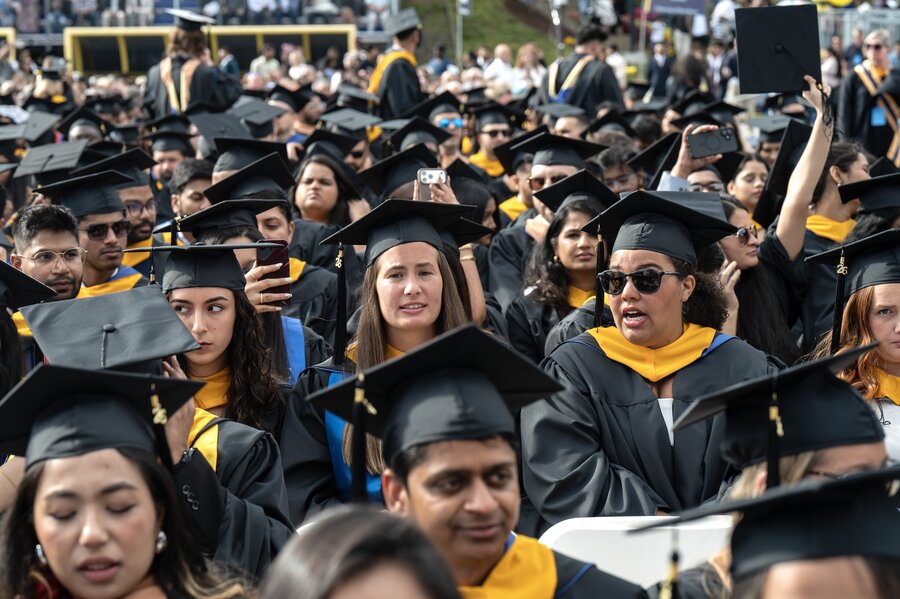
New and returning students have been flocking to college campuses across the United States this month. And, at several institutions – such as Brandeis University, just outside Boston – they are encountering a higher education reinvention that’s rapidly picking up pace: the concept of “applied” humanities or interdisciplinary and skills-focused liberal arts learning.For Brandeis and similar institutions, changing demographics (fewer college-age students overall) and budget shortfalls are an immediate impetus for this shift.But underlying such pragmatic considerations is also a growing willingness within higher education to better align with the needs of a changing society and economy. And that signals both humility and introspection – qualities integral to the humanities, which prize curiosity and the willingness to change and expand thinking and reasoning.“Higher ed shouldn’t be an ivory tower concept,” according to Sonya Christian, chancellor of the California Community Colleges system, the nation’s largest. Training an “applied” or skills lens on the liberal arts is not about devaluing academic degrees, Dr. Christian told the publication Inside Higher Ed. Rather, it’s about evolving what she described as a “both-and” viewpoint.Both large state institutions and small private colleges are working to break down silos between humanities departments and science faculties. In April, deans from technology schools – such as Virginia Tech, Georgia Tech, and MIT – met to create a network to promote the liberal arts at institutions like theirs.Educators and employers and students all seem to realize that in a tech-reliant world – increasingly dependent on artificial intelligence – independent, values-based thinking among individuals is ever more important.According to LinkedIn, tech firms are hiring more liberal arts graduates than those in computer science or engineering. And the National Association of Colleges and Employers reports that well over 90% of employers rank skills such as critical thinking, teamwork, and communicating as very important.Typical college transcripts don’t indicate such abilities. So, more schools are moving to provide graduates with a second “career competency” transcript, which would list skills that employers value and also include internships or jobs students have held.“This is liberal arts at work,” the president of a small private college in Pennsylvania told Inside Higher Ed. It’s not about students “studying in isolation within a single discipline, but learning to think and act across boundaries in ways that the most pressing challenges of our time demand.”Brandeis President Arthur Levine reportedly displays an antique radio, manual typewriter, and gramophone in his office. They serve as charming artifacts of how quickly the world has changed – and humbling reminders of how academic inquiry and liberal arts learning need to keep evolving, too.
Applying liberal arts learning in a changing world
Full Article
Original Source
Read the full article at Csmonitor →KhanList aggregates and links to publicly available news content. We do not host full articles from third-party sources. Always verify important information with original sources.