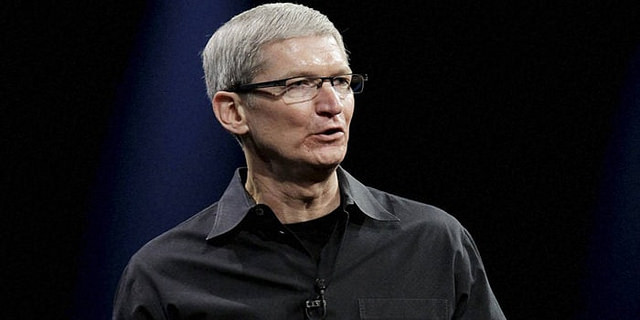
Apple’s stock slides as it blames supply chain constraints for its weak guidance iPhone maker Apple Inc. reported better-than-expected earnings and revenue as it delivered its third quarter results, thanks to a 22% surge in handset sales. However, its stock was trading almost 6% lower in the late trading session after it issued weak guidance for the current quarter, blaming that primarily on “supply constraints.” The company reported earnings before certain costs such as stock compensation of $2.02 per share, easily beating Wall Street’s target of $1.89 per share. Revenue for the period jumped 15% to $109.42 billion, surpassing the $108.65 billion analyst estimate. All told, Apple delivered net income of $29.79 billion in the quarter, up from $23.43 billion in the year-ago period. Today’s conference call was notable because it’s the last to be led by Apple Chief Executive Tim Cook (pictured) before he hands over the reins of the company to John Ternus, a 25-year Apple veteran who currently serves as its head of hardware. Ternus was also present on the call, but let Cook do most of the talking. Cook told analysts that Apple is dealing with a global memory crunch that he termed a “hundred-year flood,” and a scramble by companies to secure chip manufacturing capacity. It’s also seeing foreign currency headwinds, he said. As a result, it’s facing significantly higher costs, which have already forced it to increase prices for its Mac computers and iPads. The company has so far resisted increasing the prices of its iPhones, but most analysts believe that it will be forced to do so at some point this year. At the same time as it’s dealing with this component crisis, it’s also gearing up for the launch of a redesigned Siri that’s powered by Google LLC’s Gemini artificial intelligence technology, as well as the latest iPhone models in September. Those launches will be a critical test for the company at a time when investors are worrying it’s falling behind its rivals in terms of its AI capabilities. iPhone price speculation Cook told analysts that the current situation is “difficult,” and “not good for the consumer,” but he refused to be drawn on speculation regarding the iPhone. “Obviously, the memory prices are choking, so we’ll have to look at alternatives,” he said. Cook elaborated, saying that Apple has been paying more for the memory chips it buys for the last three quarters. “We expect to pay even higher memory costs going forward,” he said. The company does still have a substantial inventory of memory chips that can be used to offset some of those costs, but he doesn’t see an end in sight to the increasing costs of those components, and said the market really needs to expand beyond its three primary suppliers of Samsung Electronics Co. Ltd., Micron Technology Inc. and SK hynix Inc. “If you look beyond September, we see the market pricing for memory continuing to increase, which could drive an increasing impact on our business,” Cook said. Valoir analyst Rebecca Wettemann said there has been intense speculation over possible iPhone price increases, because it’s not really clear if those potential higher costs would help or hinder Apple, considering it has always sold premium products at premium prices. “Price elasticity of demand is a real thing, and future quarters will tell us if economic uncertainty pushes consumers to look for Apple alternatives or simply slow their upgrade cycles,” she said. “Apple’s new CEO will need to show more product innovation and strong guidance on sales and margins.” Apple will also be under pressure to ensure that the long awaited Siri upgrade is a hit with customers, even though the market so far hasn’t really punished it for seemingly falling behind its rivals on AI. “While traditional SaaS and software firms have been hammered by SaaSpocalypse rumors, the lack of a credible AI story hasn’t really hurt Apple,” Wettemann said. However, the analyst warned there is a danger that Apple could miss out on the growth associated with AI. “Some of what we’re seeing today is likely a reaction to both Microsoft and Amazon doing so well this week,” Wettemann said of Apple’s after-hours stock drop. “Those who were worried about AI infrastructure outpacing growth and parking money in Apple as a safe bet are likely reconsidering that strategy.” Guidance dissapoints The memory crunch is one of the reasons why Apple isn’t forecasting such a great current quarter. Chief Financial Officer Kevin Parekh said the company sees revenue rising between 9% and 11%, falling short of the analyst’s consensus of 12% revenue growth. He added that the company is still seeing “high levels of demand” for iPhones, and expects handset sales to increase by the “mid-teens” on an annual basis. “However, we do expect iPhone revenue to be impacted by these foreign exchange headwinds and supply constraints,” he admitted. The unfavorable foreign exchange rates Apple is dealing with could impact its growth by as much as 2.5% in the fourth quarter, Parekh added. The weak guidance took the sheen off some impressive results in the second quarter. Apple said iPhone sales increased 22% from the same period one year earlier to $54.25 billion, topping the Street’s estimates. Cook said the sales figures were an “incredible blowout,” tied to the strength of the latest iPhone 17 models. He added that “upgraders,” or people who replace older models with the latest hardware, came out “in full force” during the quarter. “We just had significant momentum on the iPhone really since the launch,” he said. . Mac sales were another bright spot. Revenue from that segment increased 29% to $10.35 billion, primarily due to strong sales of the lower-cost MacBook Neo, which uses the A18 Pro chip found in the iPhone 16 Pro and launched in March. The company also saw strong sales of MacBook Pro devices, Cook said. Apple increased the price of its entire Mac range at the end of the quarter as a result of the memory chip crunch and the higher costs associated with chip manufacturing. Less impressive were Apple’s iPad sales, which fell 6% to $6.19 billion, trailing the $6.92 billion Street forecast. According to Cook, the weakness here was due to a tough comparison in the same quarter one year ago, when sales surged due to the launch of a lower-cost iPad model. Apple’s important Services business, which generates hefty profit margins for the company, continued the steady growth it has been seeing over the last few years, with sales up 12% to $30.74 billion. However, analysts had forecast Services revenue of $31.22 billion. Cook blamed the shortfall on foreign currency headwinds, but pointed to growth across the board in advertising, App Store revenue, AppleCare warranties, music, video, cloud services and payment services. According to Cook, Apple now has 1.5 billion paid subscribers – a figure that includes both iCloud and subscribers to third-party apps through the App Store. Emarketer analyst Jacob Bourne said Apple’s results highlight the wisdom of its decision to pursue a “capex-light” AI strategy. “The memory crunch is real and the new upgrade program shows Apple is trying to get ahead of it,” he explained. “But record Mac revenue suggests buyers may be willing to absorb some price increases on the premium end. And with Apple’s massive installed base, the bet that distribution beats AI model-building has a solid foundation.” Incoming CEO Ternus, who is set to lead Apple’s next earnings call in three months’ time, barely spoke at all. He’ll take over as CEO on September 1, with Cook moving upstairs to become the company’s executive chairman. When asked about the transition, Cook insisted that everything is proceeding seamlessly. “I am beyond excited for John to step into his new role and lead Apple into its next era,” he said. “John will lead these calls going forward.” Ternus finally spoke when one analyst addressed him directly about his vision for the company going forward, but his answer revealed little. “There is so much opportunity for us with everything that’s happening in this space, and we’re really just focused on our plans and very excited about it,” he said. Photo: iPhonedigital/Flickr A message from John Furrier, co-founder of SiliconANGLE: Support our mission to keep content open and free by engaging with theCUBE community. Join theCUBE’s Alumni Trust Network, where technology leaders connect, share intelligence and create opportunities. 15M+ viewers of theCUBE videos, powering conversations across AI, cloud, cybersecurity and more 11.4k+ theCUBE alumni — Connect with more than 11,400 tech and business leaders shaping the future through a unique trusted-based network. Are you AWS customer? Support SiliconANGLE Financially by buying your AWS services from our Marketplace portal page and links. About SiliconANGLE Media SiliconANGLE Media is a recognized leader in digital media innovation, uniting breakthrough technology, strategic insights and real-time audience engagement. As the parent company of SiliconANGLE, theCUBE Network, theCUBE Research, CUBE365, theCUBE AI and theCUBE SuperStudios — with flagship locations in Silicon Valley and the New York Stock Exchange — SiliconANGLE Media operates at the intersection of media, technology and AI. Founded by tech visionaries John Furrier and Dave Vellante, SiliconANGLE Media has built a dynamic ecosystem of industry-leading digital media brands that reach 15+ million elite tech professionals. Our new proprietary theCUBE AI Video Cloud is breaking ground in audience interaction, leveraging theCUBEai.com neural network to help technology companies make data-driven decisions and stay at the forefront of industry conversations.
Apple’s stock slides as it blames supply chain constraints for its weak guidance
Full Article
Original Source
Read the full article at Siliconangle →KhanList aggregates and links to publicly available news content. We do not host full articles from third-party sources. Always verify important information with original sources.