
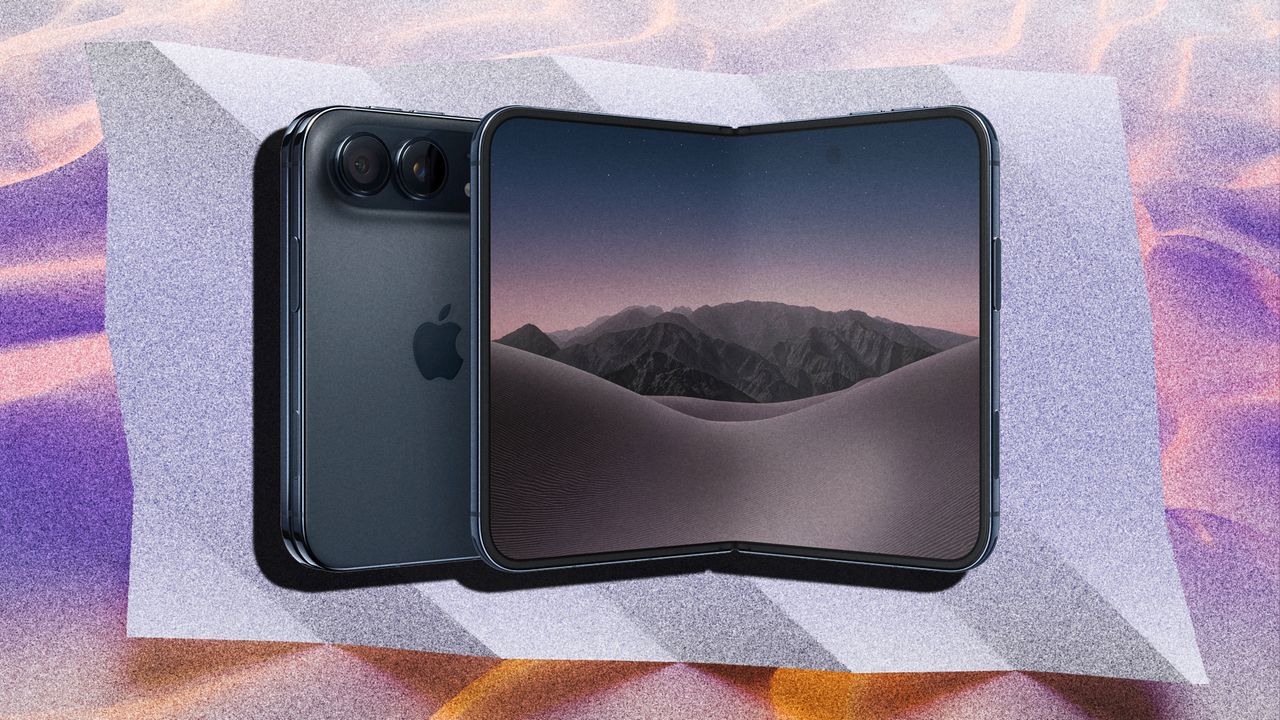
To understand the iPhone Duo and its ability to turn sceptics into believers, you could do a whole lot worse than crib from the wisdom of Jay-Z. Sure, Steve Jobs was a noted fan of Picasso’s “good artists copy, great artists steal”. In this case, Hov called it better with “you made it a hot line, I made it a hot song”.The point? Folding phones have been around for almost eight years now. A few of them are seriously accomplished devices in their own right. None have the ability to blow up your timeline, bag a spot on the News At Ten and compel a succession of distant acquaintances to slide into my DMs asking some variation of, “So do I have to spend $2,000 on an iPhone now?”Until the Duo’s 23 October release date, I can’t give you a definitive answer to that question. Having spent a good few hours last week with Apple’s first foldable and the people who made it, I’ve got a pretty good idea of why this device is already a phenomenon. “This is why we do what we do,” says Apple CEO, John Ternus. “It’s really special because it provided an opportunity to just think all-new.”iPhone DuoMade like a notebookI’ve reviewed a lot of new tech over the past decade or so, and the ideas that tend to stick are almost always some variation on a theme you’re already familiar with. That’s why the Apple Watch managed to usurp a vast swathe of Casios and G-Shocks overnight, while the Vision Pro has struggled to convince folks that strapping a computer to your face is something worth doing on the regular. So rather than emulate the existing, widely-held aesthetic for foldables—tall and thin for as big an inner screen as possible—Molly Anderson, VP of Industrial Design at Apple, sought to lean on a more traditional form factor.“Everyone knows what a notebook feels like in the pocket and what it feels like to carry around,” she says. “So that was a big part of the inspiration: ‘How do you get to something that gives you space but also feels compact?’”If you want to get technical, the Duo’s proportions are derived from the international A-Series paper system, so that they remain the same when opened and closed, helping to deliver the thinnest-ever iPhone. And while I’m not sure that its curved titanium frame will hold up to the same abuse as your average Moleskine, there’s an undeniable tactility to this phone that feels intuitive (so long as you hold it right-handed). That sensation is only elevated by a Duo-specific version of iOS that existing iPhone owners can grasp from the off. Even when splitting apps across screens and half-opening it into an alarm clock mode – the whole operating system dynamically adjusts to how the phone is shaped in your hands.“There was this concept the whole time, ‘How do you feel like you're expanding the device?’” says Steve Lemay, VP of Human Interface Design at Apple. “We didn't want it to feel like you're starting a different operating system when you unfold it. And you're never searching for the button you were just looking at.”HAW-LIN SERVICESA next-gen iPhoneThere’s an old cliché about first-gen Apple products that they take a couple of generations to really find their feet. It doesn’t really hold up in practice. The AirPods? They were great straight out of the gate. Same for the iPod. The iPhone Duo could well belong to the same lineage. On first impressions, it feels like the result of patient iteration, not a product in search of an identity. You can see this most immediately in the animation that plays when opening the Duo, where the effect is like peering through a window.“It was really important to us from the beginning that iPhone Duo feels like one cohesive experience, not two different products awkwardly fused together,” says Lemay. "...You basically feel like you're peeking through to the inner display, and it just grows underneath you.”As much as the Duo’s sweep between screens is impressive, it’s this phone’s more subtle refinements that left a lasting impression on me. The way the matte “nano texture” on its inner screen eliminates the crease across its centre without obscuring your viewing experience. The near-imperceptible selfie camera that’s hidden under the same display. And the oh-so-satisfying snap when you clasp it open and shut."We really obsessed about how it feels when you open it – it’s incredibly smooth,” says Anderson. “The hinge is defined by a custom variable torque profile, so it’s easy to open, and then it's actually biased so that it holds itself open and lays flat.”Apple’s greatest hitsYou might not have noticed, but Apple has been soft launching the iPhone Duo’s foundations for some time now. Just as iOS’ recent Liquid Glass redesign was inspired by the Vision Pro’s floating apps and glossy aesthetic, so the Duo’s fluid interface elegantly builds on the same ideals. It’s a foldable that will feel familiar to anyone who has used an iPhone in the last decade or so. Only layered on top of the usual swipes and gestures is a new array of controls, such as tapping the centre of the screen to link two apps together and access them in unison later.“You'll see a lot of learnings from iPad in here, learnings from even Macintosh, and learnings from the existing phones,” says Lemay. “It's sort of the greatest hits of those products together.”Unlike most new Apple products, the iPhone Duo won’t ask you to scramble around in search of your app essentials on Day One. If they work on iPhone, they’ll be fine for the Duo. Better still, the likes of Netflix, Slack and Zoom have already been optimized for Apple’s foldable ahead of its release. So you can sit the thing halfway open on your desk and crunch through The Gentleman season two in an afternoon without drawing an iPad mini-sized screen’s worth of attention to yourself, or reply to your boss’ DMs with even greater efficiency. And this is just the beginning for Duo.Just as you couldn’t swim with the OG Watch and the AirPods only got eartips three years after their release, this device will evolve according to how it's used. For Apple’s design team, that’s part of the appeal of making it.“There are so many things the developers will come up with that we've never anticipated,” says Lemay. “Some of those will become big ideas that take over the industry and change the product in interesting ways.”Two grand well spent?None of this is to say the Duo will live up to the hype. There’s plenty you can nitpick here, from its use of a Touch ID fingerprint sensor over Face ID to a two-lens camera system that’ll likely be outshone by the iPhone 18 Pro’s larger zoom and more capable sensors. This is a different product to Apple’s impractically thin 2015 MacBook and its single USB-C port, but anyone pre-ordering this iPhone on 16 October will be paying $2,000 for a device whose compromises aren’t an issue on “normal” smartphones.Until now, this is the defining reason why foldables haven’t taken off in a major way, and why plenty of companies aside from Apple are hoping it can breathe new life into the category. So the iPhone Duo’s appeal isn’t rooted in novelty or raw power, even though it has plenty of both. It’s about the little rush you get when opening it up for the first time, and ensuring that holds true for the long run. “Steve talked about the intersection of technology and liberal arts, and I think iPhone Duo is a perfect example of that,” says Ternus.If you wanted to surmise the Duo with another Jay-Z maxim, it’d be this: “I smarten up, open the market up”.The iPhone Duo is available for $1,999. Pre-orders begin on October 16th. At apple.comThis story originally appeared on British GQ.
Apple’s New iPhone Duo Is Packed with Design-Nerd Details
Full Article
Original Source
Read the full article at Gq →KhanList aggregates and links to publicly available news content. We do not host full articles from third-party sources. Always verify important information with original sources.