
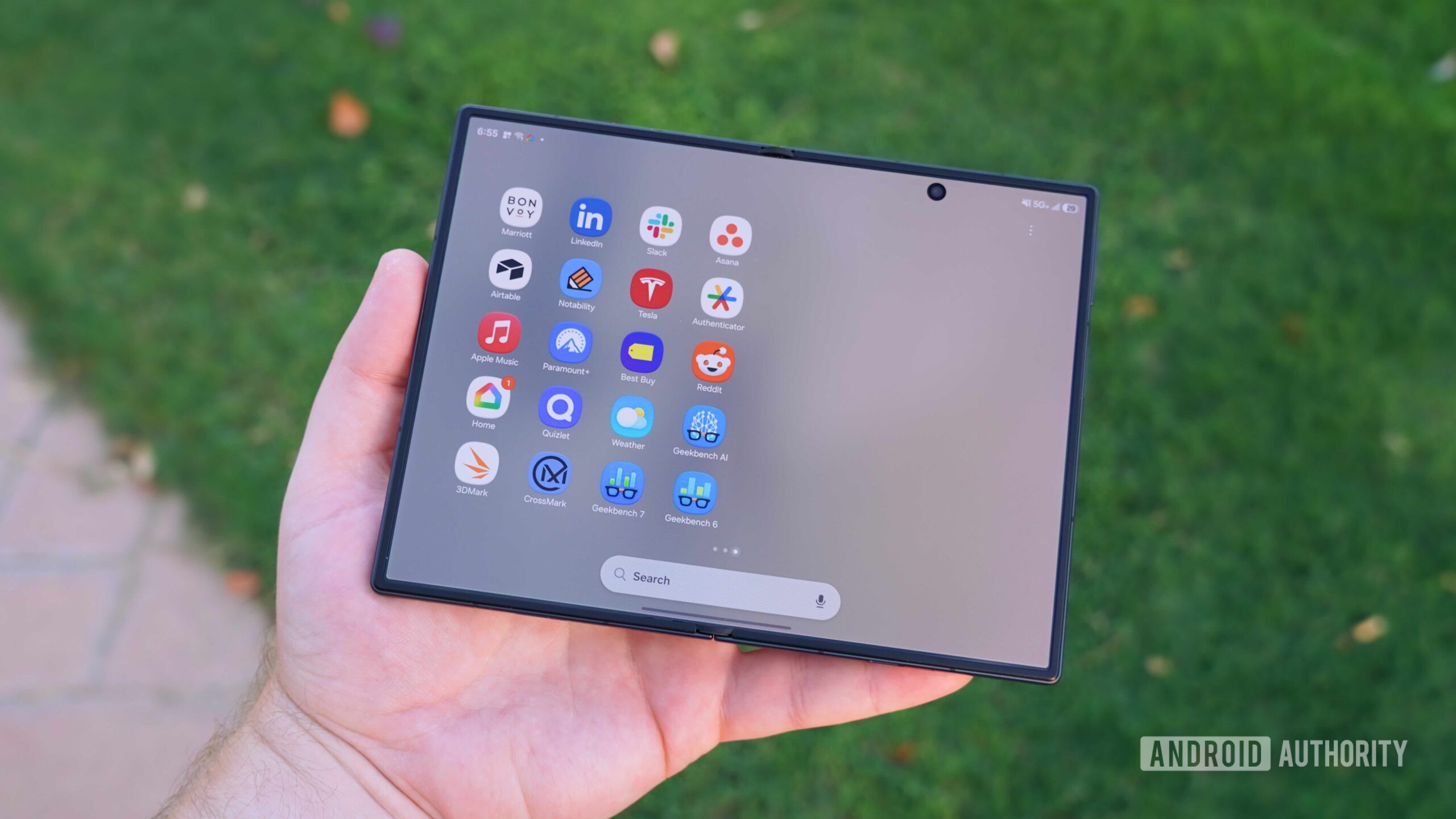
Brady Snyder / Android AuthorityWe’re fast approaching a decade since the first commercially available foldable phones arrived — yes, I’m counting the hilariously bad Royole FlexPai. Yet, despite the strides we’ve made in the technology behind them, foldables as a category are stuck behind a proverbial wall.Everyone from Samsung to Google, Motorola, and a plethora of Chinese OEMs have spent years redesigning hinges, improving displays, and offering increasingly aggressive trade-in deals to spur take-up. Despite that, foldables still make up just 1.6% of global smartphone shipments.For an industry that once considered folding screens the next big revolution in mobile computing, the category shipped 19.6 million units last year, according to Counterpoint Research. That’s an 18% year-over-year increase, which sounds impressive on paper. But when foldables still account for just 1.6% of the overall smartphone market, it feels less like explosive growth and more like a category struggling to break through. Let’s be real, it’s a drop in the bucket.The fact is that Android phone makers have hit an adoption ceiling. Aside from early adopters and tech enthusiasts, most people remain deeply skeptical of foldables. Android manufacturers might’ve pulled off an incredible feat of engineering, but they’ve struggled to convince the other 98% of the market that they actually need one. I believe Apple’s foldable will change that.Would Apple’s entry make you more likely to buy a foldable?8 votesThe Apple effectRyan Haines / Android AuthorityIf the last two decades or more of consumer technology have taught us anything, it is that new product categories rarely become truly mainstream until Apple enters the picture.We have seen it happen with smartwatches, wireless earbuds, and tablets. Even the MP3 player, if you go back as far as the iPod. Smartwatches existed long before the Apple Watch, but they were mostly seen as niche gadgets for fitness enthusiasts. The year Apple introduced the Apple Watch, the smartwatch market grew more than fourfold year over year. The Apple Watch accounted for 63% of that.Apple rarely invents new product categories. It just has an uncanny ability to make them desirable.Wireless earbuds were just another Bluetooth accessory until AirPods turned them into a cultural phenomenon. The early years of true wireless earphones were full of AirPods copycats. AirPods became so culturally synonymous with the category that, for many consumers, “AirPods” became shorthand for the entire idea of wireless earbuds. Apple is one of those rare brands that has the cultural cachet to define the lexicon.Similarly, tablets existed for years before the iPad showed people what a large-screen touch device should actually do. You know where I’m going with this.Apple did not invent any of these categories. It just has an uncanny ability to make them desirable. That is what an Apple foldable could do.Apple’s foldable could be the validation Android needsDhruv Bhutani / Android AuthorityWhen Apple eventually launches a foldable, likely at its upcoming event on September 9, it will not be pioneering flexible displays or inventing the hinge. In fact, I don’t expect the hardware itself to be category-defining. Instead, it will give the category something Android manufacturers have struggled to create: mainstream validation.For a cautious buyer, an Apple foldable sends a very simple message. That the technology is ready for the mainstream. It signals that folding phones are no longer an experiment reserved for early adopters, but a product category Apple believes is mature enough to put its most valuable brand behind.Apple could give foldables something Android manufacturers have struggled to create – mainstream validation.Even though the company is gradually edging back to more experimental products like the Vision Pro headset, Apple has cultivated a reputation for entering categories late, after the underlying technology has matured and when the company believes it can deliver a sufficiently polished experience.No matter which side of the platform wars you stand on, that public validation matters. And I suspect it could do more for Android foldables than another five years of Samsung innovation.Once folding screens become a normal, aspirational part of mainstream smartphone culture, a lot of the skepticism around the category will simply disappear. I expect foldables to go from a niche to just an expensive smartphone category.We’ve seen this before when the MacBook Air helped establish thin-and-light as the ideal premium laptop. Today, those laptops are the norm.Apple could also fix Android’s biggest software problemJoe Maring / Android AuthorityHardware is only half the problem. The biggest weakness of Android foldables today is arguably not thickness, the crease, or even battery life. It is the software.Google and Samsung have spent years encouraging developers to optimize their apps for larger inner displays and dual aspect ratios. Yet outside a relatively small group of major apps, the experience can still feel like a smartphone app awkwardly stretched across a much larger screen.It’s the chicken-and-egg problem. There just isn’t much money to be made by optimizing for a tiny group of Android foldable users. For a small or medium-sized developer, spending time building adaptive layouts and dual-screen interfaces for a relatively small audience is difficult to justify. Apple could change that almost overnight.Hardware is only half the problem. The biggest weakness of Android foldables today is arguably the software.When Apple launches a foldable iPhone, it will bring its world-class developer tools and interface guidelines with it. And because iOS users tend to generate more app and subscription revenue, developers would have a much stronger financial incentive to support the new form factor. More than that, those same developers will carry forward their expertise from designing for the iPad. Recent updates to iPadOS have also introduced significantly better windowing support, giving developers more experience designing interfaces that adapt to different screen sizes and window configurations. All of that experience translates directly to the scalable screen sizes a foldable iPhone would have.And let’s be real, a foldable iPhone isn’t going to be all that different from the iPad mini when unfolded.There is another important knock-on effect. Since most modern apps are built with cross-platform development tools, improvements made for Apple’s foldable devices are much easier to bring to Android foldables as well. Apple could end up solving one of Android’s biggest foldable problems without even trying to.A bigger foldable market helps everyoneStephen Radochia / Android AuthorityIt goes without saying that an Apple foldable will be expensive, and it won’t change the shipment skew overnight. There’s an argument to be made that Apple’s foldable might just dominate the foldable category. After all, the iPhone 17, 17 Pro Max, and 17 Pro occupy the top three best-selling phone spots in the world, according to Counterpoint Research.But I don’t think a foldable will sit near the top of that category – at least not yet.Apple entering a new hardware category usually makes the category itself much bigger. When a foldable phone goes from niche to desirable, it opens the door for tens of millions to try one out. Not all of those potential buyers will be eager to pay the top-end prices that Apple will understandably attach to its first foldable. And others will want to stay within the Android ecosystem, complete with the hardware flexibility and customization it offers.That desirability creates an enormous opportunity for companies like Motorola and Google.When Apple creates a huge wave of interest in foldables, Android manufacturers will inevitably have millions of people actively looking for alternatives.Motorola has already carved out a strong position with the Razr by making flip phones fashionable and relatively accessible. Google continues to improve the multitasking and camera experience on its Pixel Fold lineup, even though it has been rather hesitant to push the needle forward.Regardless, when Apple creates a huge wave of interest in foldables, those companies will have something they don’t have today — millions of people actively looking for alternatives.Some will want a cheaper phone. Others will prefer a different form factor. Many will simply want Android. Apple doesn’t need to sell them a phone for competing manufacturers to benefit from Apple making consumers interested in foldables.Making the pie big enoughDhruv Bhutani / Android AuthorityThe fact of the matter is that technology is no longer the primary barrier to the adoption of foldables. Outside of extreme tests (I’m looking at you, JerryRigEverything), foldables are structurally sound, have good-enough cameras, and offer plenty of performance. Foldables have a scale problem.Android manufacturers have spent years taking on the financial risk, solving engineering challenges, and gradually improving flexible displays. But there is only so much they can do on their own.By making the market big enough for everyone to win, Apple might just single-handedly save Android foldables.Apple entering the foldable market shouldn’t be seen as a death sentence for Android. Instead, it could be exactly what Android foldables need.Apple would validate the form factor for mainstream buyers. It would give developers a reason to properly support larger folding displays. And perhaps most importantly, it would make millions of people who have never considered a foldable start thinking about one.By making the market big enough for everyone to win, Apple might just single-handedly save Android foldables.Samsung Galaxy Z Fold 8Samsung Galaxy Z Fold 8New form factor • More Affordable • Fast Charging • Flagship specsA fresh take on Samsung's book-style foldableSamsung's Galaxy Z Fold 8 introduces a wider foldable design that prioritizes comfort and portability. With a lighter body, 45W charging, Snapdragon 8 Elite Gen 5 power, Galaxy AI features, and capable dual 50MP cameras, it's an easier entry into Samsung's foldable lineup.Thank you for being part of our community. Read our Comment Policy before posting.
Apple’s first folding iPhone won’t kill Android foldables — it will save them
Full Article
Original Source
Read the full article at Androidauthority →KhanList aggregates and links to publicly available news content. We do not host full articles from third-party sources. Always verify important information with original sources.