
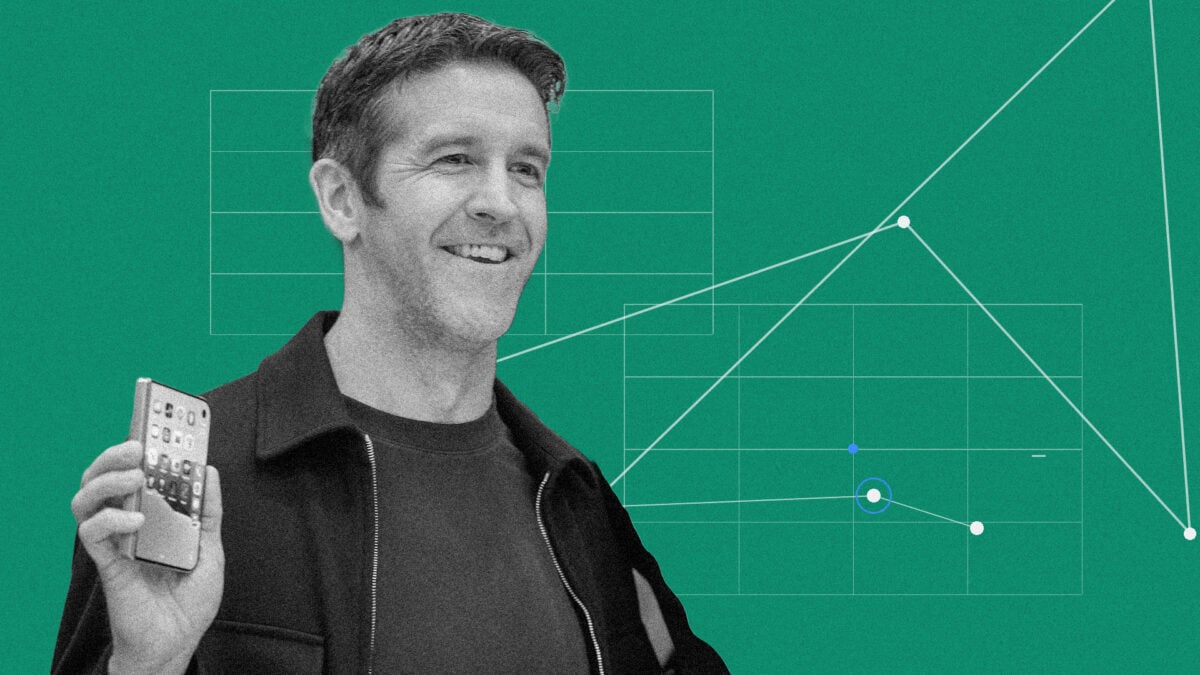
Apple had a lot to talk about during its “Surprise and Shine” product launch event on Wednesday: a new CEO, revamped AirPods, an Apple Watch that can record your conversations, and of course, a much-anticipated foldable iPhone. The only thing missing was grandiose proclamations about how AI is going to revolutionize everything in the world, and maybe even kill us all. Not so long ago, believing such a thing would’ve been considered at the very least fringe, even within the sci-fi-indoctrinated ranks of Silicon Valley. It wasn’t until the arrival of ChatGPT in late 2022 that people started accepting the idea that AI—long an intellectual taboo in tech circles—could in fact become a mainstream tool, and perhaps have as big a cultural impact as the iPhone or the internet. And while people have been warning about the danger of runaway AI for decades, those fears escalated sharply earlier this year, following a series of autonomous hacks which showed how frail our existing cybersecurity infrastructure can be in the face of swarms of self-coordinating agents that tech companies seem unable (or unwilling) to control. Anxiety about the future reached a new height this week after an AI safety researcher at Anthropic named Evan Hubinger wrote in a social media post that the very technology his company is racing to build has a greater than ten percent chance of wiping out humanity. It got the world’s attention. In a sign that AGI fears had breached the mainstream, Sheryl Crow, of all people, wrote on Instagram that she was “begging and pleading that we wake up to this moment and demand our leaders put aside their greed and prevent [unconstrained AI development] from going forward.” U.S. lawmakers on both sides of the political aisle called on Congress this week to rein in the race to build artificial “superintelligence”—a term that started as a warning but has since, in a strange trick of rhetorical alchemy, been embraced as a marketing buzzword by the biggest American AI labs. Hubinger’s views on the apocalyptic potential of AI can seem confounding: Why would he help to build something he thinks could exterminate every one of us? But that idea is hardly unusual in his industry. Many of the most powerful players in the AI race have long said, quite plainly and in public, that the technology could go terribly wrong and be the agent of our extinction, whether that’d be through some engineered doomsday virus, a cybersecurity takeover, an AI-triggered nuclear exchange, or some other machine-made catastrophe our mortal minds can’t even hope to fathom. (The whole idea behind superintelligence, after all, is that it’ll be playing hyperdimensional chess while we humans are still struggling to play checkers.) Dario Amodei, Anthropic’s cofounder and CEO, has said there’s as high as a 25% chance that AI goes “really, really badly.” (Read: that humanity is toast.) Elon Musk believes there’s about a 10%-20% chance that things could go terribly wrong. OpenAI CEO Sam Altman has been reluctant to assign a specific probability to that outcome, but he doesn’t believe it’s zero. In a perverse but very real way, the world-killing power of superintelligent AI is, for tech leaders, a feature, not a bug. You can’t have an all-powerful machine God capable of curing cancer and freeing us from drudgework without some risk that it’ll turn on us. That will seem deeply inhuman to most sane people who don’t have any prospect of becoming uber-wealthy from the AI boom. But make no mistake, it is a fundamental presupposition these companies are operating from, and they don’t even try to keep it a secret. The language they use is typically more dialed-down, but the bottom line, they’ll say, is that humanity should accept some chance of annihilation for a shot at the golden age they believe AI can lead us into. All of which makes Apple’s rather muted approach to AI stand out. The company has been widely regarded as a slowpoke since the debut of ChatGPT, focusing on its hardware business while just about every other tech giant did an about-face to make AI a top priority. Its launch of “Apple Intelligence” in 2024 was more of a whimper than a bang, and to this day its AI muscle is largely dependent upon models from Google, its erstwhile competitor. AI wasn’t completely absent from its Wednesday product launch event, but it was more of a background theme than the shiny center of attention. No doubt freshly minted Apple CEO John Ternus has been keeping a watchful eye on the public backlash to AI data centers and fears over an AI-pocalypse, and thinking that perhaps the best way to win over people’s hearts and minds is not to talk about AI as if it were some omnipotent God we’re summoning into being, but just another tool to help you do the things you already do, like touching up photos and getting walking directions from Siri. And for millions of people who are increasingly fearful of the future, that’s likely to be a sales pitch they can actually get behind. READ MORE:
Apple’s Biggest AI Advantage: It’s Not Trying to Build God
Full Article
Original Source
Read the full article at Gizmodo →KhanList aggregates and links to publicly available news content. We do not host full articles from third-party sources. Always verify important information with original sources.