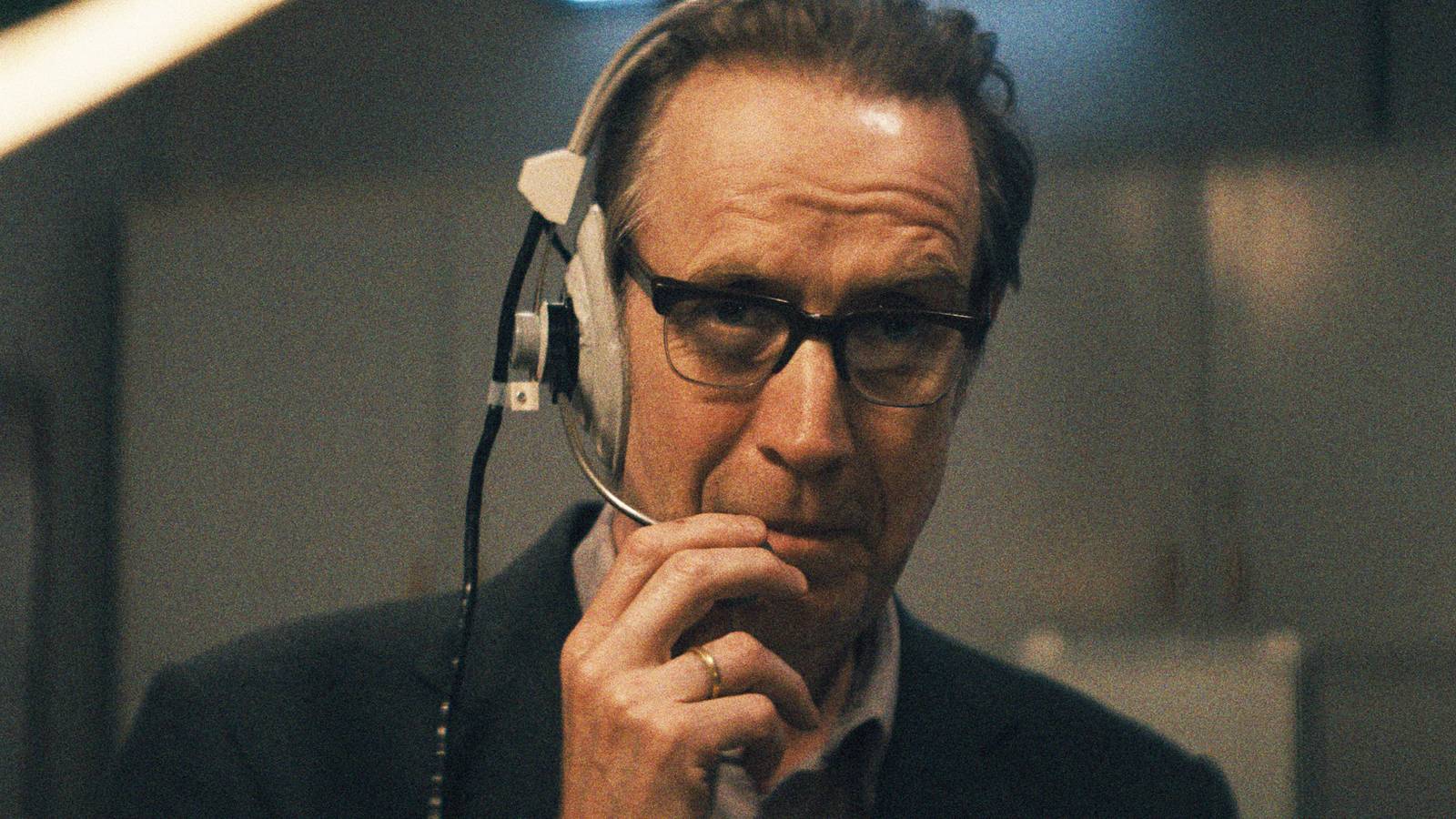
Published Jul 24, 2026, 4:08 PM EDT Amanda M. Castro is a Network TV writer at Collider and a New York–based journalist whose work has appeared in Newsweek, where she is an Associate Editor, and The U.S. Sun, where she previously served as a Senior Consumer Reporter. She specializes in network television coverage, delivering sharp, thoughtful analysis of long-running procedural hits and ambitious new dramas across broadcast TV. At Collider, Amanda explores character arcs, storytelling trends, and the cultural impact of network series that keep audiences tuning in week after week. Born and raised in Puerto Rico, Amanda is bilingual and holds a degree in Communication, Film, and Media Studies from the University of New Haven. Apple TV has become the home of prestige science fiction, but no show has defined that reputation quite like Severance. Dan Erickson’s workplace thriller exploded into a cultural phenomenon, becoming one of the platform’s signature originals thanks to its razor-sharp writing, unsettling mystery, and standout performances. This kind of success tends to overshadow everything else Apple releases, even shows that deserve just as much attention. Star City was a product of this. Premiering earlier this year as a spin-off of For All Mankind, the alternate-history drama arrived with far less fanfare than Severance, yet it managed to accomplish something remarkable. With critics embracing its tense storytelling, layered characters, and ambitious expansion of an already acclaimed universe, Star City earned even stronger reviews than Severance on Rotten Tomatoes, at 97% and 95%, respectively. It’s not necessarily the bigger cultural phenomenon, but it may be Apple TV’s most impressive sci-fi achievement of 2026. ‘Star City’ Turns the Space Race Into a Cold War Thriller Image via Apple TV One of For All Mankind’s greatest strengths has always been its alternate history. Rather than visualizing a scenario where Apollo’s missions ended the race in space, the series asked what would have happened if the USSR had indeed landed on the Moon first. It was this change in the storyline that reshaped decades of history and made it possible for the show to develop into a wide-ranging story, which spanned from the end of the 1960s to a time when mankind inhabited Mars. Rather than pushing that timeline forward, Star City looks back. Set during the earliest years of that alternate history, the series shifts the action behind the Iron Curtain, following the Soviet engineers, cosmonauts, and intelligence officers responsible for beating America into space. Familiar events from For All Mankind are revisited from an entirely different perspective, but the show builds an identity all its own by focusing on the suffocating political system surrounding them. Although rocket launches and countless thrilling space missions continue, the actual action is taking place in offices, interrogation rooms, apartments, and surveillance departments. Each achievement has a political impact; each failure poses a serious threat to an individual’s safety, and almost every conversation is at risk of being recorded. The constant sense of paranoia transforms Star City into more of a spy thriller than a space drama. ‘Star City’ Earned Better Reviews Than ‘Severance’ for Good Reason Image via Apple TV Apple’s workplace thriller remains one of television’s defining series, earning widespread acclaim for its inventive concept and meticulously constructed mysteries. Star City has impressed critics for different reasons, however, particularly its confidence as both a spin-off and a standalone series. Instead of relying on nostalgia or callbacks to justify its existence, the show expands the For All Mankind universe by exploring questions the flagship series could only hint at. What did victory actually cost the Soviet Union? What happens when scientific ambition collides with authoritarian control? And what does everyday life look like when even national heroes aren’t free from government scrutiny? Rhys Ifans anchors the ensemble as the Chief Designer, whose dreams of pushing humanity deeper into space constantly clash with a government more interested in defeating its rivals than advancing science. Around him, characters like Lyudmilla Raskova (Anna Maxwell Martin), Irina Morozova (Agnes O'Casey), Anastasia Belikova (Alice Englert), and Sergei Nikulov (Josef Davies) illustrate different ways in whichordinary people navigate a system built on secrecy, fear, and unwavering loyalty. You Don’t Need To Watch ‘For All Mankind’ First Image via Apple TV Spin-offs often struggle to balance existing fans with newcomers. Lean too heavily on previous stories and new audiences feel excluded; ignore the original series completely and longtime viewers wonder why the expansion exists at all. Although longtime For All Mankind fans will recognize familiar names and historical events, the show features a new cast, providing all the necessary context to make prior knowledge irrelevant. Critics have pointed to this accessibility as one of the major strengths of the series: while the show is an installment in Apple's enormous alternate-history universe, it is just as effective as a political drama in its own right. However, this accessibility is a sign of the tonal shift. While For All Mankind believes in the positive effects of science on humanity's future, Star City shows the opposite: progress is still important, but it occurs under complete control, ideological struggles, and political games. Rather than celebrating the power of human collaboration, the show demonstrates what heroes experience when rulers turn all accomplishments into propaganda. Apple TV has built an enviable sci-fi library over the past few years, but Star City demonstrates that the platform still has room to surprise viewers. It transforms one of its most celebrated franchises into something darker, more intimate, and arguably even more suspenseful, all while standing confidently on its own. Severance may remain Apple’s biggest science-fiction phenomenon, but when it comes to critical acclaim in 2026, Star City snuck into an even higher orbit.
Apple TV's 2026 Sci-Fi Masterpiece Just Quietly Outperformed 'Severance'
Full Article
Original Source
Read the full article at Collider →KhanList aggregates and links to publicly available news content. We do not host full articles from third-party sources. Always verify important information with original sources.