
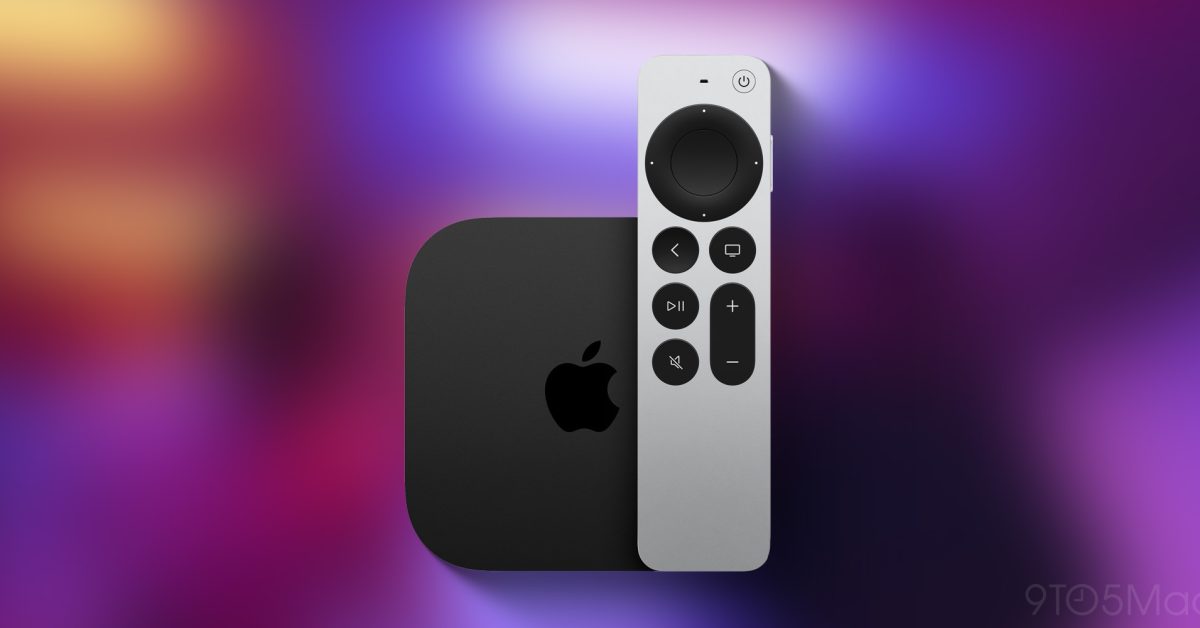
It’s been four years since Apple last updated the Apple TV 4K, but a new version is here. There’s Siri AI support, a faster chip, an improved remote, and more. Here’s everything that’s changed, what’s better, and whether the new Apple TV 4K justifies its new $299 price. Pre-order the new Apple TV 4K Pre-order the new Siri Remote What’s changed Performance The Apple TV 4K’s overall design is largely unchanged. It’s still the same familiar black box that sits underneath your television. The only visual change is that the front status light has moved from the right side to the center. Inside, Apple has upgraded the A15 Bionic to the A19 chip, touting 50% faster CPU performance and twice the GPU performance. Those are great improvements on paper. In practice, I’m not doing anything on my Apple TV that really stresses the performance. Compared to my third-generation Apple TV 4K, I’ve occasionally noticed slightly smoother animations and faster performance in apps that handle more processing locally, like Infuse. I think the biggest advantage of the A19 chip is future-proofing. People tend to buy and keep these devices for years. In fact, I’m still using a first-generation Apple TV 4K from 2017 in my bedroom, and it still works just fine nearly a decade later. The A19 gives the new Apple TV plenty of performance headroom for future tvOS updates and more demanding apps, even if those advantages aren’t particularly noticeable today. Siri Remote The Siri Remote looks the same as before, but it now supports Precision Finding in the Find My app, making it easier to track down when misplaced. You can also play a sound on the remote to help locate it. I lose my Siri Remote all the time, so this honestly might be the change I’ve noticed and appreciated most in my 10 days testing the new Apple TV. It’s worth noting Apple also sells the new Siri Remote separately for $59, and it’s compatible with every previous Apple TV 4K generation. You do, however, need a newer iPhone model to use Precision Finding. Home Theater One of the more interesting new features is support for a four-HomePod surround sound system. You need four HomePod (2nd generation) or HomePod mini 2 speakers, arranged in matching pairs at the front and rear of the room. Apple TV automatically calibrates the speakers based on their positions in the room. For context, I typically use my Apple TV with a stereo pair of full-size HomePod (2nd generation) speakers. I’ve spent some time testing the new four-speaker surround sound setup by adding a pair of HomePod mini 2 speakers. My house’s layout isn’t particularly well-suited for a traditional surround sound setup, but to my admittedly untrained ears, this sounds great. I can’t speak to how it compares to a dedicated surround sound system, but I appreciate Apple continuing to expand what’s possible with HomePods and Apple TV. Siri AI One of the biggest changes with the new Apple TV 4K is the addition of three far-field microphones. This means you can now interact with Siri without picking up the Siri Remote. In conjunction with this, Siri AI is also coming to Apple TV. Siri AI brings the same broad world knowledge and personal-context capabilities you’ve experienced on iPhone and HomeView, but adapts them to finding and watching content on your television. Siri AI on Apple TV requires the owner of your Apple Home setup to have an Apple Intelligence-enabled iPhone or iPad. Personal context requests also require a paired compatible device connected to the same Wi-Fi network as Apple TV. A few things I’ve tried: What movie did Zac recommend I watch? What was that TV show Lily recommended a few weeks ago? What are some baseball movies I might like? What did the vet say after Blake’s vet appointment? For each example, tvOS responded with a dedicated interface on Apple TV, showing the answer along with poster art, cast information, and more. It also offers built-in contextual suggestions when you ask for recommendations, so you can refine the results further. You can also ask Siri contextual questions about the show or movie you’re watching. This includes things like “where was this show filmed?” and “when is the next season coming out?” I’ve found Siri AI’s responses to those contextual questions less accurate. It struggles to accurately identify the show or movie that’s playing, leading to completely inaccurate responses to those types of questions. It’s worth noting that Siri AI is also coming to the second-generation Apple TV 4K from 2021 and the third-generation model from 2022. The far-field microphones are what’s exclusive to the new hardware. This lets you shout Siri commands into the air without talking directly into the Siri Remote. In my testing, hands-free Siri works relatively well, and it’s convenient to control Apple TV without reaching for the remote. It does a good job at picking up commands 9to5Mac’s Take I can’t go any further in this review without talking about the price. The Apple TV 4K (4th generation) costs $299. That’s a huge increase over previous Apple TV models. Here’s a brief history of Apple TV 4K pricing over the years to set the stage: DateModelBase configurationHigher-end configurationKey differencesSeptember 2017Apple TV 4K (1st gen)$179 — 32GB$199 — 64GBStorage only; both included EthernetApril 2021Apple TV 4K (2nd gen)$179 — 32GB$199 — 64GBStorage only; both included Ethernet and ThreadOctober 2022Apple TV 4K (3rd gen)$129 — 64GB$149 — 128GBHigher-end model added Gigabit Ethernet and Thread supportJune 2026Apple TV 4K (3rd gen)$199 — 64GB$249 — 128GBSame hardware as 2022; price increase onlyOctober 2026Apple TV 4K (4th gen)$299 — 128GB—Single configuration with Ethernet, Thread, and Wi-Fi 7 After Apple introduced the $129 Apple TV model in October 2022, I started to notice a change. More and more people had Apple TVs when I would visit. Friends and family who had previously bought an Amazon or Roku box, or just used their TV’s built-in software, had purchased an Apple TV. At $299, I worry that type of adoption is going to come to a screeching halt. And it’s unfortunate because the Apple TV is so much better than anything else out there. tvOS is fast, clean, and relatively free of the clutter and advertisements you find on competing platforms. The Siri Remote is excellent, and the integration with the rest of Apple’s ecosystem is hard to beat. I could justify the $299 price for the Apple TV 4K (4th generation) if it were just one option available in a broader lineup. If there were lower-priced options for people who don’t need all the bells and whistles. That’s not the case, though. In fact, this is the first Apple TV 4K generation to be sold in just one configuration. There’s no cheaper version with less storage or fewer features. To Apple’s credit, these are devices that can last for years. The fact that I’m still using an Apple TV 4K from 2017 makes the $299 price a tiny bit easier to swallow, but it doesn’t really change my frustration. Apple seems serious about its new smart home strategy. There’s the HomeView smart display, a new HomePod mini, and the Apple Home Collection family of smart home accessories launching later this year. One of the best ways to get deeper into people’s homes is by controlling how they watch TV. I can’t help but think pricing the Apple TV 4K out of reach for so many people will hinder those ambitions. Don’t get me wrong, I love the Apple TV. I have three of them in my house. If one of them broke, I would reluctantly pay $299 for a new one. Whether you fall into that category is for you to decide. All I can say is that the new Apple TV 4K is the best streamer on the market. My favorite Apple deals right now: Pre-order the new Apple TV 4K and HomeView AirPods Pro 3 $199 (Reg. $249) M5 MacBook Air Up to $250 off M6 Mac mini: up to $150 off AirPods Max 2 $449 (Reg. $549) Follow Chance: Threads, X, and Instagram FTC: We use income earning auto affiliate links. More.
Apple TV 4K review: The best streamer comes at a cost
Full Article
Original Source
Read the full article at 9to5mac →KhanList aggregates and links to publicly available news content. We do not host full articles from third-party sources. Always verify important information with original sources.