
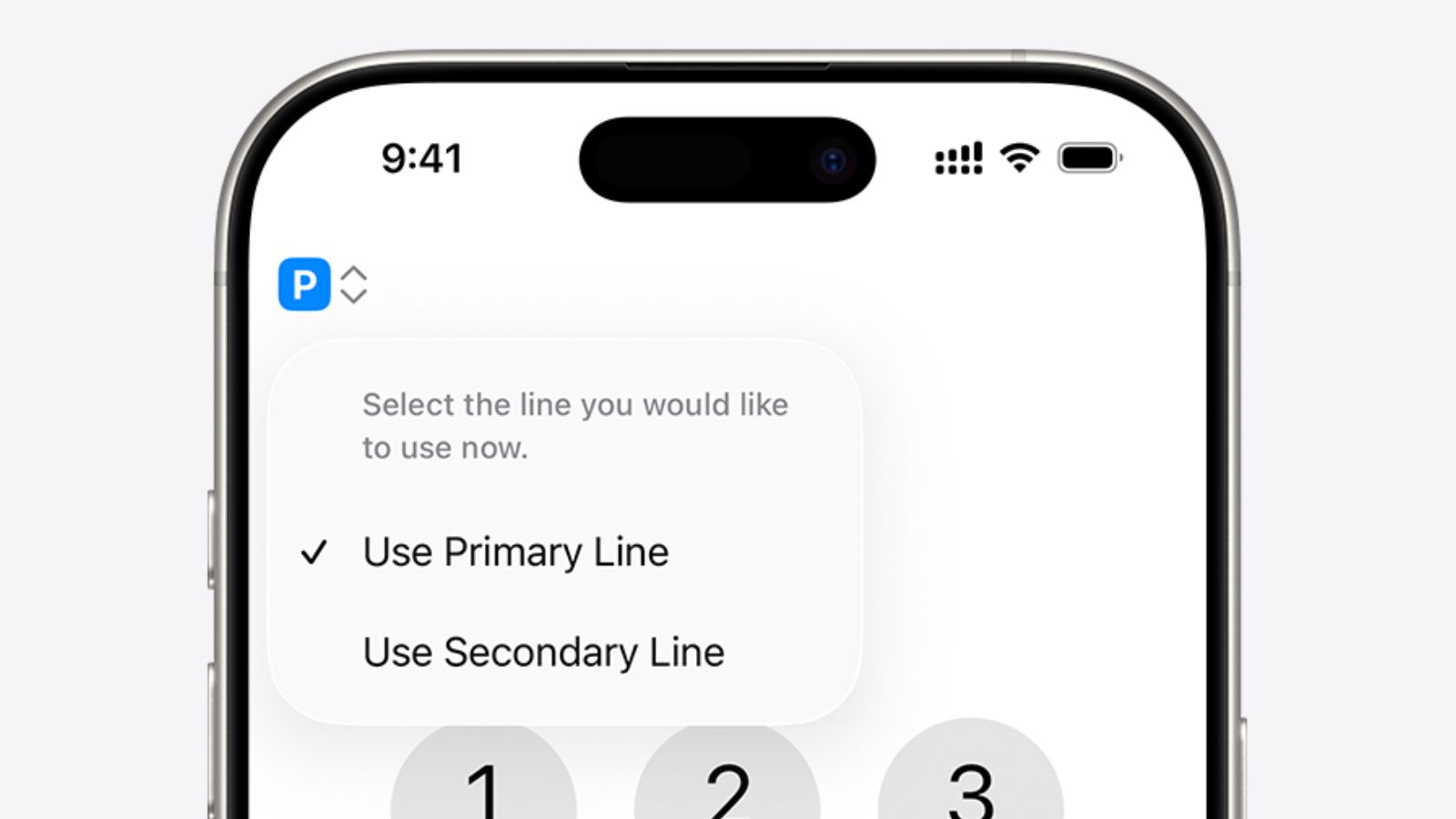
Apple is moving ahead with changes that could make it easier to use separate work and personal numbers in third-party iPhone calling and contact apps, after advancing a request to the development stage this week. The request was submitted by developer Airelec Clima on August 9 and would let these apps use more of the information iOS already keeps about a user's two cellular lines. Today, third-party apps lack a supported way to read the names users give their cellular lines, such as "Work" and "Personal," or read and change the preferred line saved for each contact in iOS. The proposed changes would make that information available to eligible apps. For example, someone could use a third-party contact app to choose their work number for calling a colleague. Apple's Contacts and Phone apps would then share that preference. The third-party app could also display the user's familiar "Work" and "Personal" labels, making it easier to tell the two numbers apart. The developer also wants apps to be able to tell which line was used for a call in call history, where that information is available. This could let an alternative calling app show whether an incoming call came through the user's work or personal number. The request does not seek access to sensitive SIM identifiers or subscription credentials. The developer says apps would only need the line's label and an identifier that tells one cellular service apart from another. The request was made through Apple's EU interoperability process, which lets developers ask for access to iPhone and iPad features used by Apple's own apps or hardware. Apple operates the process to help meet its obligations under the EU's Digital Markets Act (DMA). The law requires Apple to give third parties access to the same operating system features available to its own services and devices, so competing products can work as seamlessly with the platform. Although this request falls under the EU process, the resulting changes could be made available more widely. Apple has now moved the request to "Phase III," which means the company is now developing and releasing a solution, following an assessment and project planning. It is not yet known exactly how or when Apple will address the request or whether all three features will be delivered. Popular StoriesApple Aiming to Upgrade the iPhone Duo in Four WaysSunday November 15, 2026 8:42 am PST by Joe RossignolBloomberg's Mark Gurman today said Apple has four goals for future iPhone Duo models: Face ID, an Action button, a telephoto camera, and a thinner-and-lighter design. Gurman said Apple has already developed iPhone Duo 2 prototypes with Face ID on the outer display, but it is "running out of time" to finalize the feature for that model, so it might not arrive until the iPhone Duo...Apple Just Released a New AppMonday November 16, 2026 9:43 am PST by Joe RossignolApple today launched a new research study in the U.S. to explore the use of AI for health, and it has released a dedicated iPhone app for participants. In a press release, Apple said the study and app are "designed to advance the understanding of how people interact with conversational health AI tools." The Apple Health AI Study App contains a generative AI chatbot that participants can...Apple Adds Facial Unlock Option on iPhone Duo in iOS 27.3Monday November 16, 2026 10:17 am PST by Juli CloverApple today added a new option for unlocking the iPhone Duo using the front-facing camera, giving device users multiple ways to access their content. The feature is available in the second iOS 27.3 beta. The option to unlock with facial recognition is only available on the Lock Screen, and authentication via Touch ID is still needed for Apple Pay purchases, adding passwords and logins, and...
Apple Moves Ahead With Better Dual SIM Support for Apps
Full Article
Original Source
Read the full article at Macrumors →KhanList aggregates and links to publicly available news content. We do not host full articles from third-party sources. Always verify important information with original sources.