
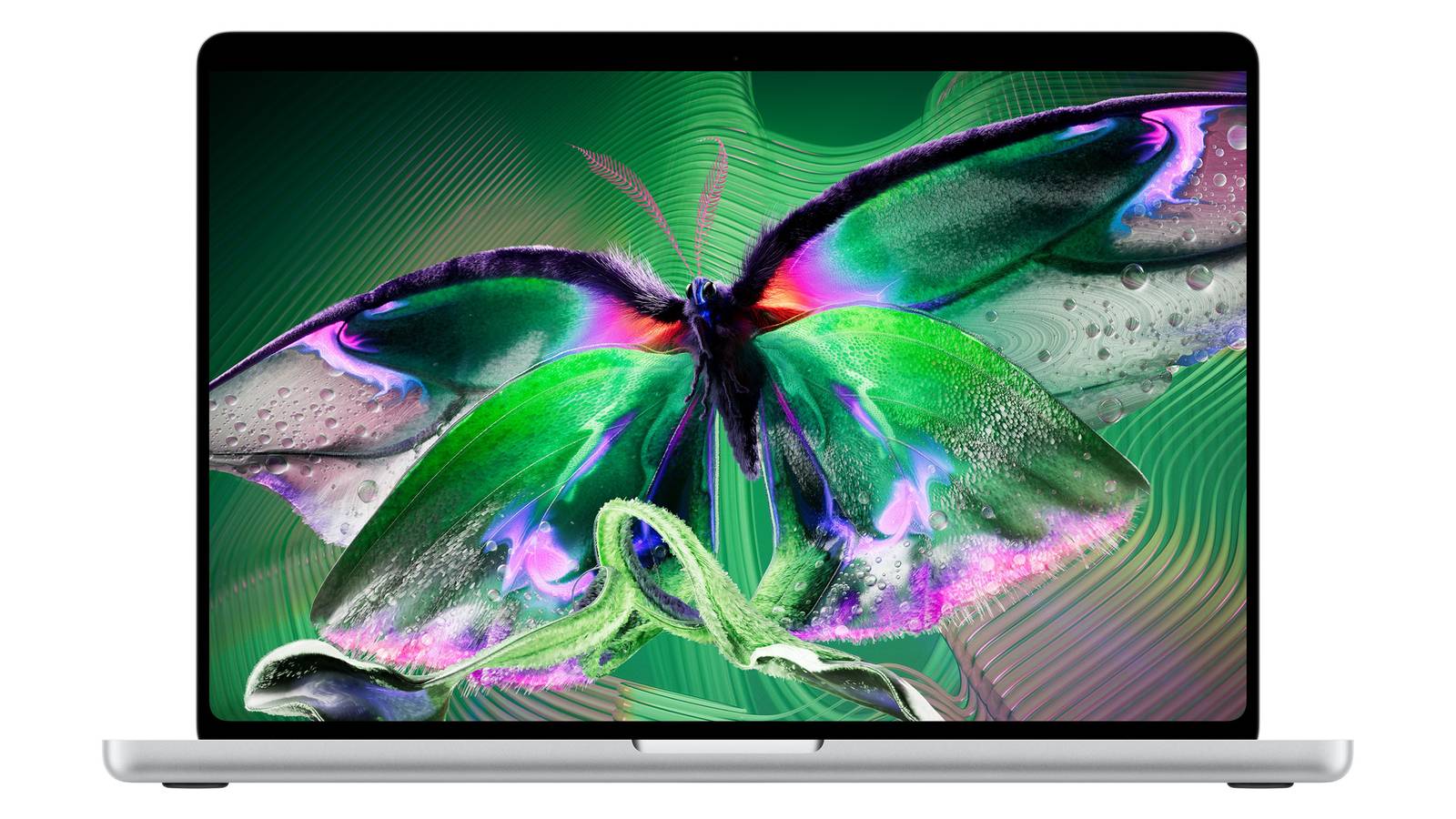
Published Oct 28, 2026, 1:22 PM EDT Patrick O'Rourke is XDA's News Editor and Entertainment Segment Lead. Previously, he was Pocket-lint's Editor-in-Chief, the Editor-in-Chief of Canadian tech publication MobileSyrup, and earlier in his career, he worked as the technology editor at the Financial Post and Postmedia. He's based in Toronto. Over the past 15 years, he's written thousands of articles. Patrick has also interviewed dozens of tech industry executives and covered GDC, E3, Gamescom, WWDC, Apple keynotes, Samsung Unpacked events and more. Patrick has a BA in journalism from Toronto Metropolitan University. Summary Apple has revealed the OLED MacBook Pro with a ProLED XDR touchscreen, 2,000 nits, and 120Hz refresh rate. The laptop brings back the glowing Apple logo, adds an iPhone Dynamic Island, and includes six‑speaker audio with deeper bass. The OLED MacBook Pro features Apple's M5 Pro or M5 Max chip, and is available in 14-inches/16-inches (it starts $2,900/$3,400). Confirming rumors that have been swirling for what feels like nearly a decade now, Apple has finally revealed a new MacBook Pro with an OLED touchscreen. The new "Pro" laptop features a "ProLED XDR" display, which Apple says is a tandem OLED screen. It features 2,000 nits of brightness, a 120Hz refresh rate, and a 10,000,000:1 contrast ratio. Oh, and it features a touchscreen — suddenly macOS' shift to a more touch-oriented look over the past few years makes way more sense. Also, in a crowd-pleasing move, the glowing Apple logo on the back of the laptop that the tech giant ditched back in 2016 is back in all its glory. Other key features include an iPhone-like Dynamic Island that displays Live Activities in place of the notch that's featured in Apple's other MacBook Pro and Air models. Interestingly, the new OLED MacBook Pro features Apple's M5 Pro and M5 Max chips, not the M6 chips in the other MacBook Pro announced earlier this week. Confused yet? Don't worry, you aren't alone. According to earlier reports, Apple may have decided against releasing M6 Pro and M6 Max chips because the performance gains weren't substantial enough to justify releasing them. The MacBook Pro with a ProLED XDR Display and an M5 Pro starts with a 15-core CPU/16-core GPU, but can be configured with an 18-core CPU/20-core GPU, plus 24GB, 36GB, 48GB, 64GB, or 128GB of RAM, depending on the chip configuration. The M5 Max starts with an 18-core CPU/32-core GPU, but can be configured with an 18-core CPU/40-core GPU. RAM options include 36GB, 48GB, 64GB, or 128GB, depending on chip configuration. Storage options range from 1TB all the way up to 16TB, depending on the configuration. Credit: Apple The 14-inch OLED MacBook Pro weighs 3lb, while the 16-inch version weighs 4lb. The laptop offers "up to" 24 hours of battery life, so the OLED touchscreen doesn't seem to have taken a major hit. Ports include a MagSafe 3 port, a headphone jack, an SD card reader, an HDMI port, and three Thunderbolt 5 ports. Other key specs include Wi-Fi 7 and Bluetooth 6. The laptop can output to three external displays, or four with the M5 Max version. Lastly, Apple says that the new MacBook Pro features "six speakers with an all-new woofer design that delivers deeper, richer bass, and updated tweeters for remarkable clarity." Apple resisted the idea of a touchscreen laptop for years Microsoft and Windows embraced the concept years ago Credit: Apple What's most interesting about the expensive MacBook Pro and its PROLED XDR Display is that it features a touchscreen. For years, Apple has resisted the idea, with CEO Tim Cook stating back in 2015 that he doesn't think the tablet and the laptop will ever become one device. Apple co-founder Steve Jobs was also notoriously against the idea, calling touchscreen laptops "ergonomically terrible." We even saw Apple attempt something similar in the past with the 2016 MacBook Pro redesign and the ill-fated Touch Bar. Apple eventually ditched the contextual touchscreen with the 2021 MacBook Pro. It will be interesting to see how well-equipped macOS Golden Gate is to handle touchscreen controls. While Microsoft embraced touchscreens when Windows 8 launched, the concept has never really clicked with me on a laptop, and I'll likely feel the same way about macOS. The OLED MacBook Pro starts at $2,900 for the 14-inch and $3,400 for the 16-inch version. The OLED MacBook is available to pre-order now and releases on November 6th. Earlier this week, Apple revealed the M6-powered MacBook Pro and an iPad Mini refresh with an OLED panel and the A20 Pro chip.
Apple finally caves and brings an OLED touchscreen to the MacBook Pro
Full Article
Original Source
Read the full article at Xda-developers →KhanList aggregates and links to publicly available news content. We do not host full articles from third-party sources. Always verify important information with original sources.