
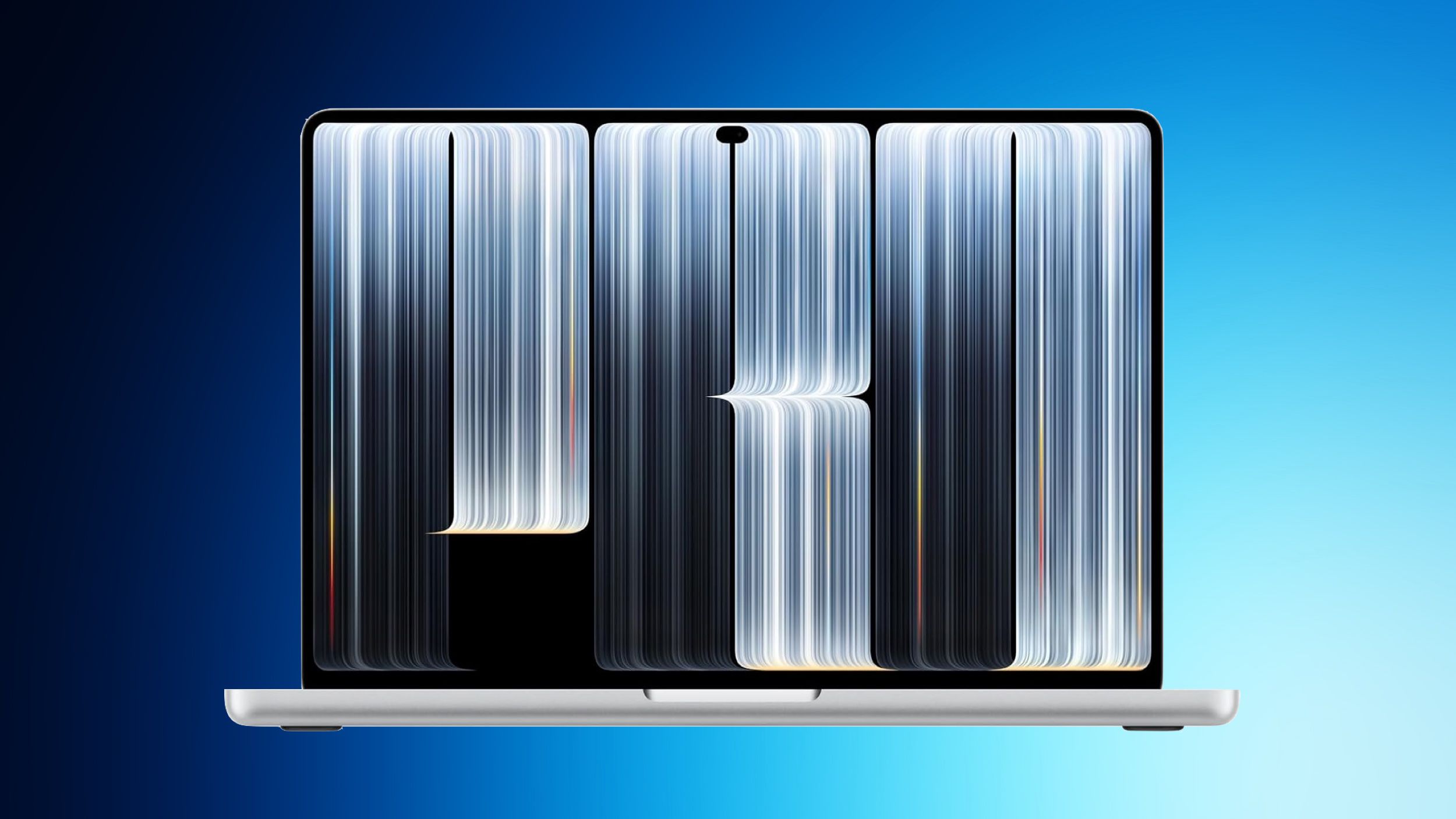
Apple is evaluating how to better manufacture high-mobility oxide (HMO) backplanes for future OLED panels, according to Korean publication The Elec. The technology is already used in the new touchscreen MacBook Pro, according to display analyst Ross Young, and Apple could be seeking to increase production for adoption in other products. Both Samsung Display and LG Display are said to be developing the HMO thin-film transistor technology for OLED panels. It is reportedly being considered by Apple as a full-blown successor to low-temperature polycrystalline oxide, or LTPO – the TFT backplane technology currently used in iPhone models and the OLED iPad Pro. HMO is designed to improve on conventional oxide TFT displays by increasing electron mobility (i.e., how easily electrons move through the transistor material when an electric field is applied). Mobility is important for driving high-resolution OLED panels while keeping power consumption low. Existing oxide TFTs have electron mobility of around 10cm²/Vs, but HMO aims to raise this to the 30–50cm²/Vs range. Both Samsung and LG are reportedly using a "sputtering" process that could make the technology easier to integrate into existing production lines. Both suppliers are also said to be pursuing another approach that uses atomic layer deposition (ALD), which involves laying down extremely thin films one atomic layer at a time. ALD is a slower process, but Samsung and LG may be trying to create a more carefully controlled oxide transistor layer than HMO allows for. Both companies are said to be validating the performance and stability of each deposition method, while prioritizing the "sputtering" approach. The Elec identifies future MacBooks and iMacs as possible applications, and Apple is indeed believed to be testing OLED displays for future MacBook Air and iMac models, though both upgrades remain some way off. Bloomberg's Mark Gurman anticipates a MacBook Air refresh in early 2027, but he has offered no time frame for either model's transition to OLED. Popular StoriesRIP, MacBook UltraApple today sent out invites for an experience in Los Angeles on Wednesday, October 28, and the "Pro and tell" tagline on the invitation likely means that the rumored MacBook models with touch-enabled OLED displays will stick with MacBook Pro branding instead of the once-rumored "MacBook Ultra" name. The long-rumored "iPhone Ultra" ended up being named iPhone Duo, so speculation that Apple...Apple Announces OLED MacBook Pro With Touch DisplayWednesday October 28, 2026 10:11 am PDT by Juli CloverApple today announced a new high-end MacBook Pro, which is available in 14-inch and 16-inch sizes. The new device has a PROLED XDR display that supports touch gestures, and a glowing rear Apple logo. Pricing on the MacBook Pro starts at $2,899 for the 14-inch model and $3,399 for the 16-inch model. Apple says the MacBook Pro has the "world's best display in a pro laptop." The PROLED...Apple Announces New iPad Mini With 8.5-Inch OLED Display, A20 Pro Chip, and MoreApple today announced a new iPad mini with a larger 8.5-inch OLED display, a nano-texture display option, a thinner and lighter design, an A20 Pro chip, a new Acoustic Display audio system that eliminates speaker holes, IP67-rated water and dust resistance, a landscape front camera, Apple's N1 chip with Wi-Fi 7 and Bluetooth 6 support, and more. Altogether, Apple says this amounts to the iPad...
Apple Explores Cheaper Way to Make New MacBook Pro's OLED Tech
Full Article
Original Source
Read the full article at Macrumors →KhanList aggregates and links to publicly available news content. We do not host full articles from third-party sources. Always verify important information with original sources.