
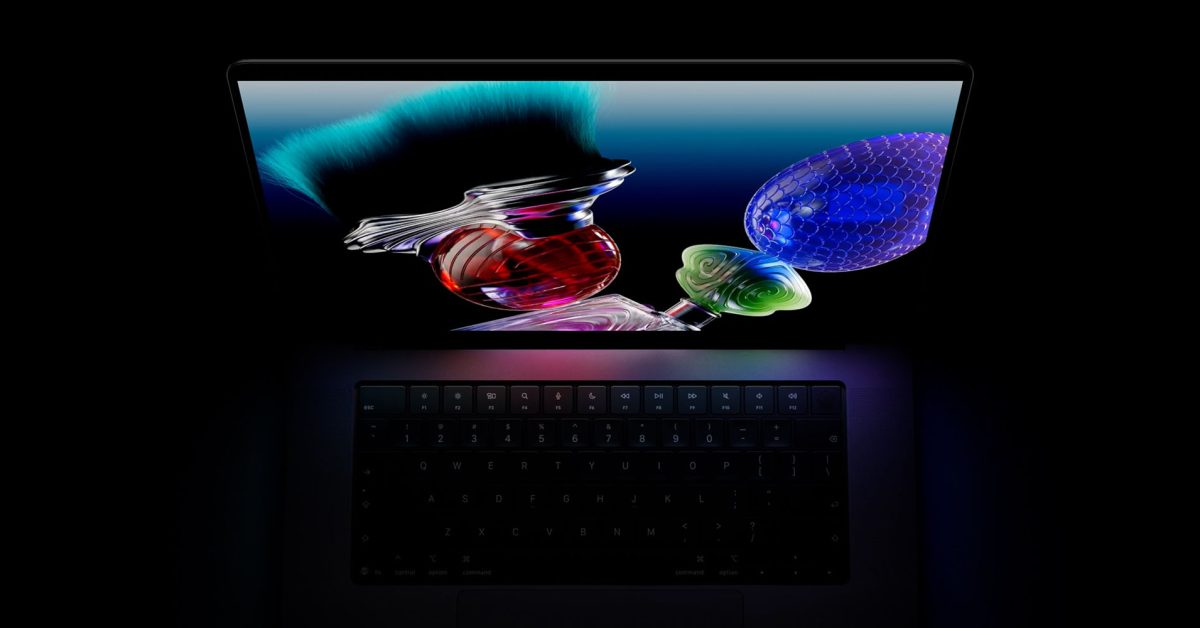
Apple argued that the touchscreen isn’t the headline feature of the MacBook Pro with PROLED XDR Display, merely a bonus. The headline should instead be the quality of the display itself – with the company effectively suggesting that the $400 premium is positively cheap for what you’re getting … Apple published a white paper in which it argues that the latest MacBook Pro display is essentially a smaller version of its professional reference monitor, the Studio Display XDR. Given that this costs anywhere from $2,899 to $3,599 just for a display (albeit a significantly larger one with a correspondingly higher resolution), this does put into perspective that $400 extra over the MacBook Pro with the standard screen. Here’s what Apple has to say about it: PROLED XDR display, the best display in a pro laptop, finally overcomes these historic limitations. For the first time, a MacBook Pro display uses tandem OLED technology, delivering up to 1000 nits of sustained full-screen brightness, 2000 nits of peak high dynamic range (HDR) and standard dynamic range (SDR) brightness, and a 10,000,000:1 contrast ratio with accurate, per-pixel black levels. It’s driven in real time by an all-new display engine in M5 Pro and M5 Max, which continuously compensates each pixel for content, usage, temperature, and ambient conditions—delivering creative precision out of the box and protecting panel lifespan over time. And a unique manufacturing process ensures panel-to-panel consistency and minimizes off-axis color shift, a first for any OLED laptop. As Macworld spotted, that’s almost identical to the company’s description of the the Studio Display XDR. In fact, the PROLED XDR in the MacBook Pro is the only display other than the Studio Display XDR that supports Apple CMF 2026, the next generation of CIE 1931. Apple says CMF 2026 “more precisely aligns the appearance of the display with an ideal D65 illuminant—the standard reference for white—and significantly improves appearance matching across display technologies, which is important for workflows that use multiple displays side by side.” Resolution aside, the other specs are identical with just one exception: the contrast ratio. As for that exception, the MacBook display comes out on top with a 10 million to 1 contrast ratio, in contrast with the Studio Display XDR’s one million. Does this change your own perspective of the price premium of the OLED model? Please share your thoughts in the comments. meross Smart Garage Door Opener Beats Woven USB-C cables Certified refurbished Apple products 15% off at apple.com Discounted AirPods Pro 3 Wireless CarPlay adapter 10-year AirTag battery case Logitech MX Master 4 for Mac FTC: We use income earning auto affiliate links. More.
Apple explains the $400 premium for the MacBook Pro with PROLED XDR Display
Full Article
Original Source
Read the full article at 9to5mac →KhanList aggregates and links to publicly available news content. We do not host full articles from third-party sources. Always verify important information with original sources.