
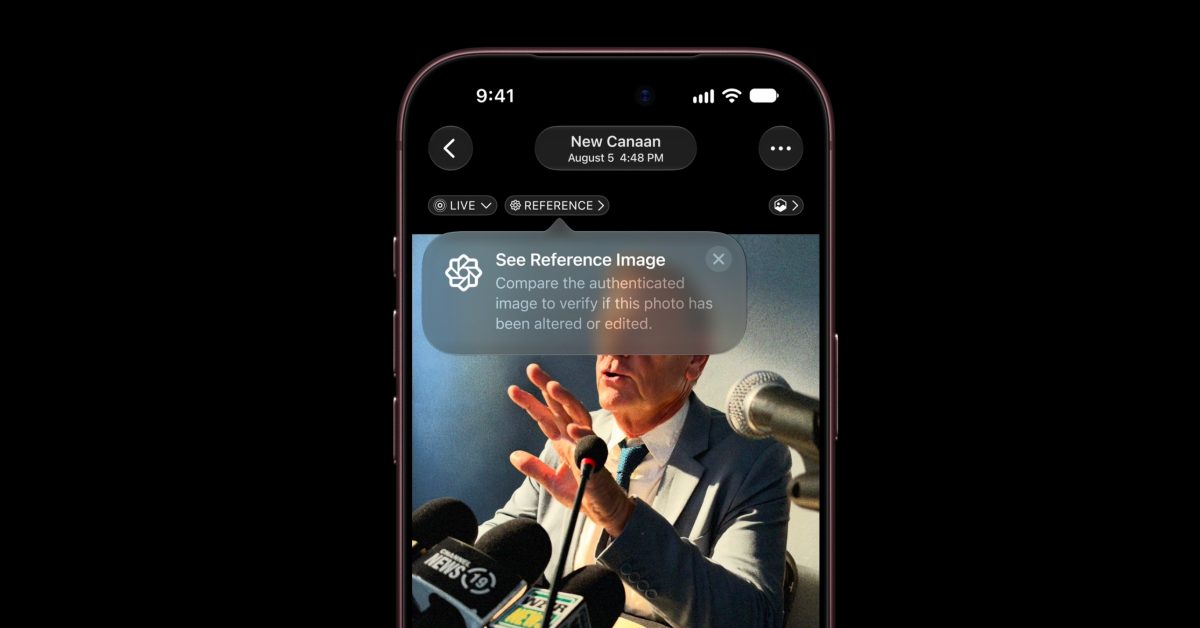
A new post on Apple’s Security Research blog details the fascinating tech, architecture, and thinking behind the iPhone 18 Pro’s new Reference Image camera mode. Here are the details Apple explains why it developed the new Reference Image camera mode In a blog post titled “Apple Reference Image: A New Approach for Verified Photography,” Apple goes in-depth into how its new photographic authenticity system works. The post confirms that the company’s motivation to build Apple Reference Image was the ever-lowering barrier to creating or adjusting images synthetically. Apple explains that while industry standards such as C2PA help address the problem, they remain vulnerable to compromise at points in the editing chain. For this reason, Apple developed a fascinatingly creative chain-of-verification system that is private, secure, and, to the company’s knowledge, “the only image provenance system that provides quantum-secure defenses.” ‘A new standard for verifiable digital photography’ In its explanation, Apple uses classic photography terms, such as a secure digital negative, which contains the raw captured pixels along with information such as signed metadata and timestamps, and is developed in a secure, private, and verifiable environment within the company’s Private Cloud Compute structure. This semantic authenticity is just one of the three core requirements Apple says a high-assurance photographic provenance system must meet, the other two being resilience to compromise and privacy preservation. If Apple’s confidence scoring system identifies a sensor as low-scoring and that sensor is revoked, Private Cloud Compute will no longer sign Reference Images captured by it. Likewise, individual Reference Images can be revoked if later determined to be fraudulent, with Apple devices regularly fetching updated revocation lists. Another interesting aspect of the Apple Reference Image chain of trust is that it begins once a camera sensor is first initialized, during the iPhone’s manufacturing process. The sensor generates a signing key pair, keeping the private key to itself while sharing the public verification key with the factory recording station, which then signs it with a factory certificate authority and records it in the device’s hardware manifest. That private key will later be used to sign every photo taken in Reference Image mode, binding the captured pixel data and sensor metadata to that specific camera sensor before the image ever reaches iOS for further processing. Apple also uses cryptographic timestamps to establish a verifiable window for when each photo was taken. Instead of relying on a timestamp provided by the device’s general operating system, which the company says can be compromised, the iPhone periodically receives a secure timestamp token that serves as a lower bound. It then requests another after capture to establish an upper bound, allowing Apple to verify that the image was captured sometime between the two. The Secure Enclave also plays a role by signing metadata that originates outside the camera sensor. Private Cloud Compute later verifies those signatures, confirms that the sensor and Secure Enclave belong to the same iPhone, and checks the timestamps before developing the secure digital negative. Once those checks pass, Private Cloud Compute processes the negative into the final JPEG Reference Image and signs it using a combination of traditional and post-quantum cryptography, which Apple says is designed to keep the image verifiable even against future quantum attacks. Apple goes on to explain that the Reference Image framework was designed so that an outside observer cannot determine the identity of the photographer, which device took a given photo, or whether the same device captured two Reference Images. This is particularly important, Apple notes, for photographers working in sensitive environments, such as conflict zones, where proving an image is authentic should not require giving up anonymity. This Security Research blog post makes for a truly fascinating read, even if you are not a technical person. You can read it here. Worth checking out on Amazon AirPods Pro 3 AirTag (2nd Generation) – 4 Pack MacBook Neo David Pogue – ’Apple: The First 50 Years’ book Logitech MX Master 4 FTC: We use income earning auto affiliate links. More.
Apple explains how the iPhone 18 Pro’s new Reference Image camera mode works
Full Article
Original Source
Read the full article at 9to5mac →KhanList aggregates and links to publicly available news content. We do not host full articles from third-party sources. Always verify important information with original sources.