
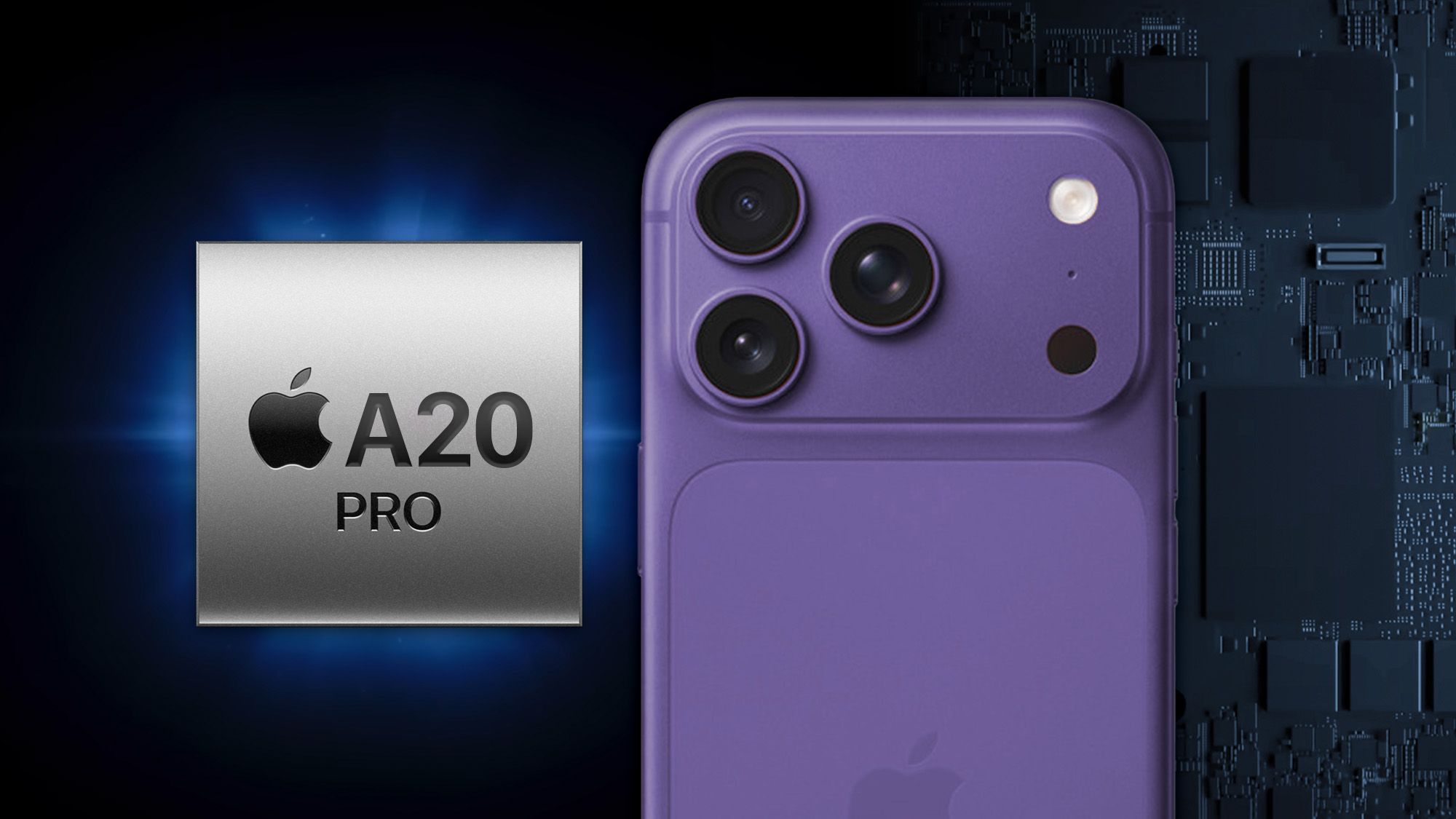
(Image credit: Tom's Guide/Apple) Every silicon cycle promises incremental gains in speed and efficiency, but Apple’s upcoming A20 Pro could mark a genuine architectural leap. As we head into Apple's “Surprise and Shine” event this week in Cupertino, all eyes are locked on the iPhone Ultra and iPhone 18 Pro Max — and specifically, whether the shift to TSMC’s rumored 2-nanometer process lives up to expectations.Across the board, this jump is poised to deliver substantial gains in throughput and thermal efficiency, both of which will be pivotal if Apple introduces its first foldable phone. Still, before crowning it a game-changer, the A20 Pro has to prove its worth under real-world workloads.iPhone 18 Pro Max could crush the flagship competition (Image credit: Tom's Guide)Both the iPhone 18 Pro and 18 Pro Max are tipped to gain the A20 Pro, but the larger flagship will naturally face greater scrutiny when going head-to-head with the best Android phones around. I’m talking about marquee devices I’ve tested, like the Galaxy S26 Ultra and OnePlus 15, which have already proven their muscle thanks to Qualcomm’s Snapdragon 8 Elite Gen 5 chipset. Swipe to scroll horizontally Row 0 - Cell 0 Chipset Geekbench 6 (single-core/multi-core score) iPhone 18 Pro Max A20 Pro (rumored) TBD iPhone 17 Pro Max A19 Pro 4,120 / 11,850 iPhone 18 Pro A20 Pro (rumored) TBD iPhone 17 Pro A19 Pro 3,871 / 9,968 Galaxy S26 Ultra Snapdragon 8 Elite Gen 5 3,785 / 11,563 OnePlus 15 Snapdragon 8 Elite Gen 5 3,618 / 11,116 Pixel 11 Pro XL Tensor G6 2,713 / 7,453 The bar for the A20 Pro is undeniably high, especially considering the outgoing iPhone 17 Pro Max already leads the pack with staggering 4,120 single-core and 11,850 multi-core scores — comfortably ahead of both the Galaxy S26 Ultra and OnePlus 15. Meanwhile, despite being less than a month old, the Tensor G6 powering the Pixel 11 Pro XL falls flat in comparison.For the A20 Pro to truly assert itself as the dominant leader, it'll need to push single-core speeds well beyond the 4,500 mark and stretch multi-core past 13,000. Reaching those figures would be impressive on its own, but imagine if the A20 Pro actually surpasses those estimates. Doing so would point the spotlight on Qualcomm, putting even more pressure on its subsequent flagship silicon to keep pace with next year's Android flagships. Swipe to scroll horizontally Row 0 - Cell 0 Chipset 3DMark Wild Life Unlimited (Score / FPS) iPhone 18 Pro Max A20 Pro (rumored) TBD iPhone 17 Pro Max A19 Pro 26,637 / 159.53 fps iPhone 18 Pro A20 Pro (rumored) TBD iPhone 17 Pro A19 Pro 26,451 / 158.37 fps Galaxy S26 Ultra Snapdragon 8 Elite Gen 5 29,937 / 179.27 fps OnePlus 15 Snapdragon 8 Elite Gen 5 29,029 / 173.83 fps Pixel 11 Pro XL Tensor G6 14,465 / 86.62 fps While Apple has traditionally proven successful in Geekbench, graphics performance has become Qualcomm’s bread and butter — and the 3DMark numbers above show the uphill battle facing the iPhone 18 Pro Max. The Snapdragon 8 Elite Gen 5 currently holds the graphical crown, with the Galaxy S26 Ultra leading the charge at 29,937 (179.27 fps) and the OnePlus 15 not far behind at 29,029 (173.83 fps). Meanwhile, the current iPhone 17 Pro Max tops out at 26,637 (159.53 fps) — a figure closely mirrored by the smaller iPhone 17 Pro at 26,451 (158.37 fps).For the iPhone 18 Pro Max and its rumored A20 Pro chip to snatch the crown back from Samsung and OnePlus, a rumored stainless steel vapor chamber could be what ultimately gives it the edge. Sure, this cooling system is reportedly going to cause the iPhone 18 Pro Max to balloon a bit in weight, but it might be a compromise well worth making.Sign up to the Tom's iGuide weekly newsletter with coverage on everything from product launches to software updates, this is your go-to source for the latest updates on all the best Apple content.iPhone Ultra will be more demanding (Image credit: Matt Talks Tech/YouTube)While the iPhone 18 Pro Max reaps clear gaming and computational benefits, the A20 Pro is even more crucial for another device in Apple's pipeline: the foldable iPhone Ultra.Notebook-style foldables present engineering challenges of their own, requiring far more background management to deliver a seamless phone-meets-tablet experience. The rumored 7.8-inch main display of the iPhone Ultra should be a major test all on its own, as both the software and processor attempt to handle dynamic app scaling.I’ve said this countless times by now, but app continuity will be the defining, make-or-break test for Apple's foldable. Seamlessly moving an active app from an external cover screen to an expansive inner panel demands instantaneous re-rendering, so the A20 Pro's processing power can't stutter.This foldable will be far more demanding than the standard iPhone 18 Pro Max, particularly if it aims to offer true side-by-side app multitasking. Heavy workflows — like streaming a video call while editing a spreadsheet and running Apple Intelligence models in the background — place immense strain on system resources. Apple can't afford to overlook the power efficiency of the A20 Pro here, or the foldable risks facing the same issues that plague Android foldables I’ve tested, like the Galaxy Z Fold 8 Ultra and Pixel 11 Pro Fold.For Apple to convince power users that a foldable iPhone is a legitimate desktop-class productivity powerhouse, the software experience must be flawless. With the A20 Pro under the hood, Apple could ensure that dynamic split-screen layouts, drag-and-drop multitasking, and on-the-fly display transitions feel just as responsive as interacting with a single app on a standard screen. Follow Tom's Guide on Google News and add us as a preferred source to get our up-to-date news, analysis, and reviews in your feeds. More from Tom's GuideMotorola 2026 foldables compared: book-style powerhouse vs elite compact flipI've tested every major foldable phone this year, and the iPhone Ultra can beat them all with this one killer featureI pushed the latest foldables from Samsung, Motorola and Honor into a no‑mercy battle royale and there was one clear winner John’s a senior editor covering phones for Tom’s Guide. He’s no stranger in this area having covered mobile phones and gadgets since 2008 when he started his career. On top of his editor duties, he’s a seasoned videographer being in front and behind the camera producing YouTube videos. Previously, he held editor roles with PhoneArena, Android Authority, Digital Trends, and SPY. Outside of tech, he enjoys producing mini documentaries and fun social clips for small businesses, enjoying the beach life at the Jersey Shore, and recently becoming a first time homeowner.
Apple A20 Pro chip: why it’s such a big deal for the iPhone Ultra and iPhone 18 Pro Max
Full Article
Original Source
Read the full article at Tomsguide →KhanList aggregates and links to publicly available news content. We do not host full articles from third-party sources. Always verify important information with original sources.