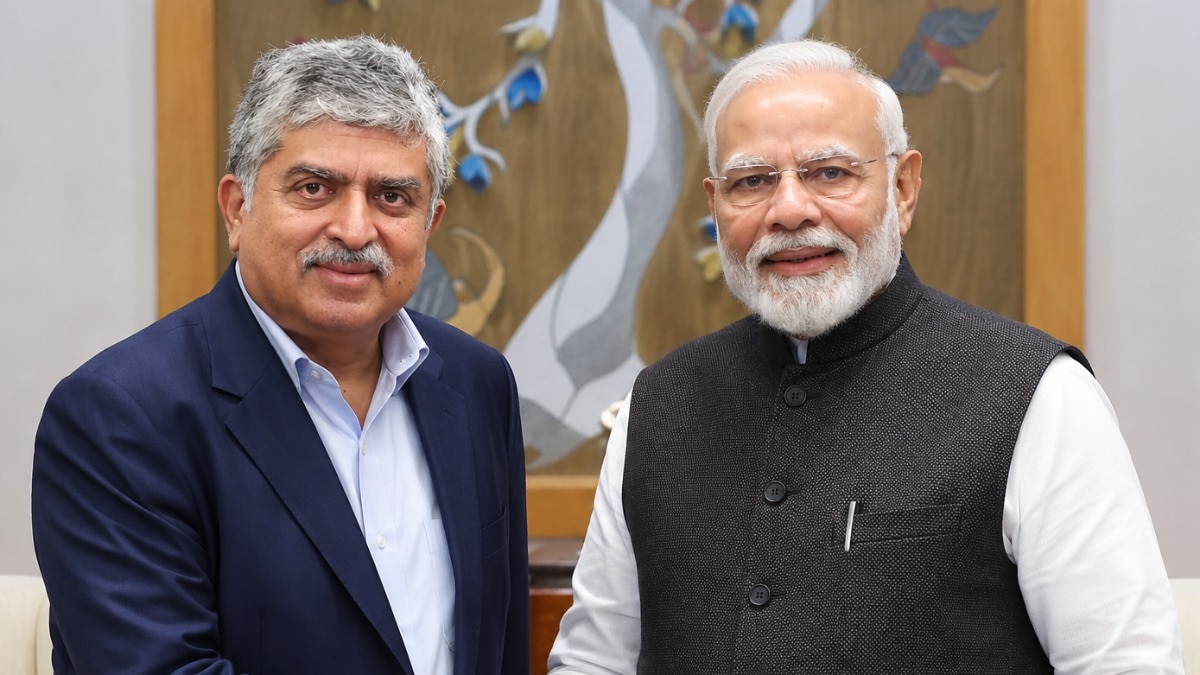
Nandan Nilekani has built some of India's most transformative digital platforms. His toughest challenge now may not be designing a better examination system, it may be convincing millions of students and parents to trust it.APAAR row will test Nilekani’s mission to fix exam trustWhen Prime Minister Narendra Modi announced a high-powered task force to overhaul India’s examination system, the choice of its chairperson surprised few. Whenever India has attempted a digital leap of national scale, one name has repeatedly surfaced. The Tech titan, Nandan Nilekani.And why not? After all, Nilekani helped build Aadhaar into the world’s largest digital identity programme. He has been among the strongest advocates of Digital Public Infrastructure (DPI), the core philosophy that is behind platforms like UPI, DigiLocker and many other digital public services.Now, after months of outrage over paper leaks and a crisis of confidence in examinations, the government has once again turned to him to do the one thing that the education ecosystem needs at present - to restore trust.However, this assignment comes with an important lesson from recent history. Not because Nilekani led the APAAR programme, he did not. It was launched under the aegis of former Education Minister Dharmendra Pradhan in 2023. Rather, APAAR became one of the clearest reminders that even well-intentioned digital reforms can stumble if people do not trust them.TECHNOLOGY MANY NOT BE THE ONLY PROBLEM. TRUST IS KEYThe Automated Permanent Academic Account Registry (APAAR) was envisioned as a lifelong digital academic identity for students. The idea was a straightforward one, a unique academic record that follows a student from school to university, storing certificates, achievements and credits digitally. It was designed to reduce paperwork, make transfers easier and eventually integrate with India’s broader digital education ecosystem.We have reported extensively about the introduction of the APAAR ID. Read here. On paper, it looked like another step towards seamless governance. On the ground, however, it became something else.Parents began asking uncomfortable questions like, would every child’s academic life now be permanently linked to Aadhaar? Who would own the data? Could schools insist on enrolment? What happens if parents refuse?Privacy advocates have consistently argued that these questions had not been answered clearly enough before the rollout gathered pace. Several schools were accused of presenting APAAR as compulsory even though government guidelines described it as voluntary. The debate eventually reached the courts.WHEN THE SUPREME COURT DREW THAT LINELast week, the Supreme Court reinforced an important principle. It held that parents cannot be "compelled to create APAAR IDs for their children", and directed that consent mechanisms be strengthened in line with earlier directions of the Odisha High Court.The court stressed that consent must be meaningful and that students should not suffer any disadvantage for opting out. The judgment was not a rejection of digital records, it was merely a reminder that digital governance works only when participation is based on informed consent rather than administrative pressure.This very distinction matters far beyond APAAR.GOVERNMENT IS BETTING BIG ON TECHNOLOGYThe newly constituted task force has been asked to recommend structural and technological reforms to India’s examination ecosystem following the NEET paper leak controversy. The government wants examinations that are transparent, secure and resistant to malpractice.Technology will almost certainly be central to those recommendations. That is precisely why APAAR offers an important lesson, because it is pertinent to note that India’s exam crisis was never caused by a lack of technology.The National Testing Agency (NTA) already uses encrypted question papers, biometric verification, CCTV surveillance and digital monitoring in many examinations. Yet exam leaks happened. The crisis exposed failures in governance, accountability and execution, not merely software.CAN TECH ALONE BUILD CONFIDENCE?Nilekani brings undeniable experience of building digital systems that operate at extraordinary scale. Supporters point to Aadhaar and UPI as proof that India can create digital infrastructure used by hundreds of millions of people. Critics, however, argue that education presents a different challenge. Unlike payments or identity verification, examinations depend as much on public confidence as technological capability.Students must believe the system is fair, their parents must believe their children’s data is protected, teachers must believe technology assists rather than controls education.These are only a few questions that algorithms alone cannot answer. What we need is a reform that is bigger than software. The new panel is expected to recommend ways to strengthen the NTA and redesign India’s examination architecture.If it succeeds, the reforms could become one of the biggest changes to public examinations in decades.For Nandan Nilekani, this may be the most difficult assignment of his public life. Not because India doubts his ability to build digital systems, but because this time, the challenge is not building technology alone. It is about rebuilding trust.- EndsPublished By: Deebashree MohantyPublished On: Jul 27, 2026 12:35 IST
APAAR row will test Nilekani's mission to fix exam trust
Full Article
Original Source
Read the full article at Indiatoday →KhanList aggregates and links to publicly available news content. We do not host full articles from third-party sources. Always verify important information with original sources.