
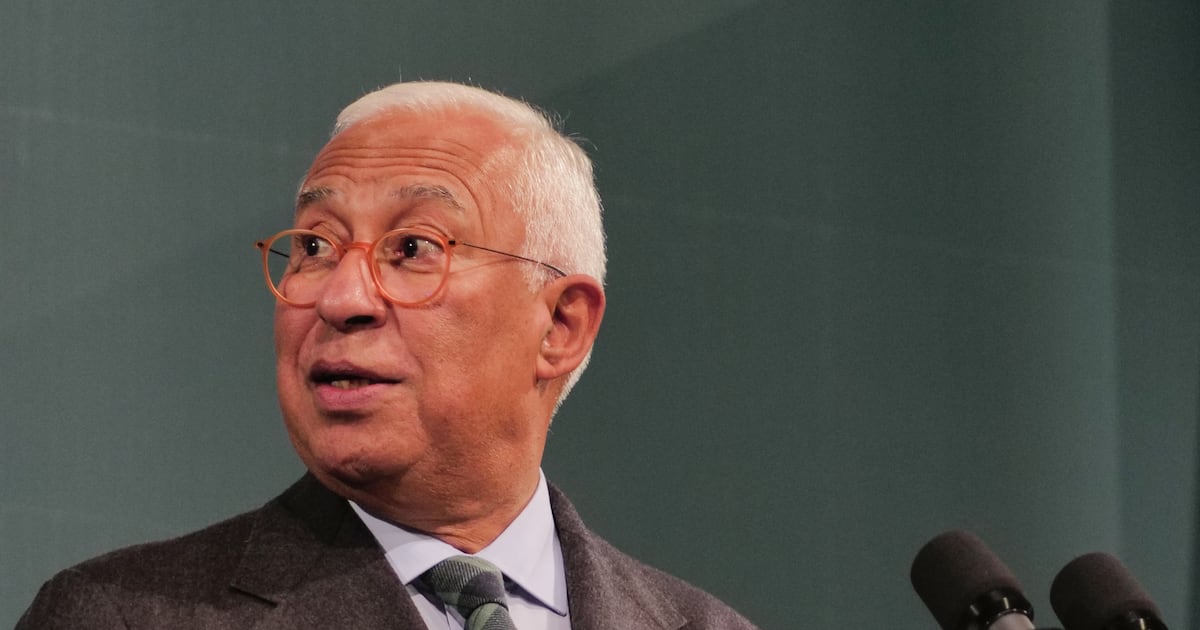
European Council president António Costa has proposed an EU-wide tax on digital services and scaled back a plan for the bloc’s next seven-year budget in a bid to secure agreement from its 27 member states by the end of this year.Under the proposals unveiled by Costa on Saturday, the EU’s budget for 2028 to 2034 would be reduced from the European Commission’s original €1.76 trillion proposal to €1.58 trillion, a cut of €180.5 billion in constant 2025 prices, or 10 per cent.“I’m confident that this proposal is a good basis for moving towards an agreement,” Costa said.The plan would still be an increase of about a quarter in real terms from the current seven-year budget, which expires next year, although that falls to 16 per cent excluding repayments of post-pandemic borrowings.READ MOREEU leaders will gather for a special summit on November 26th-27th, when they will attempt to settle lingering differences over the budget’s size and priorities. Many are keen to reach an agreement before elections in France, Italy and Poland in the coming months.The budget needs backing from all 27 EU countries, which remain divided over how much they should contribute and how to allocate spending.Costa’s latest plan largely shields agricultural subsidies and cohesion funds for poorer regions, which have in the past swallowed up two-thirds of EU spending, while scaling back funding for competitiveness, defence and foreign aid.The largest reduction was in the budget for competitiveness, innovation and security, which shrank by €84.5 billion, or 16.2 per cent, compared with the commission’s original proposal. It is still almost double the amount allocated in the current budget.Spending on other countries, including aid and funding for potential future member states, was cut by 21 per cent, leaving it 23 per cent higher than the current budget.The amount for agriculture and cohesion was reduced by 5.1 per cent, a 6.5 per cent cut compared with the current budget when excluding pandemic-era debt repayments.Administrative spending rose by 12 per cent from the current budget.Costa proposed an overhaul of the commission’s plans for new EU-wide taxes in a bid to raise new revenue streams and reduce the amount that member states have to contribute to the budget. National contributions would rise only slightly, from 0.80 per cent of gross national income to 0.82 per cent.Previously, the commission proposed levying a tax on large companies, but that was opposed by several nations, including Germany. On Saturday, Costa suggested replacing it with a tax on digital services.The new levy would amount to 3 per cent of revenues from online advertising, digital marketplaces and the monetisation of user data for companies with global annual turnover exceeding €750 million and EU digital revenues exceeding €50 million.The commission previously estimated that a 3 per cent EU-wide digital services tax would raise about €5 billion a year, or €35 billion over the seven-year budget period.A previous EU-wide digital services tax proposal stalled in 2019 in the face of opposition from several member states and was superseded by a global tax agreement brokered by the OECD.But the US opted out of the OECD agreement after Donald Trump’s re-election in 2024, undermining its effectiveness.France, Italy, Spain and Austria already have national digital services levies. Any new EU-wide tax would need unanimous backing from all member states.“This tax is not targeting a specific company as such or any country as such, but ... the aim is to ensure healthy competitiveness in our economy and fair taxation for our businesses and all businesses that operate in our market,” Costa said.Under the proposal Costa set out on Saturday, 30 per cent of revenues from the main EU emissions trading system would be allocated to the EU budget. Some 13 lower-income member states, including Poland, Hungary and Romania, would get transitional arrangements that gradually increased their contributions.Other changes include increasing the EU’s share of revenues from the bloc’s carbon border tax from 75 per cent to 100 per cent, and raising a tax on uncollected electronic waste.Costa cut the amount that the EU would repay to bondholders in its post-pandemic recovery fund by about €9 billion, or roughly €1.4 billion per year.“We propose a new profile of repayment ... in order to honour our commitments but at the same time give enough room to manoeuvre to increase our investment,” he said. – Copyright The Financial Times Limited
António Costa revives EU digital tax proposal in bid to reach agreement on budget
Full Article
Original Source
Read the full article at Irishtimes →KhanList aggregates and links to publicly available news content. We do not host full articles from third-party sources. Always verify important information with original sources.