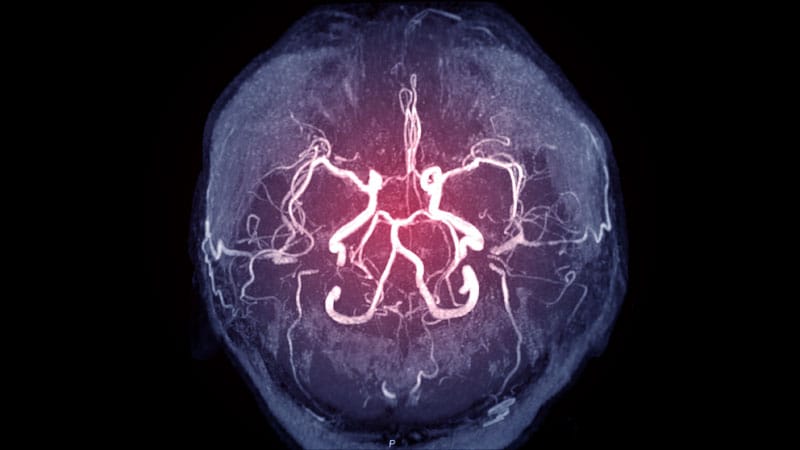
TOPLINEIn patients with acute ischemic stroke (AIS) and incidental small saccular unruptured intracranial aneurysms (UIAs), aneurysm rupture was uncommon. No significant differences in rupture rates were observed among patients receiving single antiplatelet therapy (SAPT), anticoagulation, or no regular antithrombotic therapy, and no ruptures occurred in the anticoagulation group.METHODOLOGYResearchers conducted a single-center retrospective cohort study of 197 patients (mean age 68.4 years; 53.8% women) with AIS and concomitant saccular UIAs treated in China between 2016 and 2021.Of all, 140 patients received SAPT, 36 received anticoagulation, and 21 received no regular antithrombotic therapy; 66 patients (33.5%) received short-term dual antiplatelet therapy (DAPT) as a bridging strategy (mean duration 25.2 days) before transitioning to SAPT, anticoagulation, or discontinuing therapy.The primary outcome was aneurysm rupture (confirmed aneurysmal subarachnoid hemorrhage); secondary outcomes included aneurysm-related symptoms (headache or oculomotor palsy with imaging confirmation), radiographic progression (≥1 mm growth), all-cause mortality, recurrent ischemic stroke, and aneurysm intervention.Mean follow-up duration was 28.6 months; 103 patients (52.3%) underwent at least one follow-up CT angiography or MR angiography, median time to first imaging was 14 months.TAKEAWAYAneurysm rupture occurred in two patients (1.0%): one in the SAPT group (0.7%) and one in the no-therapy group (4.8%); no ruptures occurred in the anticoagulation group; both patients underwent successful endovascular coiling. No significant association was observed between antithrombotic regimen and aneurysm rupture.New attributable symptoms occurred in six patients (3.0%), distributed similarly across treatment groups and radiographic progression was detected in one patients. All but one patient (with new symptoms) underwent successful endovascular coiling.Recurrent ischemic stroke occurred in 30 patients (15.2%) and all-cause mortality rate was 9.6% (19 patients).Among patients exposed to short-term DAPT, no ruptures occurred during or after DAPT compared with two ruptures (1.5%) in nonexposed patients.IN PRACTICE"In this retrospective cohort of patients with mostly small saccular UIAs, aneurysm rupture was uncommon, and no statistically significant differences were observed across different antithrombotic regimens (SAPT, anticoagulation, or no therapy) or with short-term DAPT exposure... The decision to use antithrombotic therapy for secondary stroke prevention in patients with incidental small saccular UIAs should be individualized, weighing the benefits of stroke recurrence reduction against the theoretical and unproven risks to the aneurysm," the authors wrote.SOURCEThe study was led by Chao Chen and Yiya Xu, Department of Neurology, Shengli Clinical Medical College, Fujian Medical University, Fuzhou, Fujian, China. It was published online on July 30 in Annals of Medicine.LIMITATIONSThe study was retrospective and single center, with modest sample sizes in the anticoagulation and no-therapy groups. Nonprotocolized imaging may have missed asymptomatic aneurysm growth, treatment selection may have introduced residual confounding, few rupture events limited statistical power, and findings applied only to saccular aneurysms.DISCLOSURESThe study was supported by Joint Funds for the Innovation of Science and Technology, Fujian Province; the Fujian Provincial Natural Science Foundation; Fujian Research and Training Grants for Young and Middle-aged Leaders in Healthcare; and the Natural Science Foundation of Fujian Province. The authors reported having no relevant conflicts of interest.This article was created using several editorial tools, including AI, as part of the process. Human editors reviewed this content before publication.
Antithrombotics Not Linked to Aneurysm Rupture
Full Article
Original Source
Read the full article at Medscape →KhanList aggregates and links to publicly available news content. We do not host full articles from third-party sources. Always verify important information with original sources.