
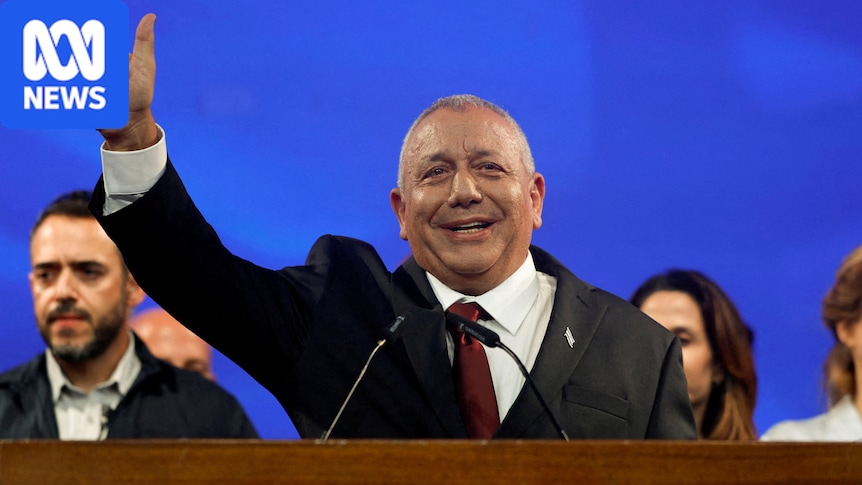
Israeli Opposition Leader Gadi Eisenkot says efforts to form a new government are moving at "full speed", but more than two weeks since the nation's election, it is not clear how it will unfold.On Wednesday Israeli media reported Mr Eisenkot was hoping to form a new government by next Wednesday — before the December 6 deadline. Late on Tuesday the Yashar leader agreed to sign a coalition pact with Avigdor Liberman's right-wing Yisrael Beytenu, the first alliance formally agreed since the election.The move sparked backlash from The Democrats, who said they were halting talks with Yashar after the deal. The Democrats, led by Yair Golan, have been frustrated by Mr Eisenkot's overtures to Likud and the ultra-Orthodox.How did we get here?After no bloc managed to secure a 61-seat majority in the October 27 election, Israel's parliament was sworn in on November 10 without a new government. Mr Eisenkot was tasked by President Isaac Herzog with forming a government after 67 of the 120 members of the Knesset backed him as prime minister, with Benjamin Netanyahu in position as caretaker prime minister.Mr Eisenkot has until December 6 to form a government, though Mr Herzog could extend it by two weeks. In recent days he has held a series of smaller meetings across party lines, including with Likud, and advanced talks with ultra-Orthodox party United Torah Judaism. The agreement with Yisrael Beytenu is the first clear result of the efforts to formulate a coalition that could form government.Mr Liberman said a government with a Jewish majority that included ultra-Orthodox parties "can be formed by the end of next week".The Arab parties dilemmaThe sticking point is the Arab parties. Mr Liberman has ruled out a government with the Arab-led parties.Two members of the opposition bloc have said they will not sit with the Joint List or United Arab List, leaving Mr Eisenkot with a few main options. These include bringing in the ultra-Orthodox parties, a unity government, or a minority government. Mr Golan has pushed Mr Eisenkot to reach a deal with the Arab parties, but other sides of the anti-Netanyahu camp like Mr Liberman are not in favour. Mr Netanyahu also urged against forming government with the Arab parties, posting on social media: "You must not form a government with supporters of terrorism!"Joint List chairman Yousef Jabareen accused him of fuelling hostility toward Israel's Arab population.Mairav Zonszein from non-government organisation International Crisis Group said Mr Eisenkot was testing how big and wide a government he could form."I think these talks are in part genuine, but in part a performance in order to have the legitimacy to go to go further because he's going to have to rely on the 19 seats of the Palestinian Arab parties in order to have a government," she said.Mr Eisenkot said the talks reflected "a genuine commitment to forming the broadest government possible".Mr Netanyahu and his allies have been ramping up a racially charged campaign of de-legitimisation against the Palestinian citizens of Israel, who represent 21 per cent of the population.A court boost for NetanyahuMeanwhile, a corruption trial against Mr Netanyahu continues in a court in Jerusalem.On Wednesday, judges in the trial urged Attorney-General Gali Baharav-Miara to consider dropping Case 4000, the only bribery charge against Mr Netanyahu. Summoned to the Jerusalem District Court in a rare move, the judges questioned whether the evidence supported a second case: Case 2000.The judges said they were open to options for resolving a third case, Case 1000, which involves Australian billionaire James Packer, who has been called to testify at the trial.James Packer reportedly gave lavish gifts to Benjamin Netanyahu and his family. (AAP: Dean Lewins/Reuters: Abir Sultan)According to Israeli media, Judge Rivka Friedman-Feldman said there was little chance of conviction in Case 4000. Ms Baharav-Miara said she would review the proposals with the prosecution team.Mr Netanyahu demanded an end to his corruption trial in a televised statement from the Knesset. "Today the trial fell apart," he declared.Under current law, Mr Netanyahu cannot be appointed a minister while indicted on serious offences. If the charges are dropped, that could change.Former Israeli diplomat Alon Pinkas told the ABC the court developments would not affect the coalition-building process.He said the attorney general had "no choice but to accept the judge's recommendation", given that the judges saw a very low probability of conviction.Mr Pinkas said if Mr Eisenkot succeeded, "all this will be forgotten". If he does not, and Israel heads to a new election in March or April, the developments could somewhat factor in.With the clock running down on Mr Eisenkot's mandate, coalition talks are now entering a decisive phase as the opposition leader looks to keep Mr Netanyahu from returning to office.The court's decision has landed in Mr Netanyahu's favour.
Anti-Netanyahu bloc vows to swear in Israel's new government by end of week
Full Article
Original Source
Read the full article at Abc →KhanList aggregates and links to publicly available news content. We do not host full articles from third-party sources. Always verify important information with original sources.