
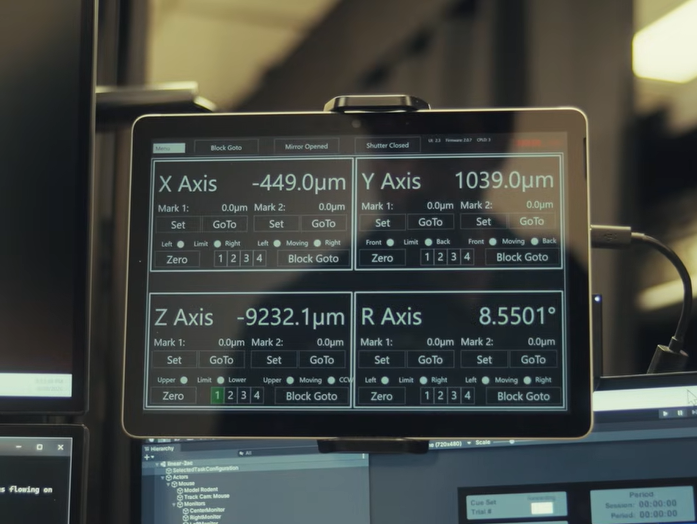
Anthropic previews MHS standard for AI agents that operate machines Anthropic PBC today previewed a standard that makes it easier for artificial intelligence agents to control machines such as microscopes. The Model Hardware Standard, or MHS, is the fruit of a collaboration between the Claude developer and medical research institute HHMI. Anthropic has so far only made the technology accessible to a limited number of partners. It will work with those early adopters to develop safety features before making MHS broadly available. The scientific instruments in a lab must precisely coordinate their work to avoid errors. For example, measuring the number of proteins in a biological sample requires multiple machines to process the object in a specific order. Implementing such automation workflows requires researchers to write custom code. Writing code for scientific instruments is difficult because each machine has a different application programming interface. Researchers must individually learn each API. Furthermore, they must account for the fact that those APIs often aren’t compatible. One machine may only support Python code while another might use Java. MHS aims to ease scientific instrument programming by replacing disparate device-specific APIs with a single, unified interface. That interface provides a standardized set of configuration commands. Coordinating machines that all take the same commands is simpler than navigating device-specific configuration rules. Notably, MHS eases scientific instrument programming to the point that AI agents can take over the task. HHMI, the research institute with which Anthropic developed the standard, built an AI agent that automatically manages microscopes. Startup QuEra Computing Inc. is using MHS and Claude to coordinate the lasers with which it programs its quantum computers. Anthropic says that the standard enables agents to automatically fix certain experiment errors. Furthermore, agents can write instrument control scripts. In one internal test, Anthropic had Claude generate a script that automatically adjusts the position of lasers. Such scripts cost less to run than an inference-based device configuration workflow. MHS also provides other automation features. According to Anthropic, it enables researchers to create a file that describes the key properties of each instrument. A scientist could specify the weight of a robotic arm or the wavelengths that a sensor can detect. Such data points help AI agents identify the best way of using each machine and avoid configuration mistakes. Researchers can further reduce the risk of errors by defining safety guardrails. For example, a lab could set a limit on the strength of laser beams used in microscopy projects. Excessive illumination can damage some samples and thereby compromise experiment results. Anthropic plans to make MHS available under an open-source license. The AI provider says that the standard will enable agents to control not only scientific instruments but also manufacturing equipment. Amazon Web Services Inc., Hugging Face Inc. and several industrial robot suppliers are currently working to integrate MHS with their products. Image: Anthropic A message from John Furrier, co-founder of SiliconANGLE: Support our mission to keep content open and free by engaging with theCUBE community. Join theCUBE’s Alumni Trust Network, where technology leaders connect, share intelligence and create opportunities. 15M+ viewers of theCUBE videos, powering conversations across AI, cloud, cybersecurity and more 11.4k+ theCUBE alumni — Connect with more than 11,400 tech and business leaders shaping the future through a unique trusted-based network SiliconANGLE Media is a recognized leader in digital media innovation, uniting breakthrough technology, strategic insights and real-time audience engagement. As the parent company of SiliconANGLE, theCUBE Network, theCUBE Research, CUBE365, theCUBE AI and theCUBE SuperStudios — with flagship locations in Silicon Valley and the New York Stock Exchange — SiliconANGLE Media operates at the intersection of media, technology and AI. Founded by tech visionaries John Furrier and Dave Vellante, SiliconANGLE Media has built a dynamic ecosystem of industry-leading digital media brands that reach 15+ million elite tech professionals. Our new proprietary theCUBE AI Video Cloud is breaking ground in audience interaction, leveraging theCUBEai.com neural network to help technology companies make data-driven decisions and stay at the forefront of industry conversations.
Anthropic previews MHS standard for AI agents that operate machines
Full Article
Original Source
Read the full article at Siliconangle →KhanList aggregates and links to publicly available news content. We do not host full articles from third-party sources. Always verify important information with original sources.