
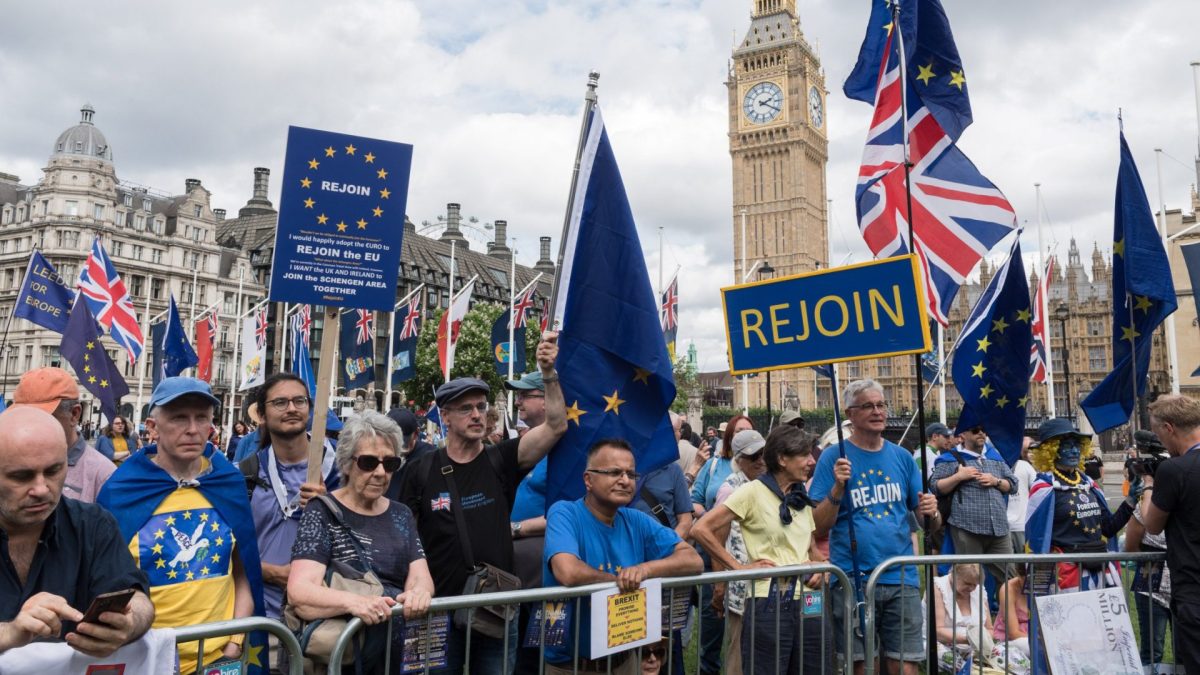
Writer and broadcaster, author of 'One Party After Another; the Disruptive Life of Nigel Farage' As Andy Burnham sets off to negotiate with leaders of the European Union, I wish him well and hope he makes good progress. The great European project that began in the 1950s with just six member states was always motivated by both economic and political considerations – a project to bring peace and prosperity to the continent, and to avoid a repeat of the two devastating European wars of the early 20th century. Seventy years later, Andy Burnham’s mission to Brussels carries a similar dual motivation – greater growth and security. The British economy has suffered significantly from Brexit. Most economists say our national output is about 6-8 per cent lower then it would be if we’d not voted 10 years ago to leave the EU. The second highly damaging development over that decade has been Donald Trump. The American President makes no secret of his disdain for the EU, he has little respect for Nato, and we can no longer rely on America to help us if Russia was to attack European Nato members. Indeed, this week’s trip to meet Vladimir Putin in China rather supports the idea that Trump admires Russia’s leader and would welcome a peace deal in Ukraine on Russian terms. The nations of Europe – in the EU or not – must work much more closely to protect the continent from Putin and any successors who could be just as aggressive. The EU deals that Burnham is pursuing on food products will help UK producers and rid them of bureaucratic obstacles that severely deter British exports to the EU. The proposed youth mobility scheme will boost exchanges between the UK and the rest of Europe, exposing British young people to new ideas, opportunities, science and culture, and to new long-term partners (both business and romantic).But dangling the prospect of rejoining the EU is a very different matter. Yes, polls regularly show most UK voters think Brexit was a mistake, and that partly reflects changingdemographics. The 2016 vote was close – 52 per cent to 48 per cent- and many of the predominantly older voters of 2016 have died, replaced by a decade’s worth of younger people who are much more positive about European integration. But would the EU allow us to return with the same opt-outs we enjoyed in the years before? Most notably there’s the budget rebate negotiated by Margaret Thatcher at Fontainebleau in 1984 – and the opt-out from Britain joining the Euro secured by John Major at Maastricht in 1991. On Newsnight on Tuesday, Poland’s deputy PM, Radek Sikorski – a friend of Britain – said it was unlikely that the UK could revert to its old terms: “The à la carte membership that you used to have is probably not do-able this time”. And don’t think this would be straightforward for voters either – a recent YouGov survey shows they would be much less keen on rejoining the EU without these previous privileges. The poll of 12,000 people suggested that 58 per cent would support rejoining if we obtained those old terms – with just 25 per cent still pro-Brexit. But if our special membership terms had to be forfeited, there’s an eight per cent majority against rejoining. EU leaders will also have spotted that the Conservatives and Reform UK are still steadfastly committed to Brexit. This week they’ve both threaten to tear up Burnham’s very limited proposed deals. How could the EU be sure that if Burnham took Britain back into Europe, a Badenoch or Farage government would not pull us straight out again? It would be farcical. And the Europe of 2026 is a very different place to that of 2016, with the far right on the rise in all the major states. Nationalist and populist Eurosceptic parties with sympathies towards Putin all want, like Trump, to make their countries “great again”, and would have little sympathy for socialist Burnham. Spain could see the populist Vox party in government after elections later this month; France looks set to elect Marine Le Pen as president next May; Chancellor Friedrich Merz’s centre-right coalition in Germany is very unstable, with the nationalist AfD now Germany’s most popular party and likely to perform strongly at the 2029 federal elections. Andy Burnham has already overloaded his plate – with revolutionary plans for social care and Neets; the dilemmas of rising defence spending; illegal immigration; climate change; and AI. Trying to rejoin the EU could be a back-breaking distraction. Theresa May’s government showed how turgid and endless debates about Europe can suck the oxygen out of Westminster and Whitehall – at the expense of urgent other issues. And the Burnham administration is not overstaffed with brilliant ministers to whom his other big conundrums can be delegated. As often before, Europe would split Labour – largely on class lines. Many MPs in the party’s s old working-class heartlands – the “Red Wall” which backed Brexit in 2016 – would fear for their seats. Don’t do it Andy! Europe destroyed the premierships and reputations of at least four of your predecessors – Ted Heath, John Major, David Cameron and Theresa May. It could easily wreck yours too.
Another Brexit farce would destroy Burnham’s career
Full Article
Original Source
Read the full article at Inews →KhanList aggregates and links to publicly available news content. We do not host full articles from third-party sources. Always verify important information with original sources.