
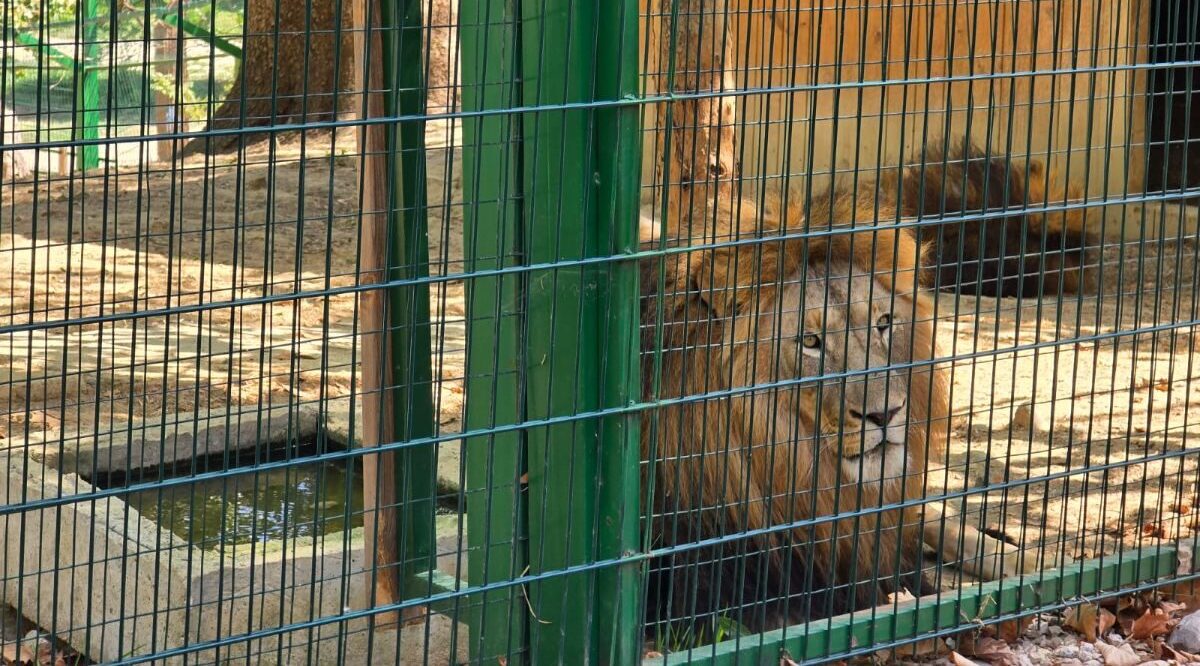
In Britain, the BBC reported that some zoos were using paddling pools, iced water and iced fruits to keep animals cool. Iced fruits have also been deployed at Tirana Zoo, said zoo director Evis Rrahmani. Rrahmani said the zoo has plans to enhance its enclosures, “to make them more diverse to provide mental stimulation for the animals”. “We intend to improve it, but it takes time,” she acknowledged. Research-based news website The Conversation recently raised the issue with an article under the headline ‘Are Zoos Ready for the Changing Climate’. It argued that extreme heat should be treated as a “foreseeable animal welfare risk”. “This might involve expanding shaded areas, creating climate-controlled refuges, improving ventilation, installing misting systems and water features, and monitoring temperature and humidity in real time,” it suggested. “But infrastructure alone will not be enough. Zoos may also need to adapt their daily management practices, adjusting feeding and enrichment schedules and modifying routines to minimise heat exposure during the hottest parts of the day,” it cautioned. “To be honest, we don’t have [enough] water in Tirana; everyone struggles to get it, not just us. But since our water consumption is higher, it stands out more in our case,” wildlife veterinarian Vasili said. Indrit Osmani from Animal Rescue Albania, ARSA, said securing enough water and shade was only the bare minimum. “If an animal is kept in captivity, the responsibility extends far beyond merely providing the minimum conditions for survival,” said Osmani, who stressed that ARSA opposes keeping animals in captivity. “A modern zoo should not be judged solely by the quality of its infrastructure or the fact that the animals have access to water, food, and shade,” he said. “It must be evaluated based on whether the entire living environment is adapted to the biological, social, and behavioral needs of each species and the individual animals housed there.” “Extreme temperatures can cause heat stress, dehydration, fatigue, and behavioural changes. Naturally, the impact varies depending on the species, age, and condition of each individual.” “Modern animal welfare standards require that animals have the ability to make choices and exercise some control over their environment, including access to varied microclimates, shaded areas, and indoor spaces, as well as the opportunity to escape continuous exposure to heat.” Zoo offers haven for rescued big cats According to a recent report in New Lines magazine, tigers and lions are being sold in Albania for as much as 25,000 euros and kept mostly by criminals as status symbols, although trading them is prohibited by law in Albania. Vasili said that a tiger and two lions were brought to Tirana Zoo by the State Police. “Over the past four years, we have received three big cats, as well as a small bear,” he said. “If this trend continues, the Zoo won’t be able to help anymore; there is simply no space.” Police spokesperson Gentian Mullai told BIRN: “Upon receiving reports that various individuals were keeping wild animals, the State Police intervened immediately to transfer them to the zoo. “There are indications that some people are keeping animals such as bears and lions, as well as birds like eagles, though operations to address these cases have not yet been concluded.”
Animals in Tirana Zoo Struggle in Sweltering Summer Heat
Full Article
Original Source
Read the full article at Balkaninsight →KhanList aggregates and links to publicly available news content. We do not host full articles from third-party sources. Always verify important information with original sources.