
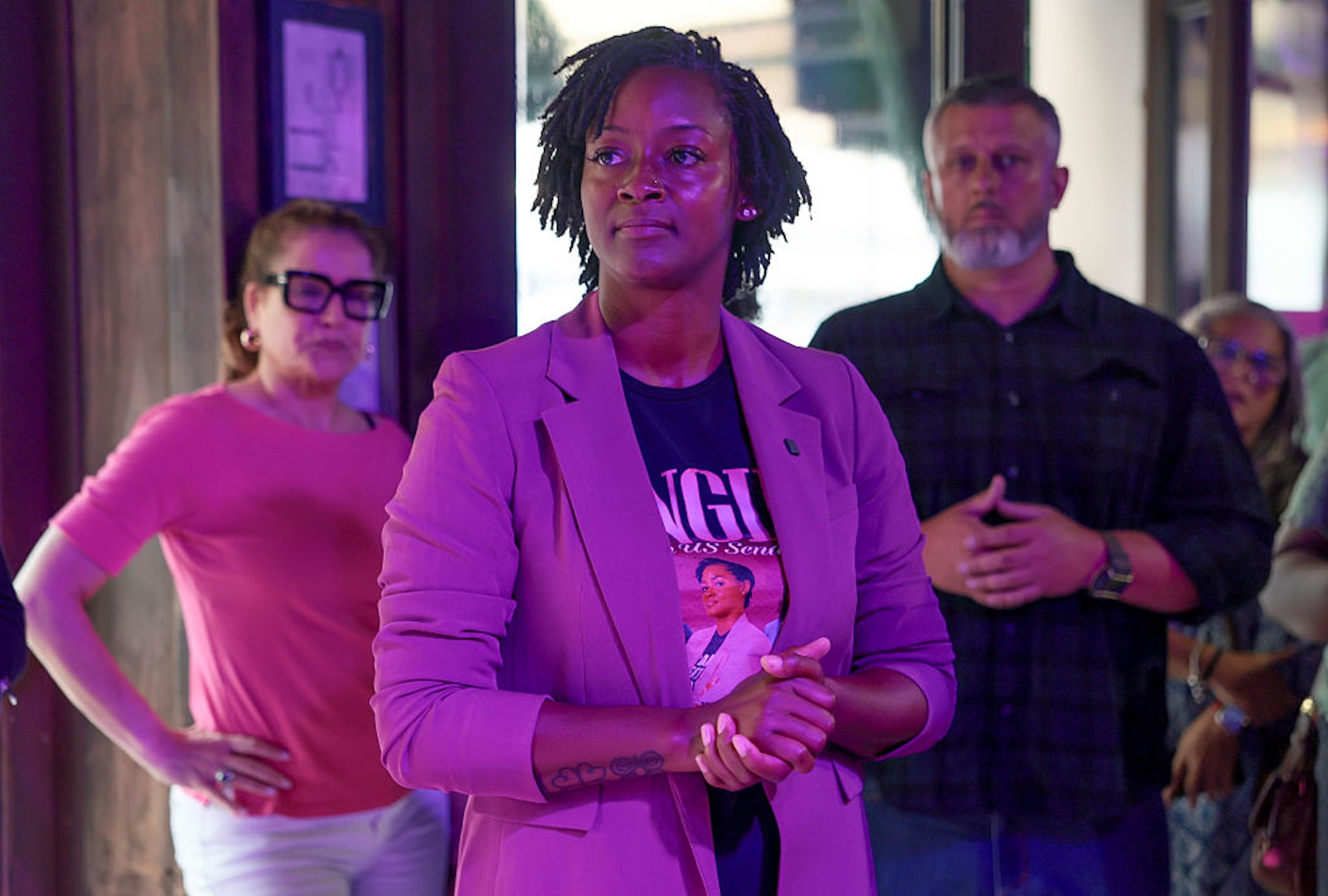
commentary The Florida Senate election was one of several Southern races the DSCC essentially conceded in advance Published November 5, 2026 6:30AM (EST) Democratic Senate candidate and Florida state Rep. Angie Nixon waits to be introduced during a visit to the Ball and Chain Cuban restaurant and nightclub as she campaigns in Miami's Little Havana neighborhood on Aug. 29, 2026. (Joe Raedle/Getty Images) Election Day brought a big blue earthquake of anti-Trump sentiment that rumbled as far inland as Kansas and shook GOP ground in the Carolinas and Texas. By the time late victories rolled in on Tuesday night, there had been so many wins that subsequent Democratic pickups had begun to feel more like aftershocks, even in states that haven’t voted blue since Bill Clinton was in the White House. Florida narrowly missed the quake, with Republicans winning all the major statewide races by the thinnest of margins. The one-time quintessential purple state, a so-goes-the-nation bellwether with a relatively even amount of registered Republicans and Democrats, turned remarkably red in the Trump era following Barack Obama’s back-to-back wins in 2008 and 2012. The state legislature redrew its maps to enshrine a supermajority, and a post-Covid influx of GOP transplants seeking lower taxes and lax regulations shifted the balance significantly. A Democrat hasn’t made a fight of the governor’s race this decade, and no Democratic Senate candidate has come close to winning since Bill Nelson lost his reelection bid in 2018. Angie Nixon felt different. The Jacksonville organizer and bookstore owner ran a proudly democratic socialist campaign, advocating for universal healthcare in a state beset by multiple insurance crises and affordability issues. Her polls looked good up to Election Day, and on Tuesday night, victories across the country made her race in the Sunshine State look winnable. Ultimately though, Nixon could not replicate the victories of other rabble-rousers like Dr. Abdul El-Sayed in Michigan and James Talarico in Texas. She lost to incumbent Ashley Moody, who was appointed by Gov. Ron DeSantis to fill the seat left vacant by Marco Rubio’s confirmation as secretary of state, by less than two percentage points. Moody outspent Nixon by more than double to barely eke out a majority. The Florida Democratic Party deserves some blame for being woefully behind the times. After a 2019 squeaker between DeSantis and the progressive Andrew Gillum, the party moved as fast as it could from any candidate that might excite its base. They ran a former Republican for governor in each of the last two gubernatorial races, no doubt depressing turnout and enthusiasm among the Democratic base with their moderate picks. But a close look at the rest of the Florida races reveals the culprit in Nixon’s narrow loss. Despite a gerrymander meant to calcify Republican supermajorities in the state and a political stiff in the form of David Jolly at the top of the ballot for governor, the GOP lost seats in the state legislature. The energy in Florida and, remarkably, throughout the South, was with anyone running against Republicans. The blame for Nixon’s defeat lies almost solely with national Democrats and their stubborn refusal to back Nixon with either messaging or money. Since her shock primary win in August, Nixon has complained about Democratic Senatorial Campaign Committee recalcitrance to anyone who will listen. In September, she told MS NOW hosts Symone Sanders Townsend and Eugene Daniels that Senate Minority Leader Chuck Schumer was less than thrilled about her race. Want more sharp takes on politics? Sign up for our free newsletter, Standing Room Only, written by Amanda Marcotte, now also a weekly show on YouTube or wherever you get your podcasts. “When I did speak with Sen. Schumer on the phone, it was basically a ‘we will see,’” she said. “He’s going to look into it. That’s what was said, that he’s going to look into it.” Nixon went on to say that Democrats were wary of throwing in behind a Black woman in the South following Kamala Harris’ 2024 loss: “Folks are a little gun-shy because, unfortunately, Vice President Harris lost as a Black woman, and so people are being very hesitant in terms of funding Black women, especially in the South.” In later interviews, she claimed that national Democrats wrote off Florida in advance, declining to put money behind her candidacy because they believe the state is “racist.” The pale blue dots on Florida’s election map tell the story. The democratic socialist was able to win in Miami-Dade County, despite a Cuban-American population that shudders at anything that sounds like revolution. On the other end of the state, typically Republican Jacksonville swung to the left. An enthusiastic push in the state’s timidly liberal cities could have narrowed the gap in favor of Nixon and added tens of thousands of votes to her final total. According to analysis by Wesleyan Media Project, the national party and affiliated PACs spent 10 advertising dollars in Iowa for every one they spent in Florida in the race’s final weeks, and it showed. The Hawkeye State now has a new Democratic governor-elect and senator-elect. It was the same story throughout the South. Democrats overperformed in states where the national party bothered to fight. It was the same story throughout the South. Democrats overperformed in states where the national party bothered to fight. Blue Texas became a reality because of seemingly unlimited spending — it was the most expensive Senate race in history — and national messaging hits on behalf of Talarico. Louisiana and Mississippi offered two incredibly close Senate races in states long assumed to be GOP strongholds. In Louisiana, Democrat Jamie Davis lost to Republican Julia Letlow by only two points. As New York Times contributing opinion writer Steven Rattner pointed out, Davis kept the race close despite receiving zero advertising dollars from the national party in October, per the WMP’s analysis. Mississippi, though, could turn out to be a miracle — in spite of the DSCC. With 96% of precincts reporting, Democrat Scott Colom, a district attorney, leads the incumbent Sen. Cindy Hyde-Smith by only 138 votes, with around 15,000 provisional ballots outstanding. Speaking to Anderson Cooper on Wednesday, Mississippi state Rep. Cheikh Taylor, a Democrat, blamed the nail-biter on a lack of investment from the national party. “Early money always helps. Monies have come to the state of Mississippi, just not through the traditional means, though the DNC. We all know that the Colom campaign was locked out of that $30 million contribution to U.S. Senate races,” he said. “Even though the money didn’t come, in Mississippi, we figure it out.” Don’t get me wrong. Colom, Davis and Nixon all deserve praise for their stunning performances, even if at least two of them came up short. Tuesday night’s news offered a rare glimmer of hope in a bleak few years, but Democrats had a chance to permanently rebuke MAGA — and instead they squandered it based on their own misconceptions about the South. If the Senate races in Mississippi and Alaska both go to the Democratic candidates, the party will be only four votes shy of the supermajority they need to overcome Donald Trump’s veto power. No amount of spending would have pushed Democrats over that 60 vote threshold. But grabbing two more close races via some well-placed funding for the party’s nominees would have left them in a much better position to harry and harass the president and block his MAGA agenda over the next two years. All it would have taken was not capitulating in advance. Related Topics ------------------------------------------ Related Articles
Angie Nixon could have won Florida. National Democrats failed her
Full Article
Original Source
Read the full article at Salon →KhanList aggregates and links to publicly available news content. We do not host full articles from third-party sources. Always verify important information with original sources.