
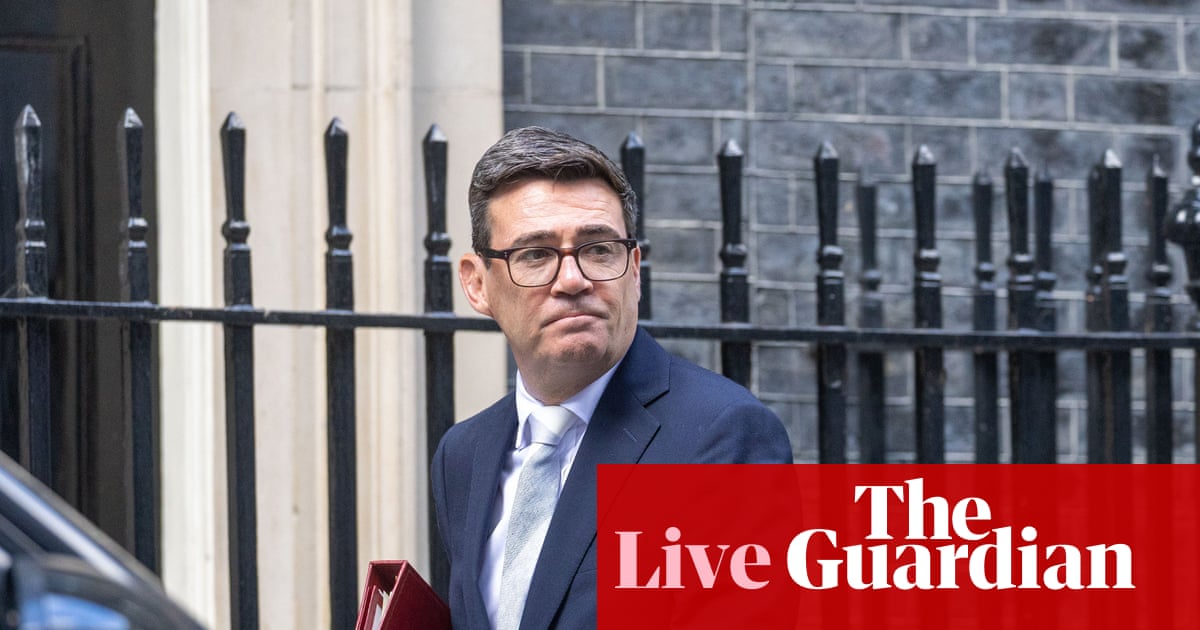
Good morning. Andy Burnham will face PMQs for the first time as PM today but he already has a fairly good idea of the questions he might get from Kemi Badenoch because she rehearsed them all yesterday. Here is an excerpt from the press release the Conservatives put out yesterday summarising those questions – and their take on how Burnham responded. double quotation markKemi Badenoch asked if Burnham would: -Set out a plan to get defence spending to 3% of GDP; -Confirm whether Labour will use a Rwanda-style deal to secure our borders; -Set out a timeline to get foreign-born prisoners out of British prisons; -Pledge no new taxes at the forthcoming budget; and -Stand up to his own backbenchers and cut benefits. In response, Burnham floundered and couldn’t give straight answers to clear, straight questions. Today Badenoch may well ask again about tax, benefit cuts and the economy.And that is because, while Westminster was focused on Burnham’s impressive debut in the Commons yesterday afternoon, the more significant story may have been happening elsewhere, on the financial markets. The Telegraph sums it up like this.Telegraph splash Photograph: TelegraphNot for the first time, the Telegraph’s headline was not entirely fair to a Labour prime minister. As Heather Stewart explains in her Guardian story, the government’s long-term borrowing costs did jump “to their highest level since early 1998 on Tuesday as investors dumped government bonds” – but this was mainly the result of international factors.As Graeme Wearden reports in his business live blog today, the UK is not the only country where government borrowing costs are soaring; Graeme says Australia, India and Germany are among other states facing similar problems.But, just because the UK is not alone, that does not mean the problem is not real; as Heather reports in her story, the rise in borrowing costs means the Treasury has lost £12bn from its fiscal safety net. She quotes an economist saying “based on Tuesday’s yields, [the Treasury’s] headroom against the current budget rule would fall from £26bn at Rachel Reeves’s spring forecast to £13.8bn before covering any additional spending plans.”When Badenoch challenged Burnham over tax yesterday, he pointed out that in his first week in office he made two tax-cutting announcements. But he refused to oblige her by ruling out tax rises in the budget.Today the Resolution Foundation thinktank (whose former chief executive, Torsten Bell, is now a Treasury minister) has published a report saying that, if Burnham wants to raise defence spending, as he proposes, taxes will probably have to rise for ordinary workers. It says: double quotation markInternational data shows that the rise in employer national insurance contributions (NICs) last year and frozen tax thresholds in the UK have led to the largest annual rise in taxes on average workers across 33 comparable OECD rich countries. Strikingly, however, this was from a very low base – lower than the US, for example. The UK remains in the bottom third of such countries for the level of tax on an average worker, and the effective tax rate on a typical earner is still lower than it was before the financial crisis. Indeed, no country raises more in total tax as a proportion of GDP without also asking more of single average earners. This analysis strongly suggests that any politician promising a bigger state and lower taxes on middle earners is not being realistic. So if we want to increase defence spending, then there is a clear case for paying for this through broad-based tax rises that include typical earners paying more. With all this on the table, PMQs is likely to be dominated by questions about tax and borrowing.Here is the agenda for the day.9.15am: Michael Shanks, the energy minister, Ofgem officials and other energy experts give evidence to the Commons energy committee about the electricity market.9.30am: Stephen Timms, the social security and disability minister, gives evidence to the Commons work and pensions committee.Morning: Rhun ap Iorwerth, the Welsh first minister, holds a press conference in Cardiff ahead of the start of the Senedd year.Noon: Andy Burnham faces Kemi Badenoch at PMQs.After 12.30pm: MPs debate the remaining stages of the representation of the people bill.Afternoon: Nigel Farage, the Reform UK leader, is doing an interview with Chris Mason, the BBC’s political editor, ahead of the party’s conference that starts on Friday.I’m afraid we are no longer able to have comments open below the line every day on this blog. If you want to contact me, please email politics.live@theguardian.com. You can use this email to flag up corrections, comments for publication, questions or complaints.
Andy Burnham to face first PMQs as borrowing costs rise – UK politics live
Full Article
Original Source
Read the full article at Theguardian →KhanList aggregates and links to publicly available news content. We do not host full articles from third-party sources. Always verify important information with original sources.