
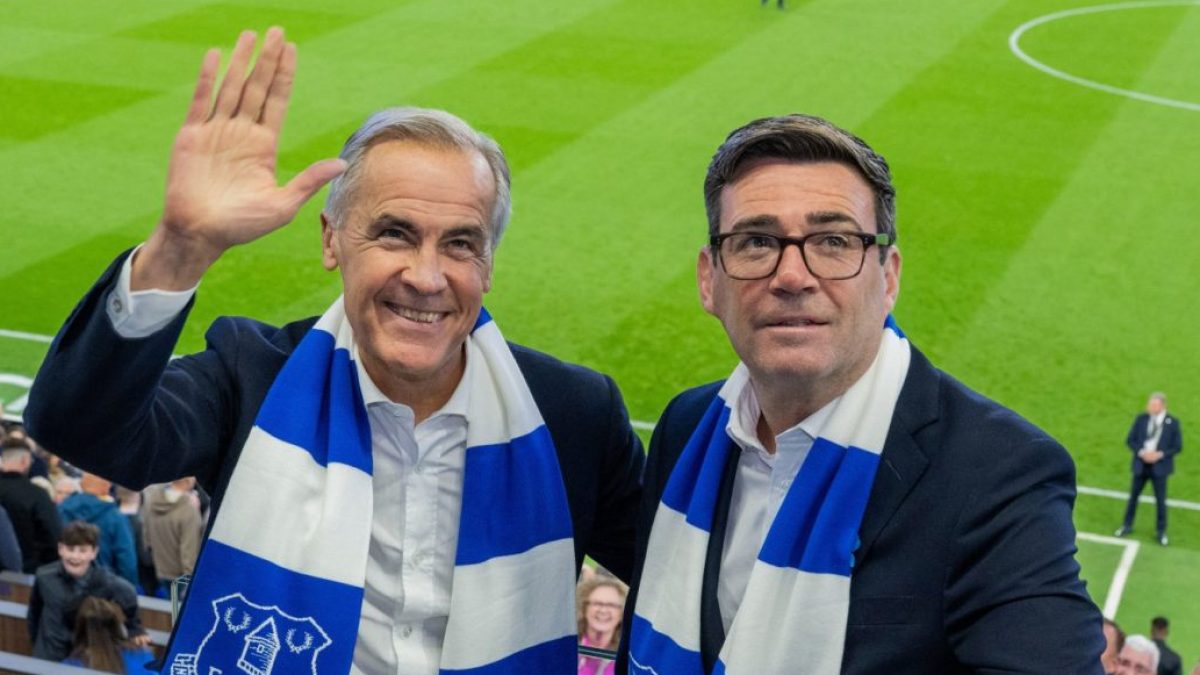
This week, Prime Minister Andy Burnham expressed caution when asked about the chances of Saturday 3pm television blackout being removed. It is a thorny issue: people understandably want to watch every match their Premier League club plays. I have a different view – I’m with Burnham. I don’t think that the blackout is out of date, I don’t agree that having every game on television is a good thing, and I have eight reasons why… 1) Non-league attendances would be impacted The critics of the blackout dismiss this strongly. Their argument is twofold: supporters of Premier League clubs don’t go to non-league matches and supporters of lower-league teams aren’t suddenly going to give up their season tickets because the Premier League is on TV. The first is a lie. A significant number of crowds at non-league matches on a Saturday afternoon are people for whom the local club is a second team; they also support a bigger club. Having those games (be it Premier League or Championship) on television will impact that support. Non-league clubs say this. They know what their audience is and they know how the numbers fluctuate. Trust them on this. On the second point, agreed. But we’re talking about the casual audience here and how that might shift over time. Nobody is saying that a season ticket holder is going to give up their team to watch televised football. But those who are on the fence may well be persuaded by the TV. That’s a bigger cohort than you probably think and the finances are so fragile that a small difference in footfall causes a large impact.Non-league clubs would be impacted if the blackout is lifted, says Daniel Storey (Photo: Getty) 2) …and therefore so too would their finances Obvious point, but what we’re really talking about here is revenue. Because while in the Premier League matchday revenue is already dwarfed by broadcasting income, in non-league the matchday revenue is everything. The usual answer from blackout sceptics here is, “Well then we just give them more money to make up the shortfall”. But that’s not a solution at all. It simply reinforces dependency on the Premier League (which is already so dominant as to be desperately unhealthy). And we know from experience that, further down the line, that money would simply be squeezed back. If you don’t believe that I have some magic beans to sell to you. The point is not just that the non-league clubs miss out on money. It’s that they miss out on the opportunity to generate their own money and establish a more sustainable revenue stream. 3) Standing on the shoulder of a giant I think the English football pyramid is England’s greatest cultural asset bar none. As such, protecting it should be a matter of priority, certainly over broadcasting every game from the top tier of that pyramid. The Premier League is a fantastic product, probably the country’s most successful cultural export. But it was also born out of the pyramid and is still reliant upon it for player development (loans and academies), managers, coaches and competition (domestic cups and promoted clubs capable of competing). If the Premier League wants to go its own way, fine. But it can’t have its cake and eat it. It is only in existence because of the tradition and heritage of the pyramid. Three of the teams in its current top eight have recently been in the fourth tier. Think of the blackout less as the Premier League subsidising lower and non-league football and more as an investment. Brighton were in the fourth tier this century (Photo: Getty) 4) Encourage football as a live experience Even if you discard the danger of non-league clubs suddenly losing some of those Premier League-supporting casuals, this is a long-term issue more than it is an immediate one. Let’s say you have two children who are both into football. They reach an age where their parents consider that they might go to watch football as a live experience. But then the Premier League becomes televised as a Saturday afternoon spectacle: five games at the same time with a goals show and the chance to split screen. Lots of children in that scenario would choose the screen. You may conclude “Well that’s the customer’s prerogative of choice”, but the point is that the only way football clubs survive and thrive is through the live experience. And if the next generation of football supporters sees Saturday afternoon as peak football TV-watching time, you erode that pillar of the sport. 5) The last bastion of non-subservience English football is an ecosystem in which entities are interdependent and that means compromise. The Premier League is at the top of the food chain, but it still needs the rest to operate as healthily as possible. The Premier League has had to do very little compromising because of its financial might – B teams in the EFL Trophy, scrapping cup replays, parachute payments, arguments over solidarity payments. This is an important point to make here: we are not discussing a huge limitation. Currently, 270 of the 380 Premier League matches (71 per cent) are shown live, in full, on television. You can televise a match during 166 of the 168 hours during a week and we currently have slots at 8pm Friday, 1.30pm Saturday, 5.30pm Saturday, 8pm Saturday, 12pm Sunday, 2pm Sunday, 4.30pm Sunday, 7pm Sunday and 8pm Monday, plus Tuesday, Wednesday and Thursday evenings during midweek rounds. Those who enjoy watching the Premier League on TV are well-served! There is plenty of football on TV already (Photo: Getty) With all of those slots, fill your boots. All we are asking for is that two of the 168 hours, between 3pm and 5pm on a Saturday, are left free. If that is too much subservience for the Premier League clubs, then sorry but the whole culture is broken. To allow this culture to be trampled upon by the few again, for their gain, is too much. Nine Premier League clubs had 31 or more league games televised last season. I understand that you want to watch the rest, but honestly it isn’t worth giving more real estate to the most rich and powerful for. It’s like you haven’t been watching the entire history of this league since 1992. 6) “We’re watching it anyway” Fine, yes, dodgy boxes do exist and people find streaming sites online to watch 3pm football. But I see that fact as a complete non-sequitur as to why we should get rid of the blackout. That’s not me being obtuse – I literally don’t see the argument at all. This thing that isn’t legal that people do should make us make the thing legal – is that how society works? 7) “They can watch every game abroad” Yeah, they can. It’s a result of the overseas deals negotiated by the Premier League that have given such incredible broadcasting revenues to its clubs, thus allowing it to establish competitive and financial dominance over every other league in the world. It’s similar the other way around, too. MLB.tv offers UK viewers every live game of Major League Baseball, whereas the US markets are subject to geographical blackouts restricting coverage to local broadcast stations. But this is all another non-sequitur, really. All of the arguments above apply to domestic populations more than they apply to foreign markets. If your argument is about it being unfair that those abroad get to watch every game, why don’t we restrict that and have it on the same terms? Unfortunately that will mean your club’s broadcasting revenues decrease. Read more Fifa: The desperate plot to topple Gianni Infantino – and the men who could replace him Opinion: English football’s biggest lie has finally been laid to rest 8) Another Pandora’s Box Sing this from the bloody rooftops: maybe all of the above is wrong (I’m sure it’s not, but go with it), but unless you are 100 per cent sure then you cannot make any change because it will never be rowed back. We know this. You don’t get to do a trial period. The genie will be out of the bottle. Think VAR but on a scale that could undermine the entire pyramid. If non-league clubs find an already tough existence harder, it can’t be undone. If attendances suffer, it can’t be undone. If the next generation increasingly sees football as a purely televisual experience, it can’t be undone. The onus is not on us to prove why the blackout should exist. It’s on its critics to prove with certainty that there would be no negative impact. You don’t just get to shout “This is what I want” and ignore the consequences. This is too important. The state of the English game itself is at stake because only 58 of Arsenal’s 63 matches last season were available to watch live on TV.
Andy Burnham is right – football isn’t a TV show
Full Article
Original Source
Read the full article at Inews →KhanList aggregates and links to publicly available news content. We do not host full articles from third-party sources. Always verify important information with original sources.