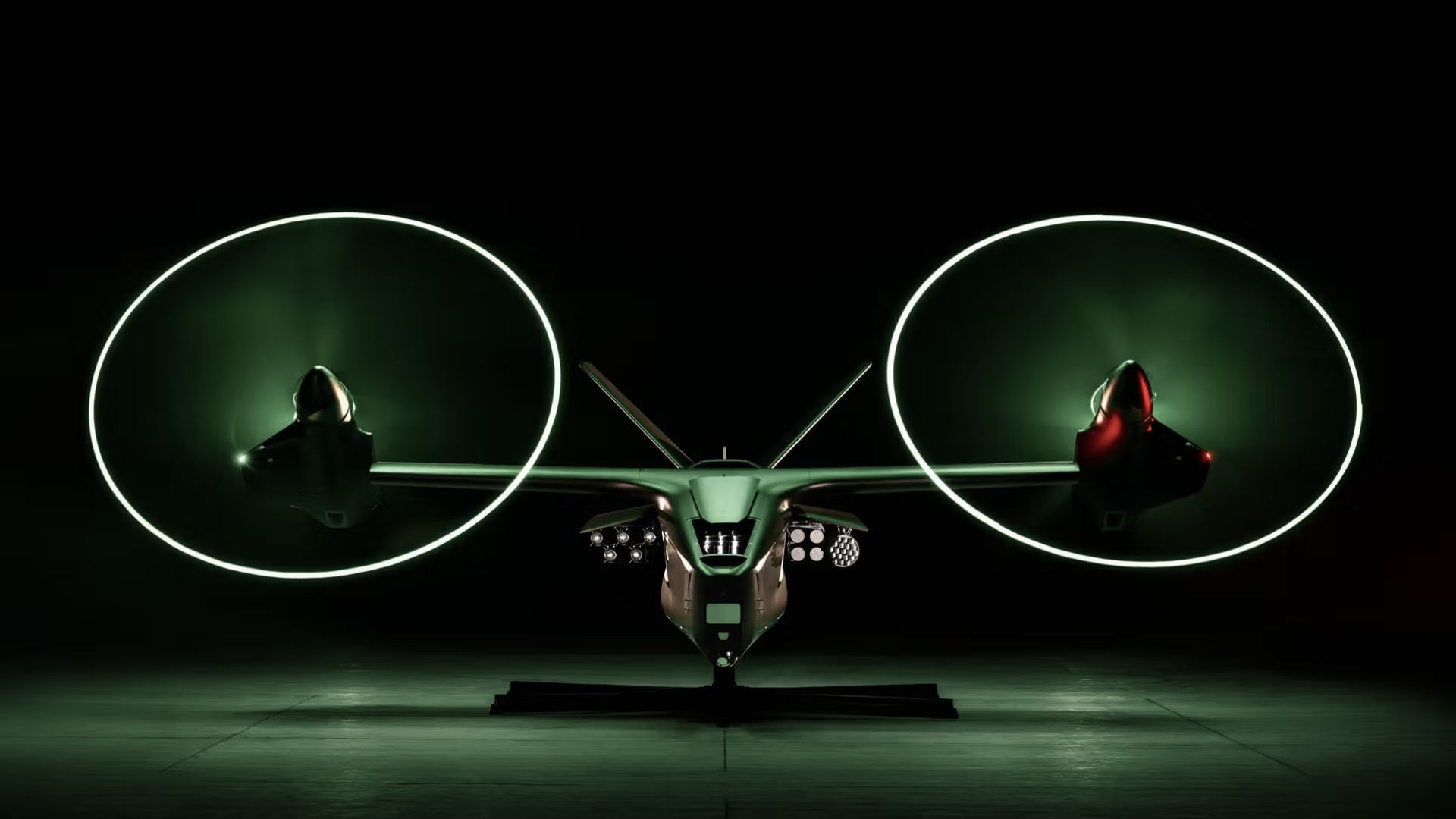
Anduril Industries has introduced Thunder, an autonomous military aircraft designed to fly alongside crewed helicopters and extend their reach on increasingly dangerous battlefields. The new Group 5 tiltrotor aircraft focuses on one growing challenge. Cheap drones, loitering munitions and widespread battlefield surveillance have made low-altitude operations far riskier for attack helicopters than in previous conflicts. Thunder is intended to shoulder part of that burden by carrying weapons, sensors or supplies while operating as an autonomous teammate instead of another crewed aircraft. Designed around range Thunder differs from conventional helicopters through its tiltrotor layout. It takes off and lands vertically but transitions into wingborne flight for longer missions. That allows the aircraft to launch from rough locations without sacrificing speed or endurance. Anduril developed the platform with Archer Aviation, drawing on commercial electric VTOL technology. Engineers paired that airframe with a hybrid-electric propulsion system that improves efficiency across different phases of flight. The aircraft also adjusts rotor speeds during cruise, cutting fuel use and reducing its acoustic signature during low-level missions. Transportability also shaped the design. Thunder can deploy under its own power over long distances, but crews can also pack it inside a standard shipping container for transport by truck, rail, ship, or cargo aircraft. Flexible payload options Instead of dedicating Thunder to a single role, Anduril built the aircraft around interchangeable payload bays. Mission planners can configure it to carry precision-guided missiles, electronic warfare equipment, or launched drones depending on operational requirements. Other loadouts support cargo delivery or counter-drone missions, allowing commanders to tailor the aircraft before deployment instead of relying on separate platforms. One configuration accommodates ten Hellfire, JAGM, or Barracuda-100M missiles. Another replaces those weapons with sixteen Altius-600 launched effects. Operators can also equip Thunder with seventy-six 70 mm rockets and additional counter-UAS effectors in the forward payload bay. Anduril believes autonomous teaming could significantly increase available firepower. The company estimates that pairing three Thunder aircraft with each AH-64 Apache would triple the brigade’s available munitions without adding more pilots to contested airspace. Software flies the mission Autonomy sits at the center of the program. Thunder operates using Anduril’s Lattice mission autonomy software, which lets pilots assign objectives instead of remotely flying each aircraft. The system manages formation spacing, navigation, and task allocation automatically, allowing crews to focus on tactical decisions. Navigation does not depend entirely on GPS. Thunder combines onboard sensors with computer vision and edge computing to recognize terrain, avoid obstacles, and continue flying if communications or satellite navigation become unavailable. Information collected during flight is shared across the formation, giving nearby aircraft a broader picture of threats and changing battlefield conditions. Anduril has already completed flight testing with full-scale surrogate aircraft. Anduril has already completed flight testing with full-scale surrogate aircraft as development moves forward. The company expects Thunder to make its first flight in 2027, with the program focused on proving autonomous teaming and expanding the role of attack aviation in contested environments.
Anduril’s new autonomous tiltrotor takes off vertically, carries 10-missile payload
Full Article
Original Source
Read the full article at Interestingengineering →KhanList aggregates and links to publicly available news content. We do not host full articles from third-party sources. Always verify important information with original sources.