
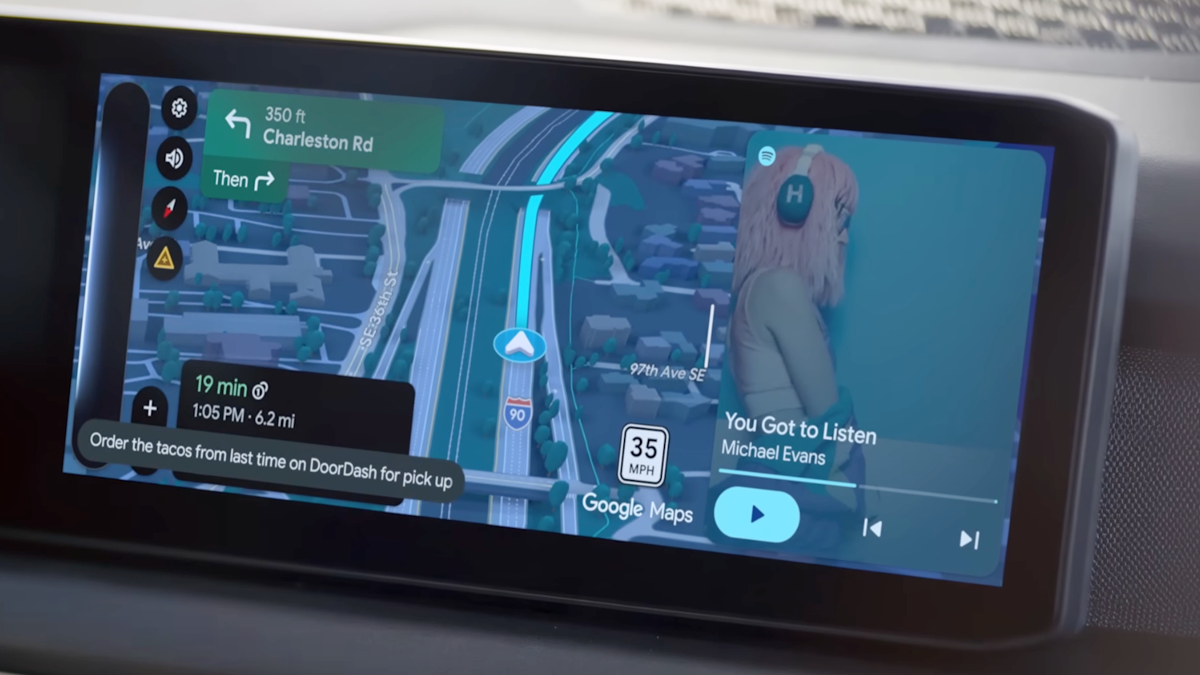
Published Oct 12, 2026, 8:30 AM EDT Dhruv Bhutani has been writing about consumer technology since 2008, offering deep insights into the personal technology landscape through features and opinion pieces. He writes for XDA-Developers, where he focuses on topics like productivity, networking, self-hosting, and more. Over the years, his work has also appeared in leading publications such as Android Police, Android Authority, CNET, PCMag, and more. Outside of his professional work, Dhruv is an avid fan of horror media spanning films and literature, enjoys fitness activities, collects vinyl records, and plays the guitar. I swap between Android Auto and CarPlay the same way I alternate between an Android phone and my iPhone. Both have strengths and weaknesses, but neither is quite there yet for me to commit. More often than not, I lean toward Android Auto simply because it lets me customize the experience a bit more and add the things I wish it shipped out of the box. However, Google's upcoming Android Auto redesign is shaping up to be a massive update. It's massive enough that it could tilt the scales entirely in Android Auto's favor. From customizable widgets to more detailed Google Maps, expanded Gemini integration and, yes, video playback when the car is parked, there's a lot to look forward to. And while the proof is in the pudding, so far based on what's coming, I have a strong feeling it could convince me to finally ditch CarPlay for good. Widgets bring weather, calendar and smart home controls to your car's display Credit: Google My biggest problem with both Android Auto and CarPlay has always been how little control they give users over what appears on the car's screen and how it is presented. You get a couple of grids and a nearly permanent map, like it or not. It'll let you access Google Maps, control your music, even check incoming messages, but on its terms. CarPlay is no different when it comes to limitations and customization. Google's redesign is taking a step in the right direction, and it all starts with widgets. I love them on my phone, and the idea of having widgets on my car display sounds great. In fact, it could make a meaningful difference to my daily driving experience. Instead of switching between apps to check the weather, see what's up in my calendar, or access smart home controls (yes, you can do that from your car), widgets give you a single place to see it all. So far, we've seen widgets for weather, contacts, photos, and home, but the sky is the limit. Beyond the obvious ones, I want a Home Assistant widget. I rely on connected devices around my home, and being able to open the gate to my driveway or switch on the porch lights right before I reach home would be amazing. Sure, I can use automations to achieve that. But automations aren't always reliable; a button press is. Similarly, a weather widget could help me plan my trip, while a calendar widget would give me one-tap access to drive to my meeting location. There's a lot of obvious flexibility here. Alongside widgets, the redesigned interface is also expected to adopt a refreshed design language based on Material 3 Expressive, bringing it more in line with Pixel phones. The idea is to get more modern-looking visual elements, prominent typography, and animation, all of which are fairly critical in an automobile. A lot of these changes might sound cosmetic, but they serve a serious purpose. For one, I want a cohesive experience between my phone and my car. But beyond that, they make better use of screen real estate, give me practical touchpoints for quick access, and offer more personalization. I can't complain about that. Google Maps and Gemini could make Android Auto much more powerful Immersive Navigation could be the biggest upgrade to in-car navigation Google Maps is also expected to get a serious overhaul with a so-called Immersive Navigation experience. This introduces a more detailed three-dimensional representation of the road ahead as well as the buildings and terrain around you. Where I live, navigating busy roads can be daunting, to say the least. Having a three-dimensional layout should help me get a better sense of my bearings. Another big reason I'm interested in Google's Android Auto redesign is Gemini. Android Auto already has a voice assistant, but the implementation is limited and often feels like a hack job. If I have to trigger it again and again for basic responses, it's not very helpful and certainly isn't making my job easier by reducing how often I have to tap the screen. Gemini, by default, is designed to hold more natural conversations, and natural language-based interactions could mean the difference between getting the task done in one go and getting annoyed mid-commute. Realistically, I can expect Gemini to help me refine Google Maps results in a natural, conversational flow or respond to additional input, like my current location. Finally, I've been using Fermata Auto to play back YouTube content anytime I'm waiting for someone in the parking lot. With the updated Android Auto, this functionality will be baked in, and you'll be able to use the car's infotainment system to watch a video while you wait. Android Auto might finally make me ditch CarPlay We'll have to see how many of these updates pan out when they actually roll out, but on paper, Google's approach addresses several of my longstanding frustrations with Android Auto. Between the refreshed dashboard with quick-access widgets, updated Google Maps, and YouTube playback while sitting around, there's a lot to like here. The redesign, set to roll out later in the year, is exciting, to say the least. As an iPhone user, CarPlay still has a place in my car, but for the first time in a while, I'm genuinely interested in seeing whether Android Auto can convince me to leave it behind.
Android Auto's big redesign could convince me to finally ditch CarPlay for good
Full Article
Original Source
Read the full article at Xda-developers →KhanList aggregates and links to publicly available news content. We do not host full articles from third-party sources. Always verify important information with original sources.