
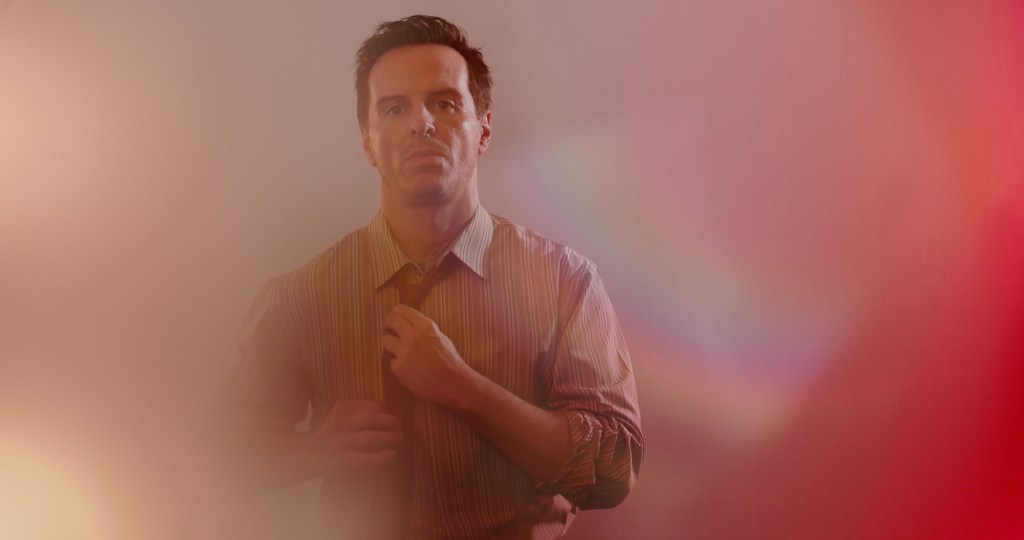
I’m waiting for Andrew Scott in an LA restaurant on an unusually rainy afternoon, thinking about the last time we met, in 2024. Back then, as we’d chatted in the Deadline podcast studio, I’d asked him, “When was the last time you cried?” And he’d answered, simply, “Today.” It turned out his mother had died only a few days before. Terrified I’d made an awful time worse for him and wanting to offer support, I’d explained that my dad had passed a few months ago. Another actor might have quickly moved back to the safer topic of work — in this case, his role in the series Ripley — but instead, he’d asked, “How is it, further along?” “You get more used to it,” I’d offered, lamely. Watch on Deadline There’s a quality to Scott that isn’t reserved for meeting him in person, he brings it to his work. And that is the sense that his feelings, the bald truth of his experiences, are right there on the surface, as though they involve us. So, when his latest film, Elsinore, premiered at Toronto, and Scott went deep into a story that skewers the preciousness of life, the inevitability of death and all of our collective losses, I, along with what seemed like the entire theater, simply dissolved. In the film, Scott plays real-life actor Ian Charleson — a man for whom the phrase ‘rage against the dying of the light’ might have been written. In 1989, when Charleson discovers he’s facing his own imminent death from AIDS-related illness, he’s offered his dream role, and deciding he’d “rather die of Hamlet than AIDS,” he takes to the stage in the ultimate act of defiance. Scott has been acting since he was eight years old. Ever since his mother, Nora, who was an art teacher, encouraged him to act as a way to get past shyness and a childhood lisp. A successful stage career followed, along with Spielberg’s TV miniseries Band of Brothers, a BAFTA-winning Sherlock role as Moriarty and a villain in the Bond film Spectre, among other things. But, it was, of course, Scott’s ‘hot priest’ in Phoebe Waller-Bridge’s Fleabag that shot him to major stardom — it seemed everyone, including the critics, craved the forbidden fruit of his clergyman character. After that came Andrew Haigh’s All of Us Strangers opposite Paul Mescal and double Emmy nominations for the miniseries Ripley. But it’s the past two years, since I last saw him, that his head has to have truly been spinning. He’s taken on back-to-back jobs, like the film Blue Moon, Lena Dunham’s show Too Much, The Comeback with Lisa Kudrow, the films Wake Up Dead Man and Pressure, and the U.K. TV series It Gets Worse, in which he plays a bonkers therapist. Add to that the marathon of Vanya on stage in both London and Off-Broadway as a one-man show — that’s all five parts at once. Then, after Elsinore, he shot upcoming John Crowley-directed film Walk the Blue Fields with Emily Blunt and Ciarán Hinds. Plus Chloe Domont’s A Place in Hell with Michelle Williams and Daisy Edgar-Jones and Justine Triet’s psychological thriller Fonda. It’s a wonder he’s had any time to think… In Elsinore, under Simon Stone’s direction and with Stephen Beresford’s screenplay, Scott, who also serves as a producer, is joined by Olivia Colman as Ian’s physician Dr. Margaret Johnson, Billie Piper and Matthew Beard as Ian’s friends Patsy Pollock and Sean Mathias, Johnny Flynn as Hamlet director Richard Eyre, and such greats as Juliet Stevenson, who actually worked with Charleson in multiple stage productions, including The Taming of the Shrew in 1979. As Scott walks us through heart-piercing parallels between Ian and Hamlet, something like alchemy emerges — a sense that this is a film about all of us, in this moment. What really matters? What would we do, given just weeks to live? Back at the restaurant, Scott is suddenly standing there, wearing a cheerful sweatshirt with ‘P-Town’ across the front. He opens his arms to hug me, and I know then that he remembers the last time. What follows is a conversation about grief, the privilege and weight of getting older, how he plans to make the most of it, and why his favorite people live with courage and the daring “to say the unsayable.” DEADLINE: You are the same age as me. You recently turned 50, right? How do you feel about it? ANDREW SCOTT: I wasn’t looking forward to it. I don’t like my birthday anyway. DEADLINE: Why not? Just the fuss of it, you mean? SCOTT: I always like a sort of non-event, like the day after a wedding, or getting accidentally drunk on a Tuesday, rather than, “You’ve got this big thing.” They’re not necessarily as actually fun as you think they’re going to be. And then you’ve got big things like events with work and everything, that when it comes to my birthday, it feels like another thing to have to do, in some ways. I was working actually on my birthday. I was doing a play. I did this play Sea Wall in New York and I went out for dinner with friends and that was nice. What did you do? Did you do much? DEADLINE: I didn’t want to do anything, but then my friends were like, “Don’t be stupid. We are going to make you do something.” And it turned out to be the most amazing thing. SCOTT: Oh, really? Tell me more. DEADLINE: We rented a house together for a weekend. And it was incredible. SCOTT: Yeah, that’s what I’m going to do when things calm down. I’ve got to take my friends away. And that’s what I like. I did it for my 40th and my 45th. So, I’ll do it again. It’s gorgeous. I love, as my sister calls it, ‘the long hang.’ Andrew Scott as Ian Charleson in ‘Elsinore’ Anthony Dickenson / © 2026 FOCUS FEATURES LLC DEADLINE: It’s a bit like getting married, these birthdays. You have this leverage to make people go somewhere and do something. SCOTT: Yeah, exactly. I just love the idea you get all the new stuff out of the way and then you’re just into having a laugh with people. Just talking and going home and having a drink. DEADLINE: When I first saw Elsinore, I did that kind of crying where you feel like your chest hurts. I could not get it together. Red, puffy, blubbering. I thought, OK the second time I watch this film, I’ll be fine. SCOTT: Because you know what’s coming. DEADLINE: Nope. Absolute carnage, just a total mess. I also experienced it with our last meeting in mind. SCOTT: Yes, I remember so well. DEADLINE: Meeting you was the first time that someone had asked me what grief is like a little bit further down the road, because it was so new to me. And I would now say to you that it gets worse. SCOTT: [Laughs] Yeah, it gets worse. Scott as Ian in ‘Elsinore’ Anthony Dickenson / Focus Features/STUDIOCANAL DEADLINE: The film had such a profound effect on me. Watching Ian really go for his life’s dream against the clock at only 40 is devastating and glorious at the same time. And being 50 now, it’s also because it’s the turning point where you start thinking, oh, sh*t. SCOTT: Yeah, absolutely. You think you just have an awareness of the value of time. And I think it’s actually what the film is about. It’s about our most valuable asset, which is our time. And what Ian chose to do with it, he chose that he was going to choose quality over quantity, and that actually, this lifelong goal that he had just came right when his taxi was waiting, so to speak. And he got to do this thing right at the very end of the finish line. And that, I think, really affects people. My friend has this great expression, which is ‘little did we know.’ She was like, “Little do we know. We don’t know what way it’s going to go.” Little do we know what’s going to happen to us this evening. At the end of every day, you’re able to go, “God, I have no idea that that’s what’s going to happen.” And something new does happen every single day if you choose to keep your antennae on. And I think Ian was very aware that he wanted something new, because I think one of the most insidious things about being ill, as we know, is being in a hospital, waiting outside in waiting rooms, and waiting for results, and lethargy in some ways. So, he used to go to the Royal Free hospital in Hampstead, then down to rehearsal, where you are exploring the greatest play that has ever been written about life and death, playing that extraordinary part with these brilliant artists. I mean, in some ways, of course you want to do that. And so, even though people thought that it was going to be the destruction of him, in some ways I think he thought it was going to heal him. And it did, in some ways. You go, “I’m going to do this, because time is a-marching on.” And if not now, when? If not now, when? And is there going to be a project which I feel more passionate than this? I don’t think so.Andrew Scott There is another thing they call Dr. Theater, which is a thing where you might have a terrible cold and you’re in such a bad mood. You come in and you’re like, “Oh my god, I’m not going to be able to do it.” And then you go on and you do the play. It’s something about the collective imagination of the audience. They don’t care about your cold. They don’t care about anything else. Plus your imagination and plus the story from start to finish being said in the dark, that your cold and your bad feeling, you just go to a place and you don’t feel ill for that time that you’re on stage and then you come off and you… DEADLINE: …puke in a bucket like Ian did. SCOTT: Exactly. And it’s true. I think any actor, particularly in the theater, will tell you about Dr. Theater. DEADLINE: I’ve been listening to the audio version of Judi Dench’s memoir Is It Too Late to Make a Run For It? In it she talks having to pretend to drink on the stage. Obviously, it’s just colored water, but she felt so drunk by the end of it. Have you ever felt like that? The crowd making you feel it? SCOTT: Yeah. It’s definitely a thing, isn’t it? It makes you think about the energy of the people that you have in your life and how you break free of things that are just not giving you anything, like this [points to iphone on the table]. That’s one thing I think an awful lot about. DEADLINE: Yes, my hand is always reaching for the dopamine hit of the phone. SCOTT: All the time. Sometimes before you’re even awake, you have somebody telling you about peptides or micronutrients. Do you know what I mean? Just stuff that you’re like, “Whoa.” That’s what anxiety is — receiving so much information about which you can do very little. That’s actually literally kind of textbook anxiety. It’s just a time stealer. That’s the biggest thing. It’s a time stealer and it’s not rest. It seems like rest, but it’s not. Scott as Ian Charleson with Olivia Colman as Dr. Margaret Johnson Anthony Dickenson / © 2026 FOCUS FEATURES LLC DEADLINE: What’s it like for you to watch this film? Are you able to watch it in an objective way, or is that impossible for you? Is it difficult emotionally? SCOTT: I do feel emotional about it. I won’t watch it anymore. I’ve seen it enough now. I wanted to see it with an audience. Obviously, I saw cuts of it [before]. Telluride was the first time I saw it. It is difficult to watch, yeah. I never watched the dailies on set when I’m acting, because it’s so distracting in some ways. Sometimes I would watch it to see what the frame might be, but I never look at it in relation to the performance. But actually I really, really immersed myself in it more than ever. I always do a little bit, but this one was so intense. It was a quick shoot for what we had to cover comparatively. I think it was maybe six weeks. It’s a lot. And Ian was in every single scene. And there’s so many beats you have to hit in some ways, and the performance, and the tracking of his illness. And some days, because of the constraints of the budget, you have to be ill in the morning and healthy in the afternoon. And your appearance was changing, which could be difficult, but it meant that we were able to get the actors that we wanted, rather than schedule it out so that it would be easy. If we were going to get Olivia Colman or we were going to get Billie or Johnny Flynn or whoever, we’d prioritize getting them, and so we would get the actors when we needed them. And if that meant we had to change rather than just doing a chronological decline, so to speak, that’s what we tried to do. So, I decided that I was going to make it fun, trying to make it fun, because one of the things about Ian was that he was enormously fun kind of guy. It’s what everybody said about him. DEADLINE: You learned that from his family and friends? SCOTT: Yeah. Everybody who encountered him, that’s what the first thing they’d say, that he was very sparkly and kind of flirtatious and just had a great sense of humor. And it was a tough road to get the film made as it is. So, actually just being on set, I was just delighted to be there. I was like, “Yes, this is happening. Here everybody is.” The last time we spoke was just after mum died and it definitely, without a doubt, fueled the passion behind this project. There’s no doubt about it. It occurred to me, as we were moving on with the development of the film, that I was really, really attached to it, because there were so many things in it that I felt I could relate to about mortality and about identity, sexual and otherwise. Shakespeare, the theater, The National Theatre, actors, love, all those things. And so, I just got more and more involved in it. Even though I feel a little bit heartbroken that mum isn’t here to watch it, because she’d be so proud and she’d love it. In some ways, I don’t think going into studios and into financiers, I can remember that now. I was a man on a mission, because I feel like when you have a loss like that, as you know, you have nothing else to lose. DEADLINE: You’ve got to keep moving too. SCOTT: You go, “I’m going to do this, because time is a-marching on.” And if not now, when? If not now, when? And is there going to be a project which I feel more passionate than this? I don’t think so — you can say, “little do I know,” but certainly up ‘til now. And then you watch it and you go “Ok that’s quite a lot.” But I enjoyed it in some ways. After we’d do big, long days, and because there was a certain weight, frankly, that I had to be at, I used to go to the gym in the evening. I used to walk home, because on sets you don’t move. I used to walk home and then I would learn whatever soliloquy or whatever it was on the way home. And even though it was incredibly intense in the middle of the winter, there’s something where you just go, “I’m going to immerse myself in this and pretty much this alone.” It’s a kind of privilege to be able to get to do that. L to R: Billie Piper, director Simon Stone, Olivia Colman, DP Mike Eley and Johnny Flynn on the set of ‘Elsinore’. Anthony Dickenson / © 2026 FOCUS FEATURES LLC DEADLINE: I was speaking to a friend recently about how work can very easily become our whole lives, and I was thinking about that Mary Oliver quote, “Tell me, what is it you plan to do with your one wild and precious life?” And the idea of, did anyone on their deathbed ever wish they’d worked more, rather than loved more or had more fun? But then I thought, actually Ian did, because work seems like a vocation for him. Is it like that for you? SCOTT: Sometimes it’s vocational. And I think it’s really interesting to hear you say that. There are certain projects that are vocational and there are certain things, certainly over the past couple of years, where I think I’ve used work to keep my head afloat. One, there were certain financial obligations that I have in my family that I want to honor and all that stuff, and two, because it gives you structure. After I did Elsinore, I made another film and there was a lot of work around that time. DEADLINE: Walk the Blue Fields with Emily Blunt? SCOTT: Yeah [laughs. I can’t say her name without laughing, because she’s so much fun. She just sent me a hysterical voice note. Isn’t that the power of Emily Blunt? Say her name and I start to laugh. But anyway, you have to start thinking as my birthday approached and all that stuff, you think, “OK, but what else? What are the other things that you could apply this kind of energy to your life?” And not everything can be vocational. Doing a job like Elsinore has to affect your health in some ways. Or doing plays like Vanya. I never really stopped all that time. And after I did Vanya actually, I was unwell after that for a while. I had to affect having a panic attack in that play. For about the last two weeks of the run, I started [having panic attacks for real]. For about six weeks after, I thought, wow, your body just doesn’t know the difference. So, to unlearn it, I was checking my [heart rate]. I got an Apple watch. I don’t know if you ever had a panic attack, but it feels like you’re going to have a heart attack, and then you check your [vitals], and you go, “No, that’s not happening. That’s not happening.” Scott as Ian Charleson and Joe Locke as Nicholas dancing to ‘The Ethel Merman Disco Album’ in ‘Elsinore’. Focus Features / Focus Features/STUDIOCANAL SCOTT: [The waiter hands him the protein smoothie he ordered.] Thank you. Back in the day we’d be having a martini. DEADLINE: What’s happened to us? SCOTT: I know. So, anyway, yeah, what you say about vocation is really true. And I do feel that. I do feel like some things, those things, will really light you up. I’m pretty good at making the wildness of this job, and the travel, and the jet lag, and the endlessness of it, trying to see the fun of it, because it is fun. DEADLINE: The reality is though that you are constantly on the move and dealing with jetlag… SCOTT: And then they just paint you and they push you on the red carpet [laughs]. God knows, I’m not complaining. I’m really not. My god. You do think, this is fun. And because as an actor, you want to take your opportunities, this is bliss. And actually, when I was really exhausted coming from Elsinore, I remember arriving in Dublin. I’d been to the South by Southwest Festival in Austin, Texas and I came back and went to rehearse with Emily in Dublin. The costume designer told me weeks later, “I sort of exhaled and inhaled, because you just looked so awful.” And it was because I just hadn’t slept or whatever. But then you go and you start working with divine people like Emily Blunt and Ciarán Hines and John Crowley. I just had a ball. I love the idea that acting is of use to people, that for people who can’t express themselves that way, someone else will do that, and will be vulnerable in front of 1,000 people in order to do something that I think is a service in the world. Of course, it’s not rocket science, but it isn’t meaningless and it is a great use to people.Andrew Scott DEADLINE: I’m looking forward to seeing that. SCOTT: Emily is a very, very special person. Have you met her? DEADLINE: Yes. I love her humor. Watching Elsinore, I get this massive bolt of nostalgia being British, because British people, and, not to speak for you, but I think Irish people too, have such a thing for undercutting sadness with humor, it’s Fleabag humor. It’s the way that Ian talks and there’s always this thing of, “Don’t get too sad, because I’m going to hit you with something rude.” And Emily’s humor… SCOTT: …is exactly like that. Sometimes the kindest thing you can do when someone gives you bad news is not to give them a hug. The kindest, most sensitive thing to do is to make fun of them.That’s why I love Stephen’s script. When Ian comes out to the company [telling them he has AIDS], they say, “Well, you’re the only person in the company who hasn’t bought any biscuits.”That’s so great. What a line. And, “You’re always drawing attention to yourself.” And then everybody’s always laughing, because it’s so wildly inappropriate. I love the daring of that. I love that that is what actors are like. All the best people in my life, in fact, I think the loves of my life really, have been people like that, that dare to say the unsayable and are courageous in that way. Acting is a much-derided profession and sometimes quite rightly, but I love the idea that acting is of use to people, that for people who can’t express themselves that way, someone else will do that, and will be vulnerable in front of 1,000 people in order to do something that I think is a service in the world. Of course, it’s not rocket science, but it isn’t meaningless and it is a great use to people. Scott as Ian rehearsing ‘Hamlet’ in ‘Elsinore’. Anthony Dickenson / © 2026 FOCUS FEATURES LLC DEADLINE: I think the only thing that truly changes people’s minds is art and storytelling. SCOTT: I totally agree. And I always think of during the pandemic, the first thing we went to was the arts. What are you listening to? What boxset are you watching? What film are you watching? What book are you reading? That’s why it’s got to be treated seriously. That’s why it should be for everybody. DEADLINE: Doing the press for this film, of course people want you to compare your experience as a gay actor now, given that Ian’s career would have, in 1989, potentially been torpedoed by coming out. That’s a big part of his story in Elsinore, including where Derek Jarman, played by David Dawson, takes issue with his decision not to come out. Nobody would ever want to be dismissive of how that would have felt for Ian and the reality of that, but now, is there a time when we can stop pointing to a person’s sexuality? Do you know what I’m saying? SCOTT: Well, the idea of modernity, the idea that we have to get with it, because it’s 2026, like it’s an iPhone update. Because in 1976 we could be forgiven for being old-fashioned? Or in 1856? As if different forms of human sexuality have not existed since the dawn of humanity, and will continue to the end of humanity. So, we’re going, “OK, well, I think I better update my attitudes towards sexuality, because it’s 2029.” It’s sort of like, “I’m now going to accept green eyes.” I don’t know, there’s a degree of preposterousness to it. But having said that, I do feel proud and grateful that I have experienced change, albeit a slow-moving change, in our industry. I don’t think that I would’ve got a chance to play this part. I don’t know. But I do find it a little… It can be reductive just talking about that, as if there’s no acting required or skill required to imagine how somebody with the same sexuality as you would be. DEADLINE: No one would apply that to a straight person playing another straight person. SCOTT: Exactly, yeah. Actually, maybe one of the things that in some ways I’m happy to talk about is, there probably would’ve been a time maybe 20 years ago that that would’ve been a concern. But actually, the thing that I feel liberated from is that I have the right to play lots of different parts and I am going to continue to do that. And if I don’t get a part like that in movies or whatever, I will do in the theater, or I’ll do something else. I feel like I have experience in having gone through all the bits, the parts, where I felt fearful of that and I felt like, oh, maybe not talking about that will disappear that subject. And now I feel like I have some degree of authority or experience about that subject, maybe as much as anybody else. So, why shouldn’t I, in some ways, have a conversation about it, that I don’t necessarily know the answers to? And that’s maybe the insidious thing about talking about the media, is that you can’t ask a question. You seem to always have to be providing the answer. I think Stephen [Beresford] writes love unlike anybody else, because there’s a sort of brutality to it. The relationship between Dr. Margaret Johnson and Ian, Olivia and me, they’re not warm or lovey with each other. In fact, they’re quite antagonistic. And that allows the audience to search for the love.Andrew Scott DEADLINE: At the London Film Festival, you had this incredible screening where you brought onto the stage some of the real-life people from this story. Including Ian’s doctor, Dr. Margaret Johnson, who did so much incredible, groundbreaking work in the fight against HIV and AIDS. You had her on-screen counterpart Olivia Colman bring her on stage to a standing ovation. And Ian’s sister, Lizzie was there, and Ralph Mills, the wardrobe technician from The National Theatre was brought on stage by Paul Chahidi, who played him. And then there was Monica Dolan and the woman she played, Linda Tolhurst, the keeper of the theatre’s backstage entrance. SCOTT: Yes. She’s been at The National for 46 years. DEADLINE: What was that like for you? SCOTT: If I’m honest, I wanted to orchestrate that entire thing. I wanted that to happen. I was pretty adamant that that’s what we’re going to do. And luckily everybody around was in agreement, because Margaret is not a public person, but to see 2,000 people stand up and give her the due that she deserved was so extraordinary. It was really, really special to have Linda and Sean Mathias, who was one of Ian’s best friends, that Matthew Beard plays in the movie. Lizzie is Ian’s absolutely beautiful sister. All Ian’s family were there. So, many friends and family flew in. It was a genuinely special night. And then we played the Ethel Merman song [“There’s No Business Like Show Business” from The Ethel Merman Disco Album that Ian played on the hospital ward in the film]. Dr. Margaret Johnson and Olivia Colman on stage at the ‘Elsinore’ opening gala at the BFI London Film Festival. Stuart C. Wilson/Getty Images for BFI For some reason, I was obsessed with the idea. There’s something about curtain calls in life that is very pleasing for an audience, that we give people their due. Only actors get a curtain call. And it felt like, in a film about theater, that the real people should have a curtain call. It gives the audience a chance to express their appreciation and hopefully for them to realize that what they’ve done is so remarkable. So, it was really special. And to do it at the BFI, which was 30 seconds from The National Theatre. I’ve got to say, it took a real team of really brilliant people. DEADLINE: Does anything of Ian stay with you? Because obviously for your own mental health, you can’t always be carrying around your characters. SCOTT: I think, because I’ve been working as an actor for such a long time, I’ve got really used to it. and he just really loved it so much. And I’ve never been complacent about it, I wouldn’t say that at all. But he was very proud of being an actor and I think that’s a nice thing to hold onto. It’s not that I’m questioning of it, because I still really enjoy it, but I want to hold onto my feeling of gratitude. But actually, in order to do that… I’ve got this bag of work that I’ve done that’s going to come out in the next year. Andrew Scott, Linda Tolhurst and Monica Dolan on stage after the ‘Elsinore’ BFI London Film Festival opening gala. Stuart C. Wilson/Getty Images for BFI DEADLINE: Are you thinking of taking a break? SCOTT: I do really want to. I’m in a place where I really feel like I can, for lots of different reasons. And I think I’m ready to stop, since the first chokehold of grief has subsided a little bit, or at least I’m used to it. I think I can afford to listen to the silence. DEADLINE: To sit with yourself? SCOTT: …to sit with yourself! Arghhhhh! DEADLINE: Right, it’s like “Quick! Turn on the telly!” SCOTT: Yes. [Laughs] DEADLINE: Our columnist Baz Bamigboye recently did an interview with Elsinore producer Gabriella Tanner and she was talking about how in the early days of this idea, it was maybe going to be about a road trip that Ian does with his friend, the filmmaker Ethan Silverman. And then Stephen Beresford evolved it into Ian’s experience playing Hamlet. Were you willing to play Ian even if it was a totally different story, on that road trip? SCOTT: I wouldn’t say that. I would say there were a couple of ideas about what Ian’s story would be. There was an idea of a story of him taking a road trip in Italy. And then Stephen started to research the idea, and they approached him about writing a screenplay with the idea of me playing Ian. And obviously Stephen, I’m worked with him so many times and I know his voice, so no better person… I would’ve gone where Stephen went and Stephen never really went on the road trip. And then, as you say, when you found gold, you can’t go back. And he really is the reason why the film, I think, is… There are so many things that are about Ian, but also Stephen’s giant-heartedness is the reason that this film works, and Stephen’s sense of humor and Stephen’s experience as an actor, and his understanding of what I think I’m able to do, what I think is my understanding of how he writes. I think Stephen writes love unlike anybody else, because there’s a sort of brutality to it. The relationship between Dr. Margaret Johnson and Ian, Olivia and me, they’re not warm or lovey with each other. In fact, they’re quite antagonistic. And that allows the audience to search for the love. DEADLINE: Yes. When she finally goes to see him play Hamlet and there are tears in her eyes, but she doesn’t say anything to him later. There’s a space for us to fill in what passed between them. SCOTT: Totally. And when Patsy says, “If you think I’m not the kind of person who’s going to beat down the door…” DEADLINE: “…then you haven’t been paying attention, darling.” SCOTT: Or when Linda says, “Don’t die on me,” and Ian goes, “Tell her to mind her own business.” I love all that, because it’s still affection. And I think that’s very sophisticated, actually. Johnny Flynn as Richard Eyre and Billie Piper as Patsy Pollock in ‘Elsinore’. Anthony Dickenson / Focus Features/STUDIOCANAL DEADLINE: And of course there are all the parallels with the Shakespeare text. When Ian’s saying goodbye to his friend and ex-lover Georgie [Luke Thompson] and then almost straight afterwards we go to Ian rehearsing Hamlet, holding the skull, doing the “Alas, poor Yorick” scene. As a producer on this, having yourself performed Hamlet 150 times in 2017 at the Almeida Theatre, how much did you and Stephen go back and forth on which passages from Hamlet worked best? SCOTT: Yes. Yeah, that was a big, big, big thing. We sifted through the script to see which bits would be… You have to present Hamlet in some ways, not like the greatest hits of Hamlet, but when we think of Hamlet, what do we think of? We think of the skull and we think of the sword fight and we think of, “To be, or not to be.” But that thing, “I see the imminent death of 20,000 men,” that really hit me, that was written 400 years ago. And he’s like, the injustice of that. They “go to their graves like beds”. And Simon Stone’s really terrific about that and he understands dramaturgy expertly. I love all that stuff. And Simon and Stephen and I really collaborated very, very closely on all that stuff. DEADLINE: On that Mary Oliver thing and about being 50, what is playing on your mind as things that you want to get done? It’s hard to know in advance, but Ian knew — the time was now and the opportunity was now. Someone once asked me when I was a kid trying to figure out what I wanted to do, “If you were dying, what would you be upset that you hadn’t done?” SCOTT: In a way, I’ve been focused a lot of my life in getting things done. And I actually think the bigger question is what do I want to be? Because it’s like that expression, to stop the glorification of busy. That’s not to dismiss the question, but if you’re able to even appreciate being exhausted and go, “OK, I’m doing this, this is what I’m doing, and this is going to end.” You know what I mean? A problem about being exhausted is that you lose your perspective. If you don’t have a day off. I had a period where I had five weeks where I didn’t have any day off at all. I was starting to go dark and I thought, I’m not doing that anymore. I’ve got to be able to say no, and that’s a kindness to myself and actually to other people. It’s not necessary. So, actually in some ways, for me, it’s about trying to do less. I think it’s to do less, or at least to experiment with that for a while, because it’s f**king scary a little bit for me to do less. Anthony Dickenson / © 2026 FOCUS FEATURES LLC DEADLINE: What does doing less look like for you? SCOTT: It’s only the period of my life that I feel now, because I have done a lot of work in the past year or two. And so, the seesaw is just a bit that way. So, I just need to give myself space to… I’ve spent an awful lot of time in New York in the past. Such a brilliant place. I love it so much. It’s been really, really healing for me, because I think I want to be a person that’s in nature all the time, but I’m not. I love nature, god, don’t get me wrong, but there is part of me that has an energy that responds to cities. And rest is sometimes going out dancing, that’s what it is. What if I’m one of the people that is able to stay a bit later, or able to go, “Oh yeah, I will go away for the weekend,” or, “I am able to go to your wedding.” DEADLINE: I hope you get to go out in LA and have some fun. Maybe pop across the road to the Chateau Marmont? SCOTT: I love the Sunset Tower [hotel bar]. I love the fact that you go in there and you can’t see a f**king thing. You know that they say that’s how you know you’re in a gay man’s apartment, because you can’t see sh*t. DEADLINE: Lighting has to be flattering. SCOTT: Exactly. Let the skin glow. DEADLINE: My friend loves pink light bulbs. You can’t get those in LA anymore. They’re all LEDs now. SCOTT: LED is absolutely disgusting. It’s like high-def television. Violent. DEADLINE: So now we can all look old together. Focus Features will open Elsinore in select U.S. theaters on November 20, expanding to additional markets from December 4. StudioCanal releases Elsinore in U.K. cinemas on January 29, 2027. SHOOT: Director, DP and editor: Sela Shiloni; 1st assistant: Morgan Demeter; 2nd assistant: Jack Morris. ANDREW SCOTT’S LOOK: Styling by Warren Alfie Baker; clothing by Ferragamo. MUSIC: “Call to Stage” from the Elsinore soundtrack, written by Elsinore composer Stefan Gregory and released by Back Lot Music. Performed by Ben Dawson on solo piano with the London Contemporary Orchestra, under conductor Hugh Tieppo.
Andrew Scott Has Thoughts About ‘Elsinore’, Life, Death & What Really Matters
Full Article
Original Source
Read the full article at Deadline →KhanList aggregates and links to publicly available news content. We do not host full articles from third-party sources. Always verify important information with original sources.