
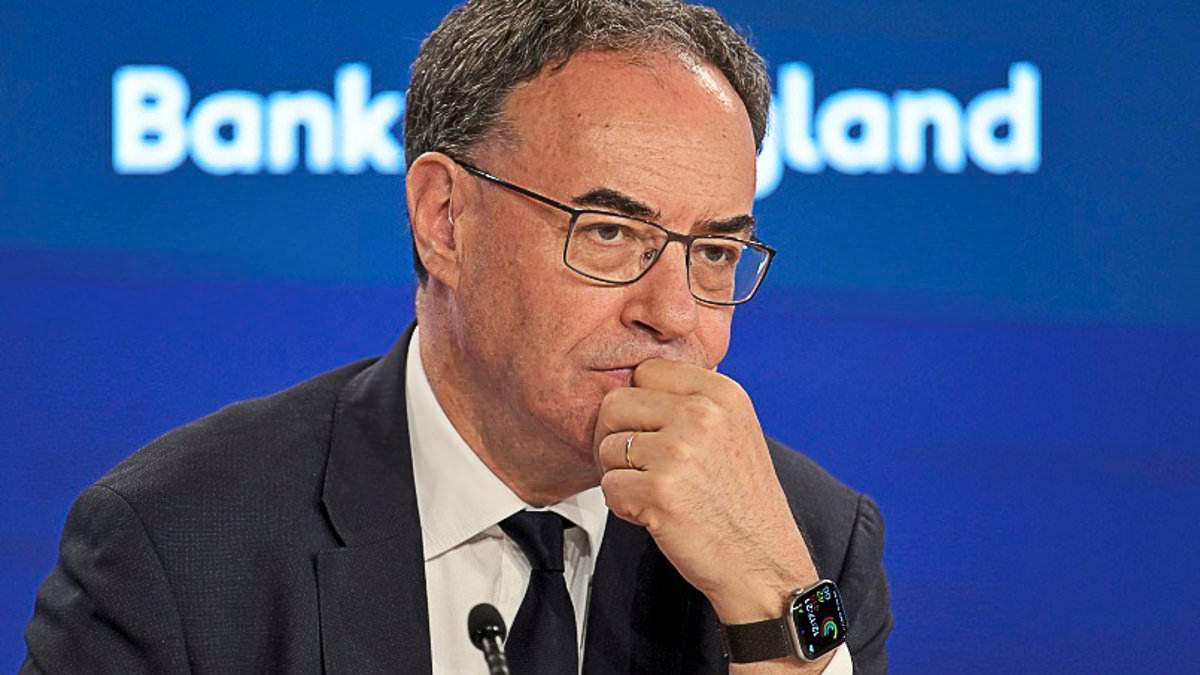
The governor of the Bank of England has warned it is getting harder to keep interest rates on hold as energy prices soar – in a blow to borrowers as mortgage deals climb towards 6 per cent.Andrew Bailey’s comments will add to expectations that rates will go up from 3.75 per cent to 4 per cent at the Bank’s next meeting.The Bank has so far resisted putting up rates this year, standing alone as counterparts at the US Federal Reserve and the European Central Bank enact hikes to try to quell inflation.Last week the Bank's Monetary Policy Committee (MPC) voted by a 6-3 majority to leave rates on hold – with the three dissenters voting for an increase.That was despite its forecast of a 24 per cent increase in energy bills next January that will push inflation above 4 per cent.Rate-setters are waiting to see whether the shock of surging oil and gas prices caused by the war in Iran will prove temporary or whether it will have a longer-lasting impact, spreading inflation through the economy. Bank of England governor Andrew Bailey has so far resisted putting up rates this yearBut there is little sign of any long-term resolution to the conflict and oil prices continue to hover at more than $100 a barrel, up from $72 before the war started.That has already helped to drive up petrol and diesel prices – with the latter close to record levels – as well as energy bills.Speaking at an economics conference in Oxford, Bailey said the evidence of any pass through to the wider economy so far remained ‘quite subdued’.But he added: ‘We can’t as monetary policy makers wait to get the full evidence on second round effects to make that call because it’s going to be too late by the time we get that.‘Although we haven’t increased Bank rate, it’s going to get harder to maintain that stance the longer we have high energy prices for.’The comments appear to add to the drumbeat of hints that the Bank will put up rates in November.On Thursday, deputy governor Sarah Breeden sounded the alarm over ‘sparks in the tinderbox’ of inflation making it ‘more likely we might have to turn the hose on it’.And Clare Lombardelli, another deputy governor, echoed the comments saying that ‘policy is increasingly likely to need to tighten if elevated energy prices persist’.The prospect of higher interest rates sets the scene for further increases in the cost of home loans – spelling fresh misery for millions of borrowers.Figures from Moneyfacts show the cheapest two-year fixed rate mortgage has climbed from 3.51 per cent before the war in Iran to 4.75 per cent today.The average two-year fix has jumped from 4.83 per cent to 5.92 per cent while a typical five-year deal has risen from 4.95 per cent to 5.94 per cent.Investors are betting on a Bank of England rate hike in November and three more next year, taking them from 3.75 per cent today to 4.75 per cent by late 2027.Adam French, head of consumer finance at Moneyfacts, said: ‘Much of that expectation has now been mirrored in fixed mortgage pricing, which has left average rates uncomfortably close to 6 per cent - but below that benchmark, at least for now.‘The scale of the repricing since the Iran conflict began has been painful for borrowers. With inflation now forecast to peak at 4.1 per cent in the first quarter of next year, the prospect of a November rate rise looks increasingly likely.‘If inflation remains stubborn and the economy continues to show resilience, the pressure on the Bank to hike rates further will continue to grow.‘The more immediate concern for borrowers is that the 6 per cent average is coming into view for the first time since December 2023.‘Mortgage rates typically sit around 1.5 to 1.75 percentage points above Bank Rate, so a sustained period of market expectations of a Bank Rate around 4.5 per cent to 4.75 per cent would be consistent with average mortgage rates reaching 6 per cent or higher.’David Hollingworth, associate director at L&C Mortgages, said: ‘The market expectation that interest rates will rise and higher than previously anticipated pushes swap rates higher.‘That in turn bumps up the cost of funds for mortgage lenders. We’ve seen lenders increasing rates and if market rates remain high or climb further there could be more hikes to come.’Sarah Tucker, a mortgage expert at the Homeowners Alliance Mortgage, said: ‘The markets are ultimately predicting rate increases and we're seeing that play out in the mortgage market right now.‘We are hoping that the Budget provides some stability and perhaps we will see things moving in another direction, but everything relies on the political landscape.‘We are trying to prepare customers for potential rate rises by getting them to book their remortgage rates early - you can lock in a rate six months in advance. This protects you in the event rates rise but also allows you to review rates in the event they improve.‘As an industry, we like to see mortgage rates start with 3 or a 4, anything over 5 per cent generally has a negative impact on the property market and the number of transactions.’DIY INVESTING PLATFORMSAJ BellAJ BellEasy investing and ready-made portfoliosHargreaves LansdownHargreaves LansdownFree fund dealing and investment ideasinteractive investorinteractive investorFlat-fee investing from £4.99 per monthFreetradeFreetradeInvesting Isa now free on basic planTrading 212Trading 212Free share dealing and no account feeAffiliate links: If you take out a product This is Money may earn a commission. These deals are chosen by our editorial team, as we think they are worth highlighting. This does not affect our editorial independence.Compare the best investing account for you
Andrew Bailey says it will 'get harder' to keep rates on hold as energy prices rise - in a blow to borrowers as mortgage deals soar towards 6%
Full Article
Original Source
Read the full article at Dailymail →KhanList aggregates and links to publicly available news content. We do not host full articles from third-party sources. Always verify important information with original sources.