
Punctual as ever, 42-year-old Congressman André Janones appears on the other side of the screen from Planalto Palace in Brasília. He has just attended an important political event with President Luiz Inácio Lula da Silva. Back in October, an “army” made up of millions of internet users, which he leads, propelled Brazil to its most exciting electoral comeback in recent memory. On election night, Lula acknowledged Janones’ crucial contribution. And, ever since then, the strategist’s life has been a whirlwind. The (digital) army general has just returned from a tour with the president. They stopped by Spain, Turkey and the Philippines, on their first international trip since Lula’s reelection. “I participated in all the bilateral meetings. I was able to see him negotiate,” Janones reveals. He can be seen in the official photograph taken during the solemn meeting in Madrid’s Moncloa Palace between President Lula and Spanish Prime Minister Pedro Sánchez. “I witnessed how much respect other leaders have for him.” Dressed in a suit and tie, he wears a magnetic microphone on his lapel. He’s always ready to rally the troops or issue a directive. The congressman’s success leading Lula’s digital operation has made him internationally famous. “I’ve received invitations from all over the world to work on presidential campaigns. It’s flattering, but I don’t want a career as a consultant. I’m in politics.” Born in Ituiutaba — a small city in Minas Gerais, the second-most populous state in Brazil — he has just been re-elected to a third parliamentary term. He’s a member of the Sustainability Network (REDE) — a small environmentalist party allied with Lula’s Workers’ Party (PT). “I want to share my knowledge to contribute to the growth of the progressive movement and [I want to help bring] an end to the global far right,” he affirms… but not by managing presidential campaigns. “I won’t take on any campaign, even though I really want Sánchez and the PSOE [Socialist Party] to win,” he says, referring to the general election this Sunday in Spain. “I’ve shared our experience with them, offered some recommendations and I’ve spoken with the young woman who runs the [PSOE’s digital] channels. But I’m not directly involved in Sánchez’s campaign,” he clarifies, Despite his wishes, the new role given to him by the Brazilian president, that of a digital strategist, comes with some limitations. “I’m under Lula’s leadership. And he, as a statesman, doesn’t interfere in other countries’ elections,” he emphasizes. “I witnessed his conversation with Sánchez, including parts that weren’t televised. President Lula made it clear that he wants him to win [in the general election on November 29]. But he reiterated: ‘Regardless of who wins the elections, the relationship between Brazil and Spain will continue. It’s not a relationship between Lula and whoever wins, but between states.’”Janones estimates that between 50% and 60% of the PT’s digital campaign operations can be replicated in Spain, albeit with more emphasis on street-level marketing than social media. This is because few countries surpass Brazil when it comes to daily internet usage.Argentina, Janones points out, is the country with the best conditions for the left-wing opposition to replicate Lula’s recent feat. “It has an extreme right wing that dominates the narrative and a left wing that’s still very timid on social media,” he explains, with his sights set on the general elections next October.A few days after Lula’s unexpected victory over Senator Flávio Bolsonaro (who immediately fled to Florida after his defeat), a small manual — of dubious authorship — laying out the Janones strategy began circulating. It has already been translated into 27 languages.He reveals that he was convinced that his formula would work – that it would defy the polls and deliver a resounding victory for Lula. The president’s comeback is especially sweet at this stage of his career: being defeated by Jair Bolsonaro’s son would have been a painful humiliation. Lula’s new term — his fourth overall, as he previously held office from 2003 until 2011, before defeating the senior Bolsonaro in 2022 — begins on January 5, 2027. And it’s shaping up to be the final chapter of an extraordinary political career.“Political correctness tells me that I should be humble… but I foresaw everything. The president’s landslide victory, that I would receive some recognition… the only thing I didn’t foresee was the global impact,” the congressman admits. He was shocked, but he quickly came back down to earth. “I think [the desire to imitate our comms strategy] also highlights the lack of leadership within the progressive movement and the need for players who know how to engage in dialogue through social media. Maybe I fill that void and that’s why I’m receiving so much attention.”Janones grew up poor. His mother was a domestic worker. An evangelical Christian, he worked as a bus fare collector in order to pay for law school. And while he grew up in an analog world as a teenager, he soon embraced the digital one. He began to gain traction on social media as a lawyer, representing patients seeking treatment from the public healthcare system. He then became active in the Workers’ Party (PT). Janones actually participated in Lula’s 2022 presidential campaign. However, his contribution wasn’t particularly noteworthy.The influence of internet users on Lula’s victory managed to break down the president’s resistance to owning a cellphone. And, in the middle of the campaign, he debuted his first meme. Janones says that, once in a while, at night, the president checks Instagram and X to take a look. “It’s pretty sporadic, but he already understands the language of memes. He’s entering that world, slowly but surely.”The important thing, he points out, isn’t that Lula uses or masters these digital platforms. Rather, what matters is that the president understands modern-day communication. Long gone are those political rallies where — upon being released from prison in 2019, after serving just over 18 months for corruption convictions that were later annulled — Lula expressed astonishment at the speed at which lies circulated on social media and the number of people who believed them.Janones emphasizes that some of the ingredients of his winning formula — the algorithmic techniques — are replicable in any country in the world. Here’s the first lesson: when a supporter is campaigning online and someone attacks their candidate, the natural impulse is to enter the comments section to defend them… but this is a mistake. It feeds the algorithm, which Janones defines as “a being with an extremely high IQ… like Albert Einstein, but blind.” For instance, the algorithm observes that the digital attacks on Spain’s Pedro Sánchez attract users. So, it concludes, it has to provide more of that kind of content, in order to boost engagement, because the algorithm is part of a capitalist enterprise that seeks profit. Janones points out: “I always advise you to only interact and engage with posts that are positive for your people. That’s my main recommendation.” Lesson number two: immediacy. “You have to be instantaneous. On social media, timing matters much more than content. Among the world’s leading progressive figures, there’s sometimes this idea that everything has to be beautiful, flawless. But no. If you start arguing about the text and revising it, it no longer works. Everything must be spontaneous.” And finally, lesson number three: style. The algorithm demands emotion. That’s why Janones exclaims “pessoal, urgente!” (loosely translated from Portuguese as “People, this is urgent!”). It’s his battle cry in posts that are filled with belligerent language. “My style is forceful, but the message is about peace,” he insists.Other elements cannot be replicated, however. For instance, there’s only one Lula. He’s unbeatable raw material: a charismatic, popular figure, with a life that’s straight out of a movie. He “represents democracy and looks like the people,” Janones emphasizes.During the recent election campaign, the Superior Electoral Court (TSE) found no fake news on Janones’s WhatsApp channel, which he used to keep Lula’s supporters engaged. After winning his fourth term, the trickle of desertions began in Lula’s digital army. The channel currently boasts 9.5 million followers, a spectacular figure at first glance. But it’s actually a million fewer than on election night. “We’re still recovering after our victory: we’re rewatching the goals, giving the loser a hard time,” the digital general chuckles. “As soon as Lula 4 (his fourth term, which starts in January) and the new [legislative session] begin, we’ll have important policy agendas. That’s when the army will have a mission again.”“Before, it was about helping the president achieve victory. But from 2027 onward, it will be about ensuring governability and getting him the highest popularity ratings of his career.” Lula finished his first presidency in 2010 with an 87% approval rating, a historic figure. It’s a number that the leader of the Brazilian left often recalls with immense pride.On election night, Janones watched the vote count alongside the veteran president. What was his reaction when it became clear he had won? “It was a very sober, balanced reaction. He didn’t jump for joy. He smiled, made the victory sign for the camera… later, when I was talking with people who had been with him during his 2002 and 2006 [election wins], they told me that he’s always like that. He has tremendous emotional control in those high-pressure situations. But then, he often gets emotional. He cries.” General Janones is ready to continue his battle against the far right in Brazil and beyond. Sign up for our weekly newsletter to get more English-language news coverage from EL PAÍS USA Edition
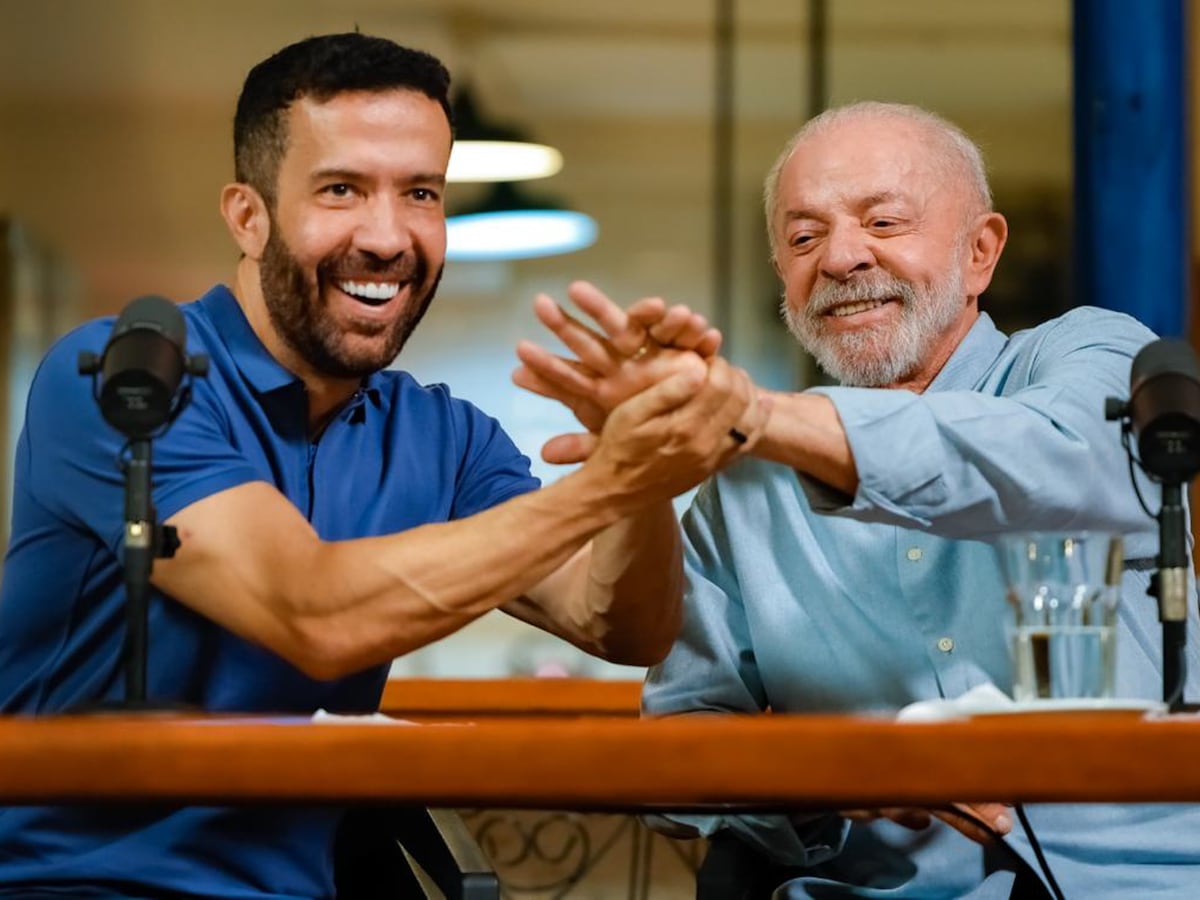
André Janones, the strategist who leads Lula’s digital army in Brazil: ‘I want to help put an end to the global far right’
Full Article
Original Source
Read the full article at English →KhanList aggregates and links to publicly available news content. We do not host full articles from third-party sources. Always verify important information with original sources.