
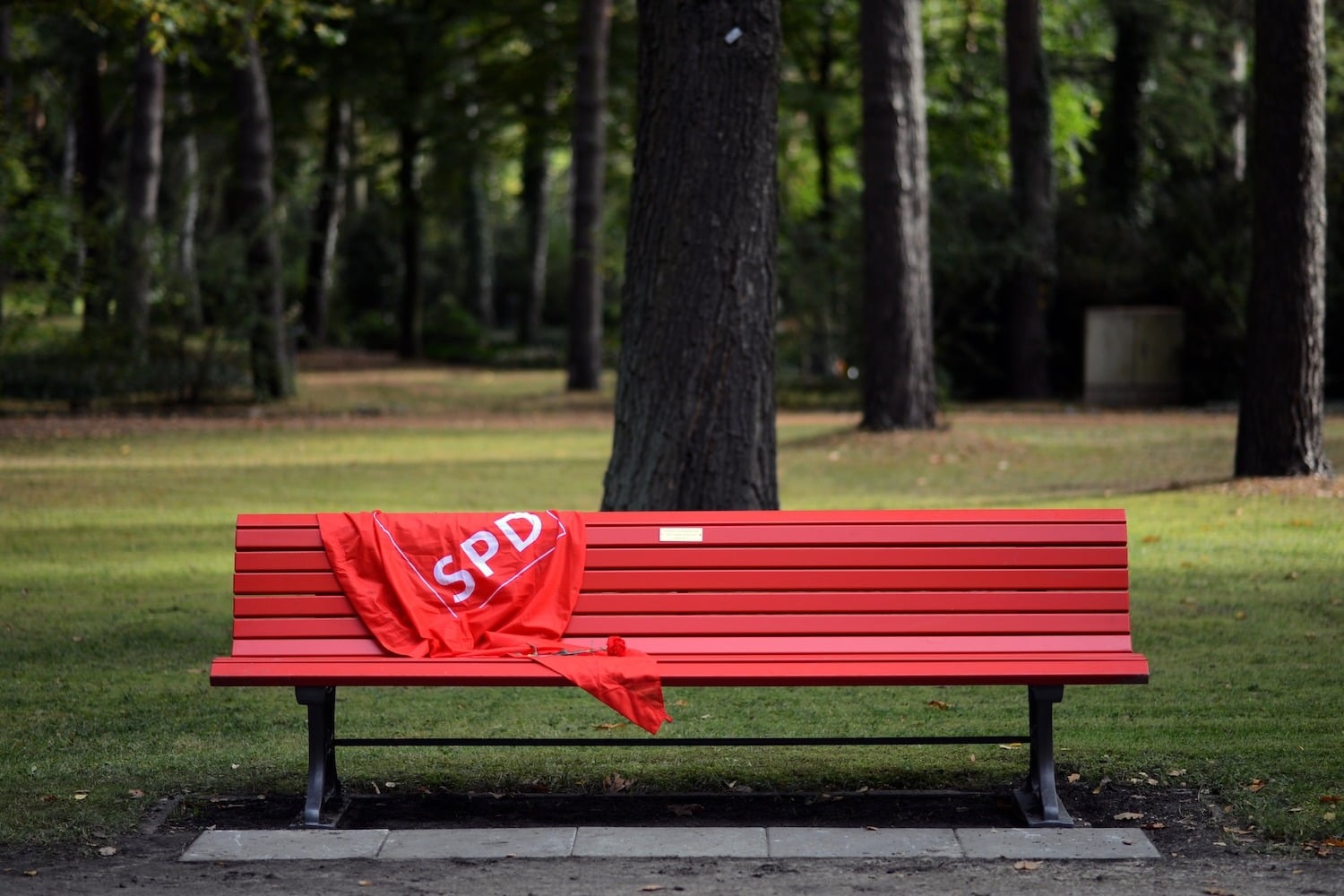
In a few months, Europe will mark a date of great moment. The Treaty of Rome, signed in March 1957, established what came to be the European Union. The 70th anniversary celebrations will, however, be relatively low-key. Italian Prime Minister Giorgia Meloni has ensured that the biannual meeting of the European Council take place in the Italian capital. There will be tributes, official speeches, but—at the start of another likely turbulent year for the continent—few governments seem interested in hailing an organization that has come to be denounced by some as elitist and out of touch. In a few months, Europe will mark a date of great moment. The Treaty of Rome, signed in March 1957, established what came to be the European Union. The 70th anniversary celebrations will, however, be relatively low-key. Italian Prime Minister Giorgia Meloni has ensured that the biannual meeting of the European Council take place in the Italian capital. There will be tributes, official speeches, but—at the start of another likely turbulent year for the continent—few governments seem interested in hailing an organization that has come to be denounced by some as elitist and out of touch. In immediate political terms, their reluctance might be understandable. The EU has struggled to understand, let alone address, the roots of populism; it has struggled to get its voice heard in the big global conflagrations, from Israel-Palestine to Iran to the Trump administration’s curious love-in with Russian President Vladimir Putin. And it has struggled to find a language that communicates with voters, particularly younger ones. But symbolic moments such as this provide opportunities for a refresh, just as the results of the U.S. midterm elections appear to point to a liberal world that is belatedly finding a way of standing up to the far right. Yet, amid all the talk of a “blue tsunami” and the jubilation at the Democrats’ stunning seizure of both houses of Congress, quiet heads are counseling that it is far too early to write off the nationalist extremists who have held politics around the world in a vice-like grip for so long. It is possible that Donald Trump might temper his behavior—but then again, he might not. He might instead use his remaining two years in office to lash out. His mind does not work in rational or predictable ways. And in any case might the MAGA movement find another, more professional, less mercurial standard-bearer? The issues that did Trump in were the price of gas and the cost of living, not a particular affection for the alternative. Trump’s imperial behavior and the corruption swilling around him and his entourage were contributory factors, but bread-and-butter issues were at the fore. Those same concerns are the center point of the various elections taking place in 2027 in Europe, which threaten to bring down a series of mainstream governments. Yet underlying them is the more amorphous question of values. The center-left parties, as in the United States and as in Europe, have always felt more comfortable defining themselves against their opponents than knowing what they stand for. EU membership was supposed to provide not just economic and other practical benefits but also a sense of abiding principle. It became an important part of a wider international architecture that set the parameters for the postwar era. Yet eight decades is a long time, and, Trump or no Trump, no system is guaranteed to, or entitled to, last indefinitely. Most of the last few years in Brussels have been taken up with firefighting, dealing with Trump’s vagaries, Putin’s military aggression and hybrid warfare, and the trade superpower that is China. Beyond sloganizing, there has been little time or seemingly desire to ponder the wider questions. Some groups are trying, though, and I took part in one such gathering on the eve of the U.S. midterms. Organized by Friedrich-Ebert-Stiftung (FES), the think tank of Germany’s Social Democratic Party, a couple of dozen politicians, activists, thinkers, and others were brought together at a closed-door retreat near Frascati, a picturesque town southeast of Rome. We were invited to use four principles as our starting point: democracy, freedom, peace, and social justice. What quickly became clear was the extent to which the first two had been co-opted by the far right with considerable success. On social justice, the consensus was that despite welfare, pensions, and other state support such as the minimum wage (largely but not exclusively the preserve of the center-left), all sides were struggling badly to address the causes of stagnant growth and either flatlining or deteriorating living standards for many that stretch back to the 2007-08 financial crash, if not longer. Broadly speaking, the center-left is stuck in a spiral of benefits spending, which because of aging and other demographic shifts, continues to increase at a time when debt repayments from borrowing has in several countries reached record highs. Parties on the right and far-right are simply confused. Those in Germany, France, Poland and elsewhere promise continued generous support for the working-class (where possible, excluding migrants); others, such as in Britain and Austria, tend more to embrace small-state, neo-liberalism of the Reagan-Thatcher era. As for peace, that depended on one’s interpretation. Much of the left finds it hard to reconcile the need to defend Ukraine and demonstrate hard power in the face of wider Russian aggression with an in-built aversion to “militarization.” Spending priorities are frequently expressed by parties such as Germany’s Die Linke (The Left) as a zero-sum transaction: Would you rather your money go to schools and hospitals or military hardware (and pernicious private sector profits)? It is, of course, a false choice, and the work has only begun to make the public aware of the many dangers posed. The only consolation is that the far right appears at least as confused about how to deal with both Putin and Trump, with many party leaders—from France’s current favorite for president, Marine Le Pen, and Alice Weidel of the Alternative for Germany (AfD) two of many that have hurriedly sought to dissociate themselves from past support they have received from the Kremlin and the White House. The term “democracy” has been recast by the right as the domain of a “silent majority” that is finally being heard, after being “shut out” during the dominance of the “deep state” of the past. And when they don’t get their way, and voters rebuff them, they cry foul, declaring that election results are the result of manipulation or an in-built bias in mainstream media. This tried-and-true trick beloved of Trump (at least until the recent midterms) was most recently adopted by Flavio Bolsonaro, who was defeated in last month’s Brazilian presidential runoff. Mainstream politicians a different dilemma. What happens when the democratic process—notably elections—puts into power political forces hell-bent on damaging or destroying democratic checks and balances? The term “Freedom” is similarly fraught. As some delegates at the conference suggested, centrist politicians have found that territory hard to occupy. The most contested space in freedom of expression. Around 15 years ago, I ran a U.K.-based nonprofit called Index on Censorship; in that era, the battle lines were rigidly drawn between dictators (who stopped people from printing or saying what they wanted) and democrats (who ensured that at home while battling for the rights of others abroad). Then came the populists, then came “woke,” and the battle shifted back home and became toxic. Yet the first signs are emerging that the argument is being reframed and will be healthier for that. Freedom “from”—the “nanny state,” the “deep state,” and the assorted far-right demons—is being clawed back. I heard Europeans talking with increased confidence the language of “freedom to breathe clean air,” as a means of justifying the green policies, and “freedom to be healthy,” to explain health spending. This is just the foothills. There is much more work to be done. FES and its partners will be issuing a manifesto ahead of next March’s anniversary. However, during the discussions, the point I continued to raise was that it comes down more to behavior than grand statements. Mainstream leaders need to start demonstrating greater resilience, imagination, and courage. Might U.S. Democrats, long derided as divided and weak, use their victory to show the way? Might Europe, which has been stuck in a doom loop of excessive caution and incrementalism, follow? That will be a major undertaking. Some see the solution in greater European federalism, the language of “European patriotism.” Enrico Letta, who lasted barely a year as Italy’s prime minister in 2013-14, published a report in 2024 titled “Much More Than a Market.” This provides some useful indicators. But the cause of European liberal democracy is about more than the fate of the EU. The original Treaty of Rome was a political and moral response to the European catastrophe of World War II that had finally come to end. Might the final throes of MAGA provided a fillip for a reinvention of those principles?
And What About Europe’s Center-Left?
Full Article
Original Source
Read the full article at Foreignpolicy →KhanList aggregates and links to publicly available news content. We do not host full articles from third-party sources. Always verify important information with original sources.