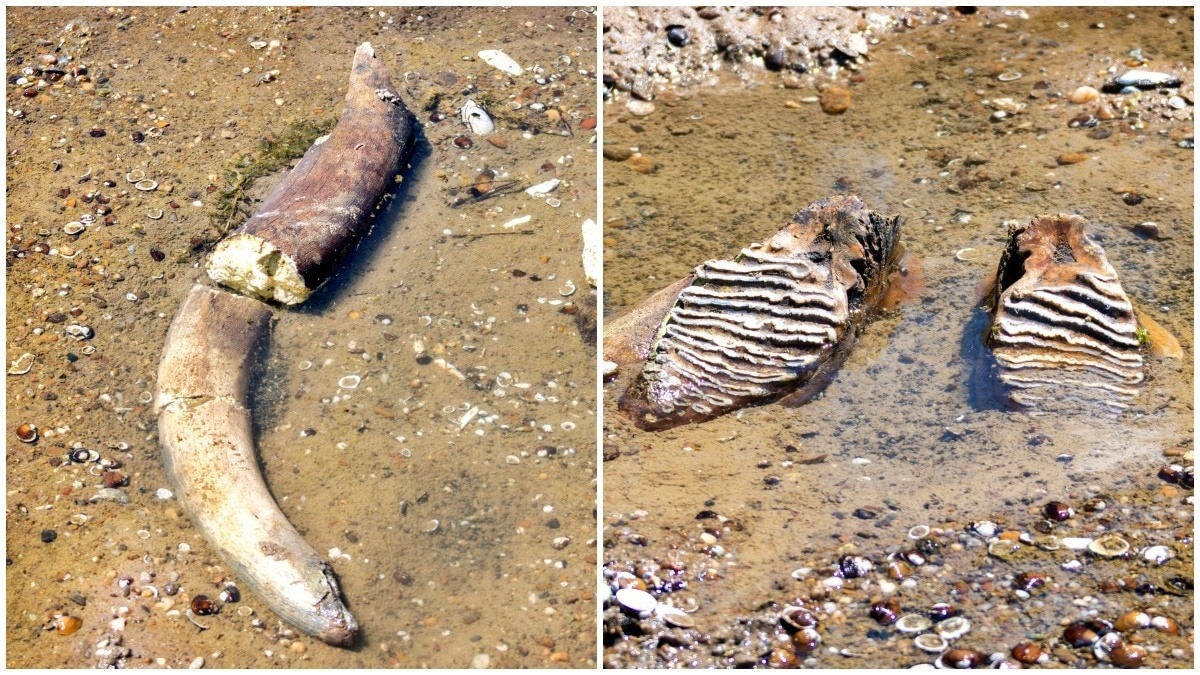
Suspected mammoth remains have been found in the Danube riverbed near Bulgaria's Ryahovo village after water levels fell sharply. The find could help scientists study Ice Age landscapes even as the drought highlights extreme weather across Europe.Villagers immediately alerted specialists from the Regional History Museum in the nearby town of Ruse. (Photo: Reuters)An extraordinary discovery has emerged from the dried-up bed of the Danube River in northern Bulgaria, where what experts believe are the remains of an ancient mammoth were uncovered after the river receded to record low levels amid Europe's prolonged heatwave and drought.The fossil remains were spotted near the village of Ryahovo by a local resident, who noticed unusual bones protruding from the exposed riverbed.Villagers immediately alerted specialists from the Regional History Museum in the nearby town of Ruse.According to Bulgaria's BTA news agency, museum experts who examined the site identified what appears to be a mammoth's lower jaw, two tusks and possibly one of its ribs. The bones are set to be carefully removed for further scientific examination to determine their exact age and origin. Remains of what is believed to be an ancient mammoth emerge near Ryahovo. (Photo: Reuters) "I would not call it a sensation, but any discovery of such ancient remains is very important for science," Museum Director Nikolay Nenov told BTA. He said researchers have long believed the area was once a swamp where the massive Ice Age animal may have died thousands of years ago.Mammoths were giant relatives of modern elephants that roamed Europe, Asia and North America during the Ice Age. Most species became extinct around 10,000 years ago as the climate warmed and their habitats disappeared, although isolated populations survived longer in some Arctic regions.The remarkable discovery comes as the Danube, Europe's second-longest river, has fallen to exceptionally low levels following weeks of intense heat and below-average rainfall.The drought has affected several major European rivers, including the Rhine, disrupting shipping, exposing submerged structures and now revealing prehistoric remains hidden for millennia.Scientists say such discoveries offer valuable clues about the landscapes and ecosystems that existed during the last Ice Age.Detailed analysis of the bones could help researchers understand when the mammoth lived, the environment it inhabited and how it eventually died.While the drought has exposed a rare window into Europe's distant past, experts warn that the same extreme conditions are a stark reminder of the growing impact of prolonged heatwaves and changing climate patterns across the continent.- EndsPublished By: Sibu Kumar TripathiPublished On: Jul 30, 2026 12:02 IST
Ancient mammoth found sitting at bottom of Danube as river dries due to heat
Full Article
Original Source
Read the full article at Indiatoday →KhanList aggregates and links to publicly available news content. We do not host full articles from third-party sources. Always verify important information with original sources.