
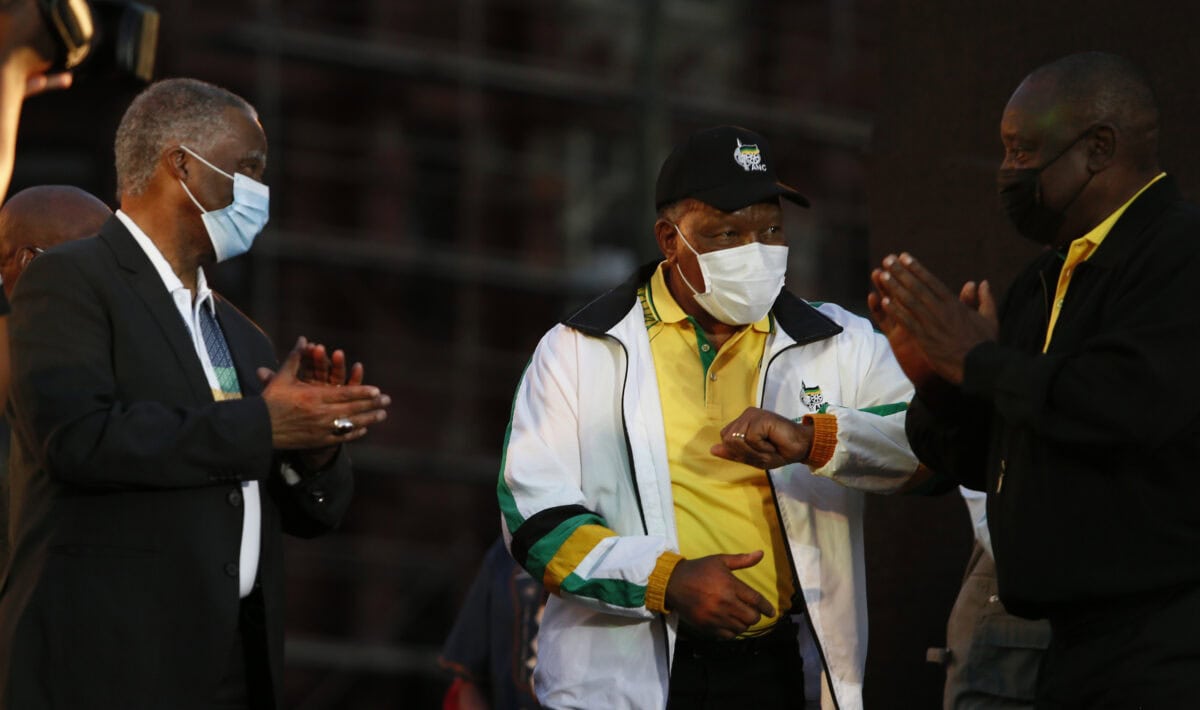
Mbeki, Motlanthe and Msimang are deeply concerned about the ANC's future and troubled by the direction it has taken. Listening to an old clip the ANC’s former deputy president Kgalema Motlanthe, arguing that it might be good for the ANC to lose an election and “hit rock bottom”, one is reminded of a simple truth: some of the party’s most vocal critics are also among its most loyal servants. When Motlanthe’s remarks are considered alongside the regular criticism of the ANC by former president Thabo Mbeki and veteran politician Mavuso Msimang, a clear picture emerges. These are not individuals seeking the downfall of the governing party. On the contrary, they appear deeply concerned about its future and troubled by the direction it has taken. That, however, may not be a message warmly received by the subsequent generation of ANC leaders occupying the corridors of Luthuli House. Within those circles, Motlanthe, Mbeki and Msimang are hardly regarded as favourites. Their willingness to challenge the party’s leadership and expose uncomfortable realities has made them inconvenient voices in an organisation increasingly sensitive to criticism. History shows that outspoken individuals are rarely popular. They force institutions to confront truths they would rather ignore. Yet criticism rooted in fact and motivated by genuine concern cannot fairly be described as disloyalty. In healthy organisations, self-correction is a sign of strength, not weakness. Mbeki, in particular, has become synonymous with speaking truth to power, regularly. There is little doubt that much of the veterans’ public commentary generates discomfort within top party structures. Among some ANC members, particularly those associated with the post-Polokwane generation of leadership, Mbeki’s interventions are frequently dismissed as bitterness stemming from his recall as president in 2008. Critics suggest he is unable to move on and remains determined to settle old scores. Yet, such a reading ignores the substance of what he is saying. The more important question is not why Mbeki speaks, but whether what he says is true. If leaders entrusted with guiding an organisation are steering it in the wrong direction, should experienced veterans remain silent simply because their time in office has passed? For Mbeki, Motlanthe and Msimang, the answer appears to be no. They belong to a generation that placed considerable emphasis on ethics, accountability and effective governance. It must be deeply frustrating to witness persistent corruption, weak administration and declining public trust, while feeling that many current leaders lack either the will or the courage to confront these challenges decisively. Msimang has repeatedly criticised cadre deployment and the erosion of merit in state institutions. The concerns raised by these veterans are not merely about the ANC’s electoral fortunes; they are about the weakening of the state itself. Years of corruption and maladministration have hollowed out public institutions, damaged governance and undermined service delivery. The Zuma administration dismantled or weakened several institutions designed to combat corruption, while the Ramaphosa administration has often been accused of moving too slowly against those implicated in wrongdoing. The Zondo commission exposed the depth of state capture, yet many South Africans continue to question whether meaningful accountability has followed. Raymond Zondo himself has expressed frustration over the pace at which recommendations have been implemented. The Madlanga commission is biting, not just barking, but seems to be a little too late. If the ANC is to reverse its fortunes, it may need to listen less to those who offer comfort and more to those who offer uncomfortable truths.
ANC must listen to critics like Mbeki and Motlanthe
Full Article
Original Source
Read the full article at Citizen →KhanList aggregates and links to publicly available news content. We do not host full articles from third-party sources. Always verify important information with original sources.