
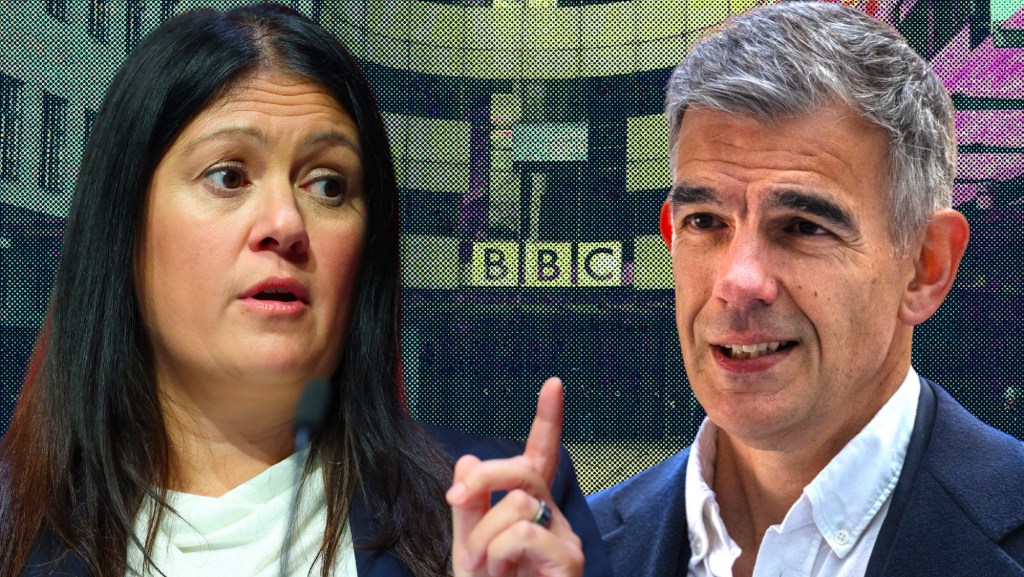
If you pay any attention to the BBC, you will know Britain’s national broadcaster is on the horns of a funding crisis. We know this because the BBC keeps telling us. Director-general Matt Brittin has told staff that the “cupboard is bare.” He has told Parliament that the BBC’s current funding model, the licence fee, is a “busted flush.” He told BBC viewers on Sunday that the corporation is in a “tight financial situation.” And when the BBC is not telling us, it is showing us by cutting thousands of jobs, canceling shows, and threatening to close services. The drip-drip of cuts announcements is like a marketing campaign counting down to BBC doomsday. Luckily for the BBC, there’s a potential solution: It’s called charter renewal. Every decade, the broadcaster sits down with the government and thrashes out its future, agreeing its funding for the years ahead, and making detailed decisions about its governance and operating guardrails. Watch on Deadline And it just so happens that the BBC and the government are in the thick of charter renewal negotiations as you read this. Behind-closed-doors meetings between the BBC’s policy team and Department for Culture, Media and Sport (DCMS) officials are happening every week. Brittin is engaging regularly with Lisa Nandy, the culture secretary. There is lots of talking going on. In public at least, the BBC and new Prime Minister Andy Burnham’s administration are singing from the same hymn sheet. The BBC wants to ensure that the 94% of Brits consuming the BBC are actually paying for it. Nandy told BBC News this month that she wants to put the corporation on a “sustainable footing.” But here’s the rub: Neither the government nor the BBC have wholeheartedly set out their preferred way of achieving this ambition, leading to what Deadline hears is growing unease on both sides about a lack of vision for the BBC’s future. We can rule out some things pretty confidently, including full ad or subscription funding. Never going to happen. What about a household levy? This would basically involve adding a tax to a utility or broadband bill. The BBC quite likes this idea, but ministers have explicitly ruled it out on the grounds that a new tax would be unpalatable (not to mention politically toxic) in a cost of living crisis. This shrinking field of options increasingly points in the direction of tinkering with the £180 ($240) licence fee. There is an old joke in UK media that reviews of BBC funding nearly always result in the same conclusion: The licence fee is the least worst option. But quite what this tinkering looks like, and whether it will achieve the shared aim of safeguarding the BBC, remains to be seen. The main idea under discussion is extending the licence fee to include non-live content on commercial streaming services. What does that mean in practice? Well, at the moment, you can watch The Gentlemen on Netflix without being legally obliged to pay the licence fee. Ministers and the BBC are now discussing plans that could incriminate you for watching MobLand on Paramount+ without paying your cut to the BBC. Shows not made by Guy Ritchie would also be included. Closing the streaming loophole may seem an elegant solution in theory, but it is complicated in reality. The BBC is struggling to enforce payment of the licence fee as it is, and the tools at its disposal, including pursuing convictions, are regressive, hitting lower-income households and women hardest. Netflix carrying pop-up ‘PAY YOUR LICENCE FEE’ notices (a genuine BBC suggestion) is not going to cut it. To get around this, Nandy has floated the idea of charging consumers extra for their subscription streaming services. A BBC levy on your monthly Disney+ bill, if you like. She acknowledges, however, that this is unlikely to be popular with U.S. streamers, who are quick to make noises about pulling back their UK investment when they see barriers to growth. Nandy has also spoken about allowing the BBC to top up its public funding with commercial revenue, including monetizing archive content or enabling the corporation to carry ads around its podcasts on platforms like Spotify or YouTube. But again, Nandy has been reluctant to fully embrace these proposals. Ultimately, it will likely be the Treasury, rather than the DCMS, that calls the shots on funding questions, but time is running out to push through the thorny reforms under discussion. It means that, with 15 months until the current BBC charter expires, the broadcaster has no clarity about its finances beyond next year. During the last round of charter negotiations, the BBC struck a funding deal with David Cameron’s government 18 months before its operating agreement ended. Nandy recently described that deal as “appalling,” but has declined to commit to an alternative. Instead, we have a vacuum. Private talks and a paucity of public information. We may hear more from BBC boss Brittin at the Royal Television Society London Convention on Tuesday, but no minister will speak at the important industry gathering because of the Labour Party conference in Liverpool. And so the limbo lingers. As one BBC watcher in Westminster puts it, both sides have been “as bad as each other” in their approach to the charter process. “As much as this government isn’t the best when it comes to making decisions about anything, it’s not clear to me what the BBC’s vision is for itself,” the lawmaker explains. “It’s a longstanding problem, and in the past the BBC usually stood to benefit, as the result would be status quo. The danger now is that the status quo just accelerates [the BBC’s] decline.” Nandy has promised to publish the government’s position “soon.” For the BBC, which is gearing up to announce another gruelling round of cuts over the coming days, it can’t come soon enough.
Analysis: What The Heck Is Going On With The BBC’s Funding?
Full Article
Original Source
Read the full article at Deadline →KhanList aggregates and links to publicly available news content. We do not host full articles from third-party sources. Always verify important information with original sources.