
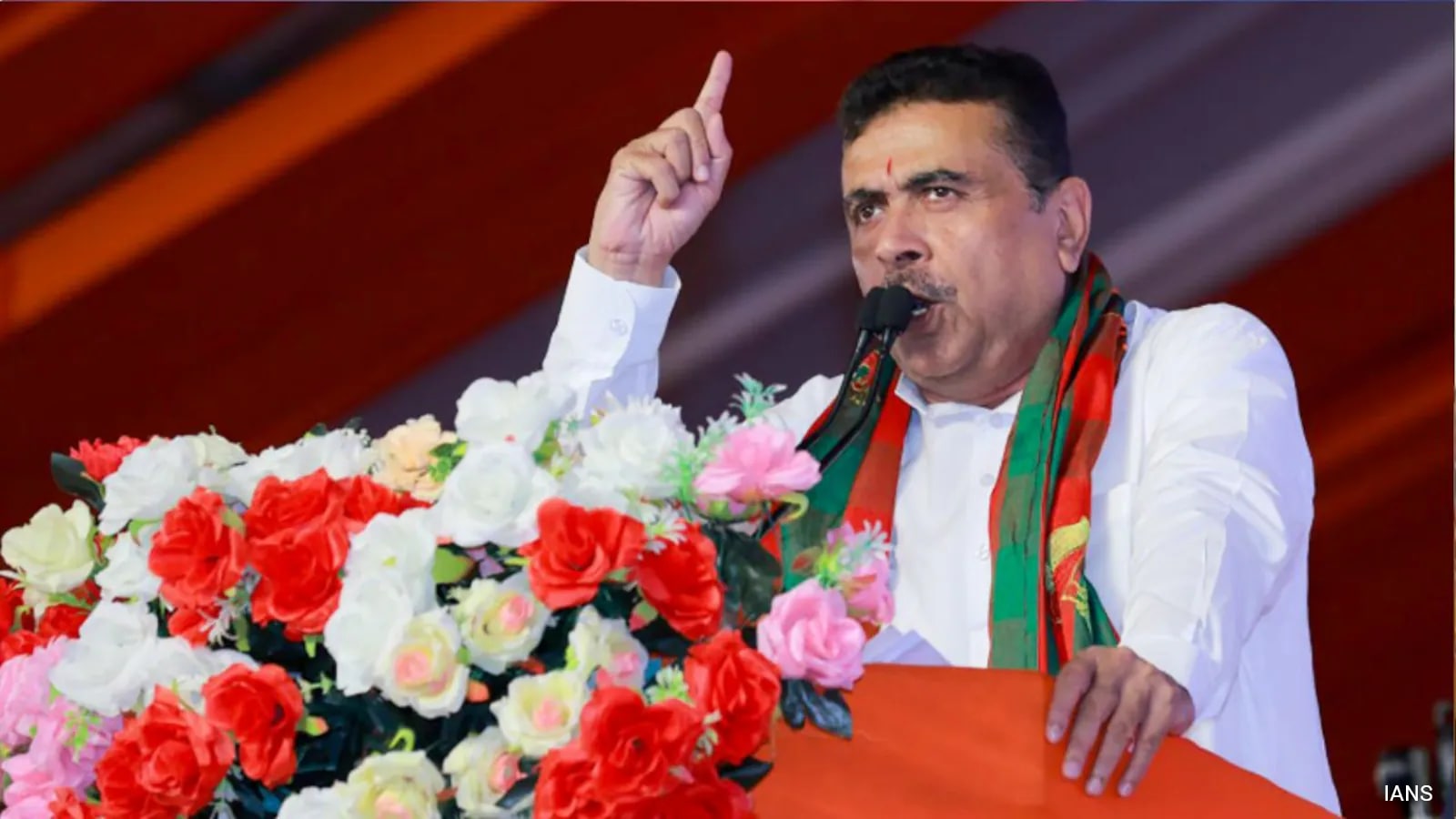
West Bengal has announced its new Industrial Policy 2026, outlining 10 major steps aimed at reviving industrial growth in the state. The announcement is expected to bring together the government's plans for investment incentives, faster clearances, industrial land allocation and employment generation. A separate framework for managing the state's financial liabilities is also part of the wider economic challenge facing the administration.Chief Minister Suvendu Adhikari said the new government would neither repeat the police firing on farmers witnessed during Buddhadeb Bhattacharya's tenure in Nandigram nor follow what he described as the non-committal approach of the Mamata Banerjee government towards industry. He said the BJP-led government would take an active mediatory role between industrialists and farmers who own land. Referring to the earlier approach under Mamata Banerjee, he said industrialists were often told to negotiate directly with farmers if they needed land, while the state government kept itself out of the process. The new government, he said, would actively intervene and facilitate discussions between the two sides.10 Major Steps Under the New Industrial Policy:1. Creation of a land bankThe state government is creating a land bank and has begun purchasing land so that it can make land directly available to private industries. As an example, the Chief Minister mentioned that the government had already provided land to Amul for its dairy products business.2. Incentives for industriesThe government will begin offering incentives to industries. Adhikari acknowledged that there was a substantial backlog of pending incentives, amounting to nearly several crores. He described this liability as a legacy of the past but said the government would gradually begin addressing it.3. Land to be reclaimed if projects do not begin within three yearsIf a private company acquires land but fails to start its industrial project within three years, the state government will take the land back after that period.4. Revival of closed factoriesThe government will make efforts to reopen closed factories in both the public and private sectors, providing support to facilitate their revival.5. Special assistance for backward districtsIndustries interested in investing in West Bengal's backward districts will receive special economic assistance from the state government. The aim is to encourage investment in areas that have not benefited sufficiently from industrial development.6. Possibility of a new project in SingurSingur, which had earlier witnessed the withdrawal of a proposed automobile project, could once again attract investment from the automobile sector.7. Improved law and order and a more favourable investment climateThe Chief Minister said the law and order situation in the state had become more peaceful and that businesspeople would no longer face extortion. According to him, this improved environment could encourage more investment from outside West Bengal, including from abroad.8. Government support for new industriesUnder the new policy, the state government has announced that it will extend 120 per cent support to any industry looking to establish a business in West Bengal.9. Linking tourism with industrial developmentThe state government plans to bring the tourism sector within the broader framework of industrial development. Tourism Minister Sankar Ghosh was also present at the event where the new policy was announced.10. Addressing the state's debt, unemployment and migration challengesThe Chief Minister acknowledged that West Bengal is carrying a debt burden of Rs 8 lakh crore. He also referred to the state's more than two crore unemployed young people and the presence of 70-80 lakh migrant labourers from Bengal.Describing the financial burden as a legacy of the past, Adhikari said his government was working to change the situation. He claimed that the state had already recorded revenue growth of Rs 4,000 crore within this short period. He further alleged that Rs 20,000 crore had been siphoned abroad to different countries by anti-national mafias operating from outside the state. He said addressing this situation would also help create a new industrial climate in Bengal.The Chief Minister also announced that investments worth Rs 1 lakh crore were expected to come into the state within the next few months. Apart from the new industrial policy, the state government will formulate a separate land policy at a later stage. The Chief Minister indicated that this would be an even more critical part of the government's plans for industrial development.The policy has been a work in progress since the BJP government took office in May. Adhikari had initially promised to introduce it before Durga Puja, but the announcement was postponed as the government sought further suggestions and made changes to the draft.The Cabinet approved the policy on October 28, clearing the way for its formal unveiling. The document has been prepared under the supervision of the Chief Minister, with Industries Minister Tapas Roy and Finance Minister Swapan Dasgupta playing key roles in the process. The government has also invited representatives of major industrial houses to attend the launch at Nabanna.At Haldia on October 14, Adhikari had declared that Bengal would become a destination for investors within a year. His message was clear: the state wants to move beyond the long-running debate over its industrial decline and present itself as a place where businesses can establish and expand their operations. "We want industrialists to say, 'Let us go to Bengal'," he said, outlining his ambition to make the state more attractive to investors.The new policy is expected to focus on two immediate priorities: reducing the number of procedural hurdles faced by businesses and ensuring that investment proposals do not remain stuck in government departments for months. The larger question, however, is whether the announcement will translate into projects on the ground. Bengal has witnessed several rounds of industrial promises over the years, but the challenge has often been to convert investment announcements into functioning factories and sustainable employment.A fresh attempt to restore investor confidenceWest Bengal has effectively been without a comprehensive industrial incentive framework since the previous government passed the Revocation of West Bengal Incentive Schemes Act, 2025. The legislation retrospectively withdrew incentives and financial benefits relating to schemes covering the period from 1993 to 2021. The withdrawal created uncertainty among businesses that had expected government support under the earlier arrangements.The Adhikari government now intends to restore and restructure the incentive system. The proposed framework is expected to offer support through electricity duty concessions, interest subsidies and reimbursement of employers' contributions to the Employees' Provident Fund.The government has earmarked Rs 5,000 crore in the 2026-27 Budget for industrial incentives. However, the financial implications of restoring the earlier benefits remain significant. The 2025 Revocation Act would first have to be repealed by the Assembly before the government can legally restore the withdrawn incentives. Estimates of the outstanding liabilities vary, with some assessments placing the amount at around Rs 20,000 crore, while other reports have put the figure above Rs 10,000 crore.This is where the state's financial position becomes important. The government will have to balance its ambition to attract new investment with the responsibility of meeting existing commitments. Investors will want to know not only what incentives are being promised but also whether the state has the financial capacity and legal framework to honour them.Employment generation to determine the scale of incentivesOne of the more significant proposed changes is the government's intention to link incentives to employment generation rather than investment alone. The approach, reported by The Telegraph, would give greater support to industrial units that employ more people.Under the proposed model, businesses creating a specified number of jobs could receive a higher share of support towards their provident fund liabilities. Units employing 100 people could receive 50 per cent support, while those generating 500 jobs could be eligible for government assistance of up to 70 per cent. Higher electricity duty concessions may also be considered for companies that recruit more workers.The government is also expected to offer additional benefits to industries setting up operations in economically less-developed districts, including Purulia, Jhargram, Bankura, Cooch Behar and North and South Dinajpur.This employment-linked approach could be particularly relevant to Bengal, where a large number of young people continue to look outside the state for work. The administration will be under pressure to demonstrate that industrial investment can create jobs locally rather than merely add to the state's list of announced projects.Land: The biggest test of Bengal's industrial ambitionsWhile incentives and faster clearances are important, the availability of industrial land remains the most difficult issue the new government must address. Bengal's land problem is not simply a question of whether land is available. Much of the state's agricultural land is fragmented into small holdings, often divided among several family members over successive generations. A single industrial project may therefore require negotiations with hundreds of landowners, sharecroppers and other parties with interests in the same area.The experience of Singur and Nandigram has also made land acquisition a politically sensitive subject. The Left Front government's attempt to acquire land for industry triggered major protests, while the Trinamool Congress government subsequently adopted a largely hands-off approach, leaving companies to arrange land on their own. Neither approach resolved the problem.The issue was central to a three-hour consultation held at Nabanna on August 11, when industrialists and representatives of business chambers met the government's ministerial group to discuss the proposed policy. Industries Minister Tapas Roy said the government would not take any step that compromised the interests of businesses or betrayed the trust of landowners. The consultations were intended to ensure that the new framework addressed both concerns.The government is considering a comprehensive land bank that would map available industrial plots through a Geographic Information System (GIS). The proposed inventory is expected to include land belonging to closed public sector undertakings, sick industrial units and government agencies, as well as plots allocated for industrial purposes but left unused.The administration is also considering reclaiming land allotted to companies that have failed to use it within the stipulated period. Under the reported proposal, the lease premium could be returned, although without interest. The intention is to prevent valuable industrial land from remaining locked up for years without generating production or employment. Hindmotor and Singur in Hooghly district, along with Domjur in Howrah, have been identified among the areas being considered for the initial land bank exercise.The government's proposed direct-purchase model is intended to avoid the political and social consequences associated with compulsory land acquisition. Instead of leaving companies to negotiate separately with numerous landowners and intermediaries, the state proposes to purchase land directly from willing owners and subsequently make it available for industrial projects.For landowners, the distinction between acquisition and purchase is important. A negotiated sale gives them a direct role in deciding whether to part with their property and on what terms. For investors, government coordination could reduce the time and uncertainty involved in assembling land for large projects.A blanket relaxation for all categories of land would have implications beyond industrial development. The policy will therefore need to distinguish between land required for productive projects and land that could otherwise be held for speculative purposes.The government is also looking to reduce the number of separate approvals required to establish and operate an industrial unit. For investment proposals above Rs 100 crore, the proposed framework is expected to provide a state-level single-window mechanism.Under the plan, eligible investors may not have to obtain separate building-plan approvals, trade licences and certain clearances from district-level bodies, panchayats or municipalities. The government is also expected to assist companies in securing Forest and Fire Department clearances.Meeting With IndustrialistsOver the past five months, the Chief Minister has held discussions with several prominent industrialists and business groups. The engagements have included meetings with national corporate leaders, Bengal-based industrial houses and representatives of industry chambers.Some meetings have resulted in specific investment announcements, while others have involved preliminary discussions, expressions of interest or proposals that are yet to take final shape. The chief minister has held meeting with prominent industrialists have businessmen of the last few months for prospective business investments in areas of Data Centres, International Cable Landing Station at Digha, Coal Gasification, Food Park in North Bengal, Roads, and Multi-speciality Hospital. Along with these, discussions were held over Rs 70,000-80,000 crore in Power plus Aluminium Smelter in Asansol.In his meeting with Adani Group's Gautam Adani and Karan Adani discussion was held on the foundation of a 2,000-bed hospital in New Town. Adani announced a Rs 1 lakh crore investment by 2035. Karan Adani separately met the Chief Minister at Nabanna to ask about Tajpur Deep-Sea Port, the Writers' Building renovation, and Kumartuli Ghat redevelopment.The industrial policy discussions have also included companies and business groups with an established presence in Bengal. The Haldia Phenol and Acetone plant, associated with Purnendu Chatterjee's group, is one of the major projects cited by the government as evidence of industrial activity already under way. Sanjiv Goenka has also expressed interest in expanding industrial operations in the state, among other major industrialists.Which sectors does Bengal want to attract?The government's proposed industrial strategy is not limited to traditional manufacturing. It is looking to combine Bengal's existing industrial base with newer areas such as semiconductors, electric vehicles, artificial intelligence and green energy.The sectors identified in the policy discussions include:* Semiconductors: A proposed semiconductor unit in Durgapur.* Defence manufacturing: Potential projects in Bankura and Birbhum, alongside discussions involving DRDO and GRSE.* Electric vehicles: Investment opportunities in EV manufacturing and related supply chains.* Green hydrogen: Development of clean-energy infrastructure and related industrial activity.* AI and data centres: Artificial intelligence infrastructure, data centres and Global Capability Centres.* Petrochemicals: Expansion around Haldia, including the Rs 6,000 crore Phenol and Acetone plant.* Food processing and agro-industry: Greater industrial use of Bengal's agricultural, fisheries and horticultural output.* Jewellery manufacturing: Support for traditional manufacturing clusters and skilled artisans.* Startups and MSMEs: Incubation support, access to finance and industrial infrastructure.The government's sectoral priorities also reflect suggestions made by industry representatives. Ahead of the policy launch, business leaders called for better infrastructure, reliable power, interest subsidies, GST reimbursement and more predictable approval processes. They also highlighted the potential of agro-processing, cold storage, natural gas, food processing and jewellery manufacturing. An industrial policy cannot succeed on incentives alone. The government must also demonstrate that it can meet its financial commitments without putting additional pressure on an already constrained state budget.Bengal's economic renaissance: A policy announcement is only the beginningThe November 5 announcement comes with considerable expectations. The BJP government wants to present a clear break from the industrial policies of its predecessors and convince businesses that Bengal is ready to compete with states such as Gujarat, Maharashtra and Haryana for new investment.But an economic revival will not be measured by the number of industrialists attending the launch or the total value of investment proposals announced at Nabanna. It will depend on whether land can be made available without creating conflict, whether approvals are genuinely time-bound, whether incentives reach eligible businesses and, above all, whether factories begin production and employ local people.The state's land question will remain central. Bengal cannot afford to repeat the coercive approach associated with the Singur and Nandigram agitations. At the same time, leaving companies to negotiate complicated land transactions entirely on their own has not provided a workable alternative. Direct purchase, land pooling and the recovery of unused industrial plots could offer a way forward, but only if the process is transparent and protects the rights of landowners and sharecroppers.Whether November 5 marks the beginning of an economic renaissance in Bengal will not be decided by the announcement itself. It will be determined by what the government delivers in the months and years that follow.
Analysis: Can Suvendu Adhikari Deliver Industrial Renaissance Bengal's Been Waiting For?
Full Article
Original Source
Read the full article at Ndtv →KhanList aggregates and links to publicly available news content. We do not host full articles from third-party sources. Always verify important information with original sources.