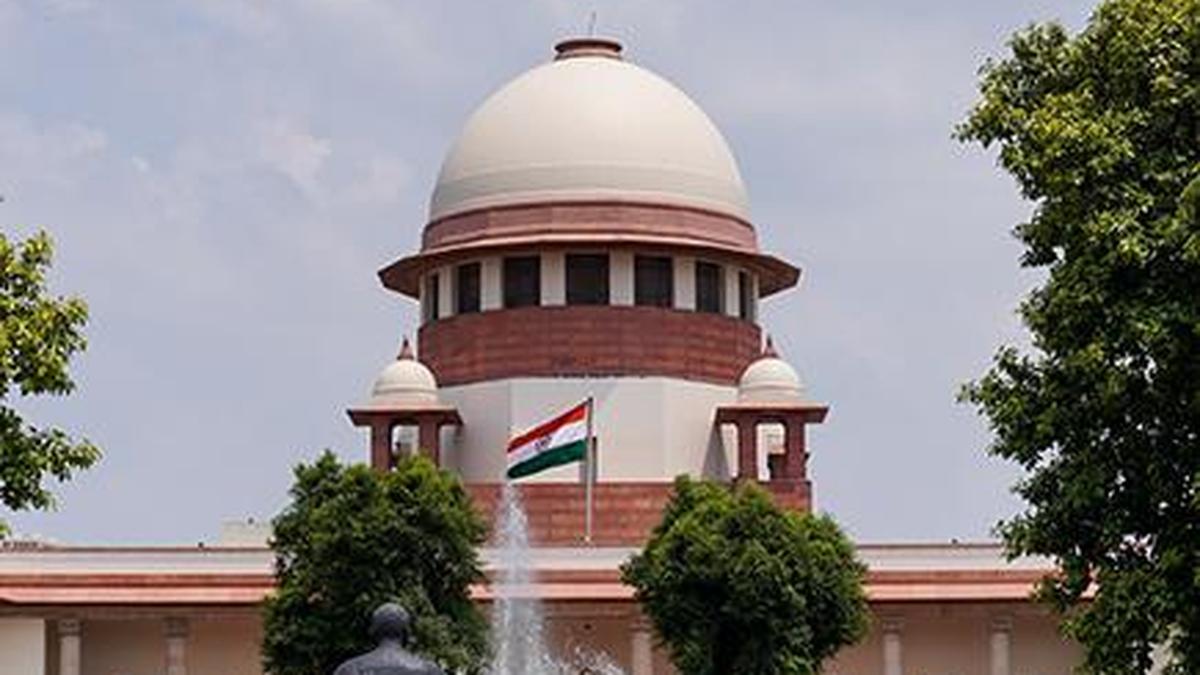
The Supreme Court’s judgment also exposes a paradox: it adopts arguments that have been painstakingly developed by sex workers but does not acknowledge the workers or their collectives (such as the National Network of Sex Workers among others). | Photo Credit: The Hindu For more than three decades, sex workers have told governments and courts how anti-trafficking interventions cause profound harm including forced rescues, indefinite detention in “corrective homes”, separation from children and even threat to life. And for decades, these accounts were only acknowledged in fragments, and never in a comprehensive rights-based framework. That is what makes the Supreme Court’s judgment of May 29, 2026, so significant.Across nearly 300 pages, the court departs from many assumptions that have long shaped anti-trafficking discourse globally. It recognises that agency and vulnerability can coexist; rejects the conflation of migration with trafficking; affirms that constitutional rights do not disappear because society disapproves of sex work; holds that consenting adult sex workers cannot forcibly be rescued; and that any intervention must begin with an inquiry into consent. Invoking Article 142, the court gives these directions legal force.But the judgment also exposes a paradox: it adopts arguments that have been painstakingly developed by sex workers but does not acknowledge the workers or their collectives (such as the National Network of Sex Workers among others). This is not only a question of credit; it reveals how even progressive jurisprudence can reproduce a hierarchy of knowledge in which those most affected by law remain its least recognised authors.What the judgment assumesThe judgment places faith in institutions that have repeatedly failed the very people it seeks to protect. The court assumes that clearer legal standards will produce different institutional behaviour — that police officers will assess consent without prejudice, magistrates will suspend moral judgment, shelter homes will become rights-based support services, and sex workers will have access to legal aid.For many women, especially those from the Dalit and Adivasi communities, bureaucracy has never been a neutral system. Caste discrimination and economic marginalisation continue to shape everyday encounters with the state. One woman, wrongly labelled a trafficker after a raid, has spent seven years reporting every month to a police station while attending court hearings where, despite all this time, her statement has never even been recorded. “I go to court and sit outside. Then they call my name, and I go inside. But they don’t ask me anything. They have not even recorded my statement yet!”The top court rightly recognises caste as one of the structural conditions that can push women into sex work. But it stops there. Caste does not simply explain entry into the profession. It also structures every institution responsible for implementing this judgment. As one worker put it: “The state says that acche din (good days) will come. When will our acche din come? Everything is about money these days. Take any actor. They can kill but do not get arrested. Those who do not have money have to keep going to the court like me.” Her question exposes the judgment’s central assumption: that the law is applied equally once rights are recognised. For many workers, the challenge is not only overcoming moral prejudice. It is navigating a legal and bureaucratic system that continues to be shaped by caste.The judgment is also noticeably quieter about another source of violence: the anti-trafficking industry itself. The court recommends reforming shelter homes but does not examine the organisations that run them, the funding structures that sustain them, or the incentives that make carceral and forced rescue practices persist. The rescue industry is not solely a humanitarian project. It is sustained by a dense network of civil society organisations that participate in forced raids, manage shelter homes, and exercise significant authority over the women confined within them.One woman who experienced both prison and a government shelter offered a striking comparison. “Even after rescue, we are bound by the shelter. It is another form of bondage. It seems better to serve six months in jail and come out free than to stay in a shelter for an unknown time.” This account is not an exception. It exposes an uncomfortable reality that anti-trafficking discourse obscures: rescue can become another mechanism of control.The road aheadThe top Court’s recommendations are important. But for the judgment to fulfil its promise, three priorities stand out.First, sex workers and their unions must move from the margins to the centre of implementation. They should draft guidelines, monitor compliance, shape police training, and establish standards for shelters. Second, the anti-trafficking NGO sector deserves scrutiny. Longstanding evidence suggests that some have become active participants in coercive rescue practices while operating with limited accountability to the communities they claim to serve. Their funding and legal immunity should no longer be taken for granted. Finally, the structural conditions identified by the court do not require new institutions to fix. India already possesses an extensive welfare architecture. The challenge is ensuring that sex workers can access it as rights-bearing citizens.The Supreme Court has opened an important constitutional door. Whether it leads to meaningful change will depend on whether India’s institutions can abandon decades of paternalism and begin treating sex workers as citizens whose choices deserve the same legal respect as anyone else’s.Pankhuri Agarwal is Lecturer and Leverhulme Early Career Research Fellow at King’s College London. Author of ‘Fictions of Freedom: Migration, Modern Slavery and Bureaucracy in India’ (Cambridge University Press) Published - August 03, 2026 12:40 am IST
Analysing the Supreme Court’s judgment on sex work
Full Article
Original Source
Read the full article at Thehindu →KhanList aggregates and links to publicly available news content. We do not host full articles from third-party sources. Always verify important information with original sources.