
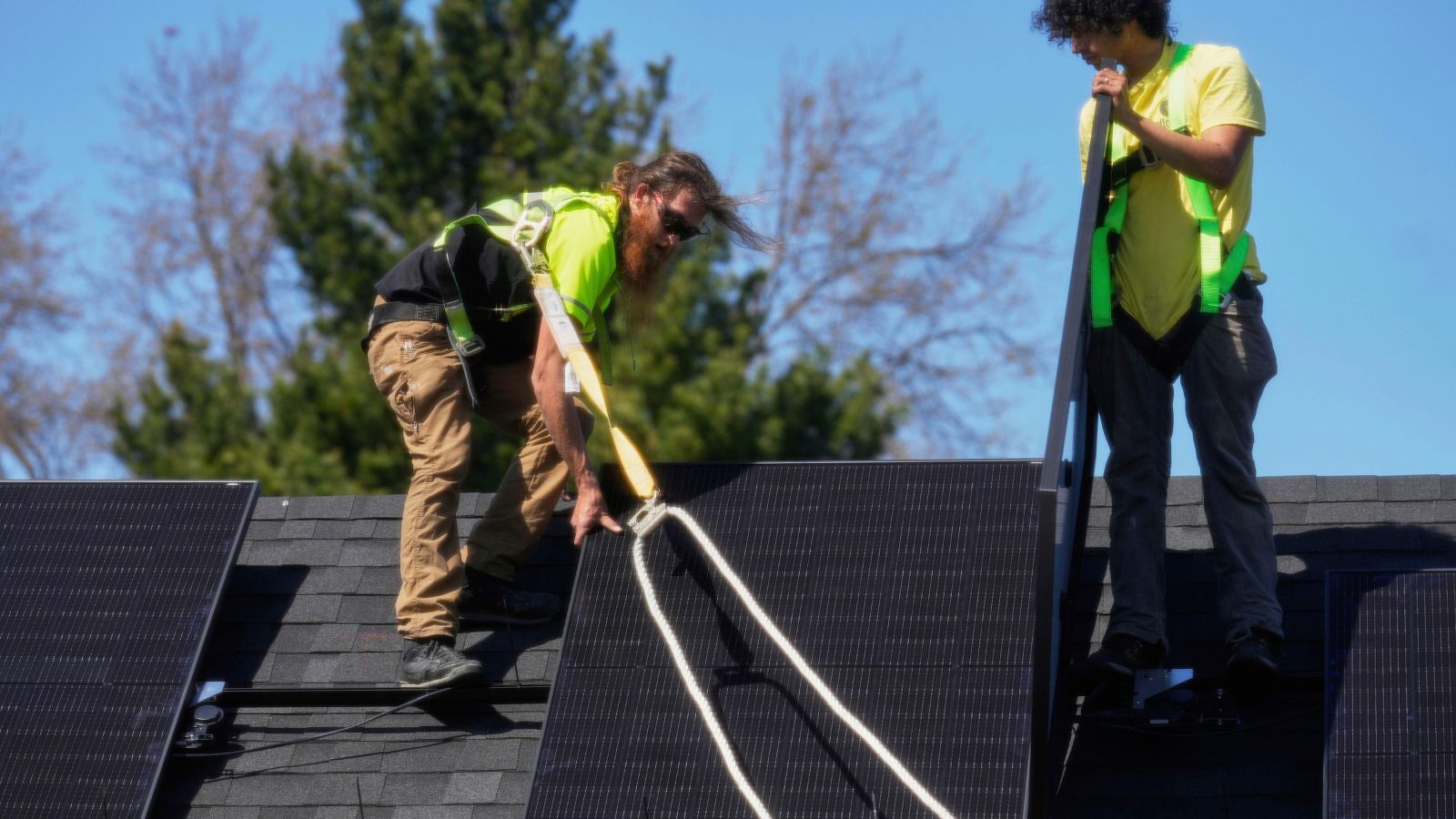
Skip to content (Image credit: AP Photo/Sue Ogrocki, File) Transcript: In 2018, residents of Athens, Ohio, did something unusual – they voted to raise their own utility bills. The voters chose to adopt a carbon fee, a small bump in their electricity rate that goes to solar energy projects on city buildings and other public sites. The fee is less than two dollars a month for the average household. Mayor Steve Patterson says the idea passed with broad support. Patterson: “Three-quarters of the citizens who voted during that election cycle said, ‘Yes, we are willing to pay an extra $1.80 per month to have more solar.’” And residents who don’t want to pay can opt out. But most have not. So the city now raises about $100,000 dollars each year from the carbon fee. This money has helped add solar to Athens’s historic armory, upgrade the transformer for a solar array at a public pool, and fund other projects around the city. Patterson: “I get comments all the time thinking how wonderful it is to see the city taking on solar initiatives to reduce our energy consumption from the grid. Knowing that it’s renewable energy in the city of Athens, to them it’s exciting.” And by producing its own solar energy, Athens lowers the amount of taxpayer money spent on electricity – while reducing carbon pollution. Reporting credit: Ethan Freedman / ChavoBart Digital Media
An Ohio city is raising about $100,000 a year for solar through a carbon fee
Full Article
Original Source
Read the full article at Yaleclimateconnections →KhanList aggregates and links to publicly available news content. We do not host full articles from third-party sources. Always verify important information with original sources.