
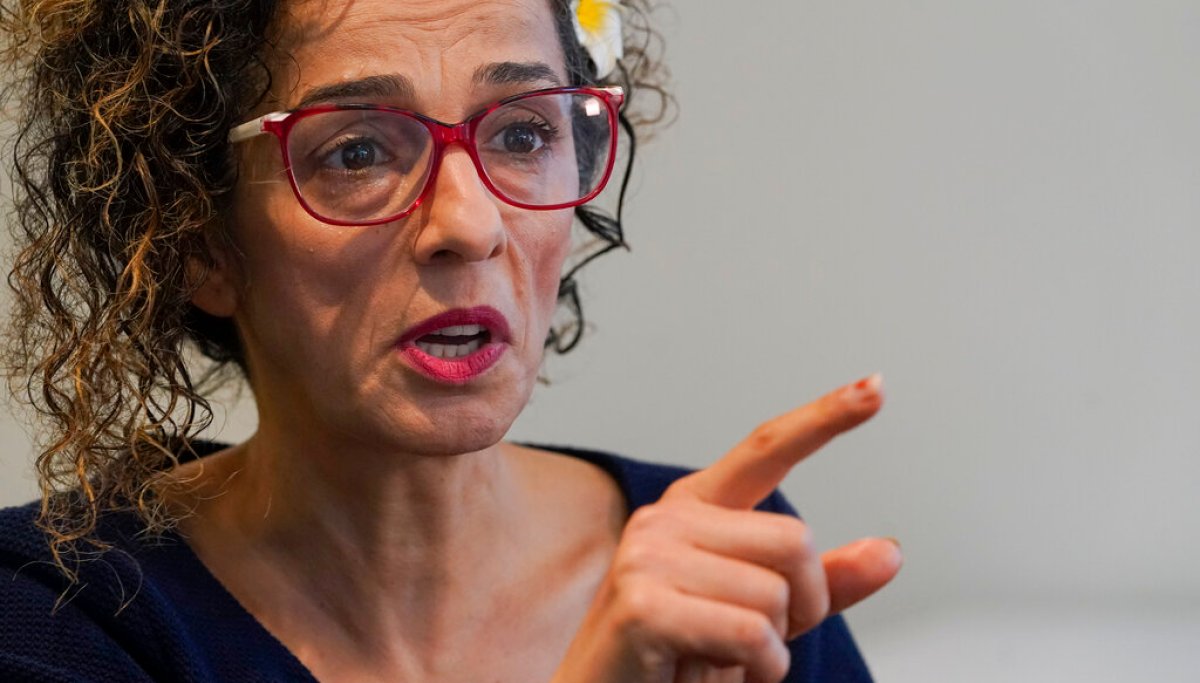
A man was arrested on a Brooklyn street with an AK-47 in his car. His target was Masih Alinejad, an Iranian-American journalist and former Voice of America contributor, living a few doors away.The Justice Department says the plot was directed by senior officers of Iran’s Revolutionary Guard, who put up $500,000 for the killing. On Oct. 29, 2025, a federal judge in Manhattan sentenced one of the men who helped arrange it — Polad Omarov, a Georgian national — to 25 years.That is an Iranian state operation, on American soil, with a Georgian citizen inside it. IRAN IS BUYING GEORGIA, AND TRUMP IS ABOUT TO SANCTION THE WRONG PEOPLENow ask a simple question. How many American news organizations have a correspondent living in Georgia, able to report the other end of that story?None that I can find, and I have spent two years looking.Not Fox. Not Newsmax. Not the New York Post. Not this newspaper. No major American commercial newsroom appears to keep a full-time reporter in a country where the United States has spent well over a $1 billion since 2004 building border, police, and counterterrorism institutions.What the absence costs in one month Consider what happened there in 17 days this August, which I already described in these pages.The Treasury Department sanctioned a Georgia-registered exchange for moving money to and from Revolutionary Guard wallets. A week later, Georgia declined to join the European Union’s latest Iran measures, while nine countries, including Ukraine and Moldova, signed on. Two days after that, Iran’s state newspaper celebrated the refusal as a victory over Western pressure. Then, Treasury Secretary Scott Bessent launched a new secondary-sanctions campaign and warned that countries tying themselves to Iran should expect to share Tehran’s isolation.Georgians learned what all that meant largely from Tehran’s framing, because there was nobody else there to file another version.That is not a Georgian problem. That is an American position being surrendered without a fight, in a country that still polls as one of the most pro-American in Europe.The Georgian state is not being subtle about it In June 2025, the Georgian government adopted Resolution No. 196, liquidating the Information Center on NATO and the European Union, the one public institution created in 2005 to explain those two organizations to Georgian citizens.Fourteen months later, the building went to auction. A protected heritage monument in central Tbilisi, listed at 14.1 million lari, it sold on Aug. 13 for 34.81 million — nearly two and a half times the asking price. The buyer was Geotech Distribution, wholly owned and directed by Kakhaber Kobaivanov.Weeks before the center was liquidated, Kobaivanov had been registered as the founding director of Kala Capital Tbilisi, a company wholly owned by Kakha Kaladze, the mayor of Tbilisi and secretary general of the ruling Georgian Dream party.Georgia’s constitution obliges every state body to take all measures toward full integration into the European Union and NATO. The building where that was explained to the public is now commercial real estate.Meanwhile, Euronews Georgia stopped covering domestic news in January. Radio Free Europe’s Russian-language Caucasus service closed in the spring after seventeen years. Independent Georgian broadcasters operate under laws written to bankrupt them.The field did not empty on its own. Part of it was liquidated by government decree and sold at auction.What Georgians do when they cannot reach you Two small things from this year explain the situation better than any statistic.For nearly two years, Georgians have protested their government almost daily. Go back to the footage from the first year and count the American flags. There were almost none — European flags in the tens of thousands, and from the stage, cursing of the United States. American flags reappeared largely because one activist in Tbilisi, Ia Parulava, bought them out of her own pocket and carried them into a crowd that did not want them. She was insulted for it. She was later fined 5,000 lari by the patrol police for handing out brochures explaining the MEGOBARI Act — the American bill on Georgia that passed the House 349-42 — brochures she had also paid for herself.And this month, a Georgian heraldic society in Tbilisi spent months designing a ceremonial coat of arms for the American president, as a gesture toward restoring the relationship. Then they tried to send it. The addresses they had did not answer. Eventually, they wrote to me — a Georgian columnist in San Francisco — because they could not think of anyone else who might know how to reach an American.They were not looking for coverage. They were looking for a door.Both sides of Georgian politics now run against you Here is the part Washington will like least.Georgian television, government and opposition alike, builds its picture of America out of imported American reporting — translated, clipped, captioned, and broadcast with no reply.The government’s channels use it to argue that America is finished, which serves Moscow. The self-described pro-Western channels use the same material to attack the current American administration, having persuaded themselves that this is the entry fee for European respectability.One example. When the Georgian outlet iFact documented that the state oil corporation wrote off a debt owed by a Houston company whose founder then lobbied against American sanctions legislation, the English version was a story about the Georgian government buying its way out of American pressure. Broadcast on a Georgian opposition channel, the same investigation was reframed around the personal interests of a sitting American Cabinet secretary. The company’s Georgian co-founder, its face before the Georgian government for years, did not appear in the broadcast.One investigation, two audiences. In English, a story about Tbilisi. In Georgian, a story about Republicans.Different motives, identical output, same audience — and no American voice anywhere in the chain.The arithmetic I am not asking for aid, sanctions, or a resolution. I am asking for a desk.One correspondent, a resident in Tbilisi with a phone and a camera. It costs less per year than a single congressional delegation’s travel, and less than one of the Washington lobbying contracts the Georgian government has been signing.There is no talent shortage. Georgia has experienced journalists working in English who have covered its courts, customs registries, and Kvemo Kartli for years, and who are underemployed right now because the outlets that paid them are being strangled by law.But the shortage is not only economic, and this is the part that rules out the cheaper option. The government is closing newsrooms. The opposition newsrooms still standing have no interest in describing this president, this administration, this party, or this country accurately — they have built their editorial identity on the opposite. A Georgian reporter who wants to explain American policy as it actually is has nowhere to publish it in Georgian.That is why the correspondent has to be American and has to be paid by an American newsroom. Funding a local outlet does not solve this. It funds the problem.And the stories are already in the open. The Iranian seminary network is operating in three Georgian towns. The Tbilisi address is shared by hundreds of Iranian companies. The criminal case Georgia’s security service opened against the author of a Hudson Institute report rather than against the network he described.None of that requires a source inside the Georgian government. It requires someone standing in the country.RUSSIA CAN STILL SELL OIL. IT JUST CAN’T MAKE GASOLINEThe Countering China’s Control of the Caucasus Act, which passed the House in June, requires a five-year strategy including an assessment of whether Georgia should remain a top recipient of American assistance. That decision is being made right now, and it is being made in the dark.Tehran did not have to win the argument in Georgia. It only had to be present while nobody was making ours.Emzari Gelashvili is a former member of the Parliament of Georgia (2008-2012) and a former senior official in Georgia’s Ministry of State Security, Ministry of Defense, and Ministry of Internal Affairs, with a counterintelligence career focused on Russian and Iranian operations. He is a geopolitical analyst in San Francisco.
An Iranian plot reached Brooklyn. Why isn’t a single American reporter covering the other end?
Full Article
Original Source
Read the full article at Washingtonexaminer →KhanList aggregates and links to publicly available news content. We do not host full articles from third-party sources. Always verify important information with original sources.