
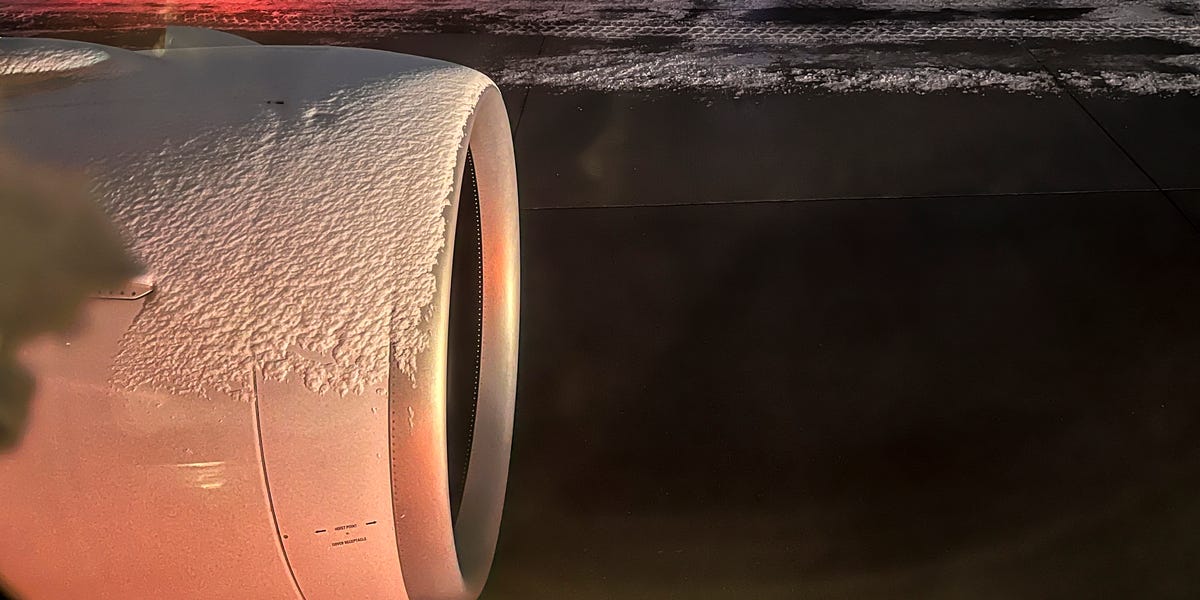
3 min readFlying is safer than any other source of transportation—there’s no denying that. Aeronautics experts estimate that flying is roughly 626 times safer than traveling in a passenger vehicle, and that safety is built from decades and decades of incremental improvements to airframes, pilot training, and air traffic control. But despite this well-earned record, airplane accidents do happen, and when they do, they tend to grab headlines.Few crashes prove this more starkly than the Learjet that plummeted onto a busy road in Palm Beach, Florida. On November 1, 2026, a Bombardier-made Learjet smashed into the ground so fast that dash cams on car driving along the busy street only caught a brief blur before a small explosion. The plane carried nine people, including a family of four from Texas and two pilots, on their way from the Lone Star State to the Bahamas. All aboard died on impact, and it’s the impact itself that’s one of the most perplexing aspects of this deadly crash. Audio recording from the cockpit moments before the crash captures co-pilot Nathalia Filgueiras reporting a descent at a staggering 20,000 feet per minute before screaming that the plane was about to crash into the groundSo what exactly happened up there at cruising altitude? The National Transportation Safety Board (NTSB), the federal agency in charge of investigating civil transportation accidents, likely won’t reach an official conclusion for months, but initial details point to one age-old culprit: ice. On that same in-cockpit recording, Filgueiras previously reported that “we have light, clear ice that is manageable and moderate turbulence” as the plane flew into a thunderstorm cell around 12:48 pm local time, but experts believe that the icing threat was greater than anticipated.“Flying in icing conditions can present operational risks, including the adverse effects of airframe and propeller icing on aircraft performance, which can make managing the airplane’s flightpath and airspeed more difficult and can prevent the airplane from maintaining level flight,” the NTSB says. “As little as 1/4-inch of wing leading-edge ice accumulation can increase the stall speed by 25 to 40 knots and cause sudden departure from controlled flight.”Since ice is such a well-known atmospheric enemy, you might expect that airplane design and flight instruction have evolved to conquer it by now. Yet a March 2024 study published in the Journal of Aviation Technology and Engineering found that icing accidents involving small jets didn't meaningfully decline from 2000 to 2019, despite what looked like a modest downward trend. The researchers also found that icing accidents were twice as fatal as accidents that didn’t involve ice at all.As The New York Times explains, a wing’s curved shape makes air move faster over its top than beneath it. According to Bernoulli’s principle, that faster air exerts less pressure, and the difference in pressure pushes the wing upward. Even a thin layer of ice changes that carefully engineered shape, breaking up the smooth airflow, cutting lift, and causing the wing to stall at higher speeds than it normally would. Larger aircraft are less vulnerable, since their big, fast-moving wings make it much harder for a thin layer of ice to manipulate the wings’ shape. Commercial airlines also have anti-ice systems to prevent dangerous accumulation, but anti-ice measures on small jets aren’t as powerful. Learjets have three methods for de-icing, including the circulation of warm exhaust over the wings, but those safety systems need to be activated by the pilot.One expert who spoke with The New York Times suspects that the aircraft encountered “clear ice,” a type of supercooled water that can freeze on wings in clear sheets. The pilots may have mistaken the ice’s effects on the flight controls for turbulence and tried to climb out of the storm. That climb could have triggered what’s known as a “tailplane stall,” in which the tail loses lift and sends the aircraft into an uncontrollable nosedive.More details will emerge in the coming weeks and months as the NTSB continues their investigation, and one can only hope that the tragic deaths of those onboard will serve as a reminder for future pilots that flying headlong into a thunderstorm always carries some level of unforeseen risk.Darren lives in Portland, has a cat, and writes/edits about sci-fi and how our world works. You can find his previous stuff at Gizmodo and Paste if you look hard enough.
An Invisible Enemy Has Haunted Aviation For Years. It May Have Caused the Fatal Learjet Crash.
Full Article
Original Source
Read the full article at Popularmechanics →KhanList aggregates and links to publicly available news content. We do not host full articles from third-party sources. Always verify important information with original sources.