
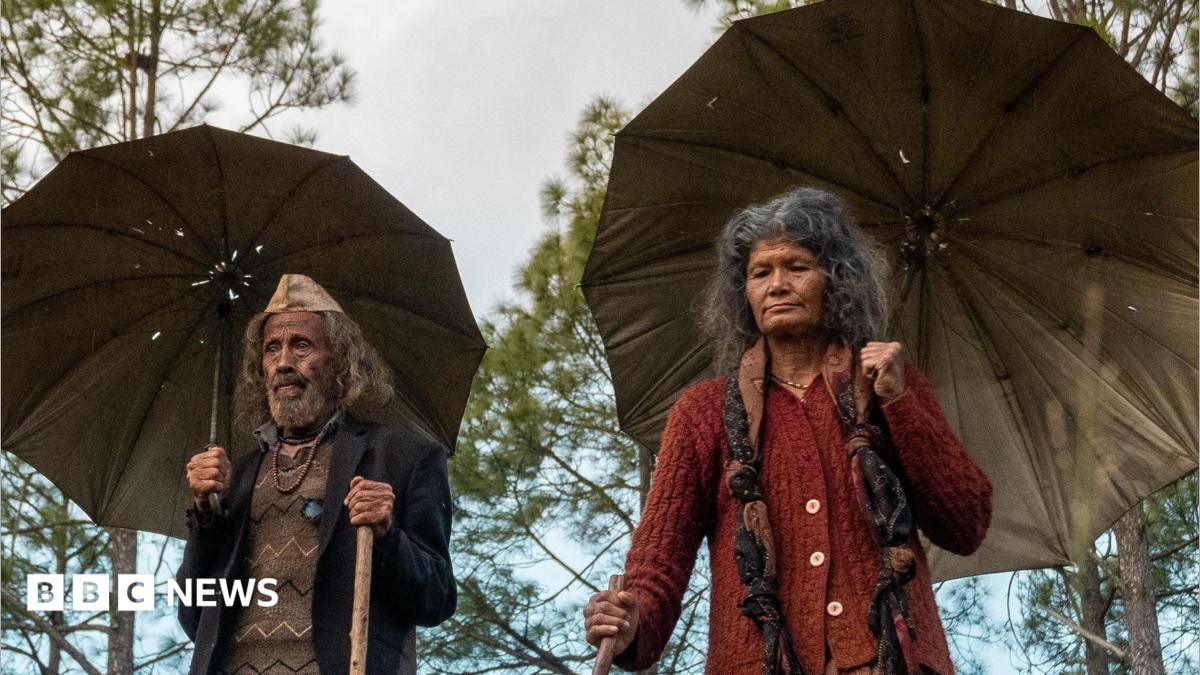
An Indian film that nobody would release is finally a hit - 18 awards laterImage source, Vinod Kapri/PyreImage caption, Pyre's protagonists are Bubu and Aama – local terms for grandfather and grandmotherByGeeta PandeySocial Affairs Editor, IndiaA film about the tender love and quiet loneliness of an elderly couple, which took two years to reach cinemas after it was completed, is wowing critics and audiences across India.The 111-minute Pyre, directed by television journalist-turned-filmmaker Vinod Kapri, also explores the pressing issue of outmigration which has left hundreds of picturesque Himalayan hamlets abandoned and turned them into ghost villages. It further reflects on the impact of climate change, which has made the region's weather increasingly harsh.On social media, many Indians have shared videos showing audiences leaving theatres with tears in their eyes. Others have posted that they have not been so moved by a film in a long time.The film's lead actors, ordinary villagers who had never faced a camera before, have also won praise from some of Bollywood's most respected figures, including Naseeruddin Shah and Anupam Kher.Pyre's protagonists - Padam Singh (played by Kapri's uncle, Padam Singh) and Tulsi (played by Heera Devi) - are Bubu and Aama, local terms for grandfather and grandmother. The couple live in a small home in the mountains of the northern state of Uttarakhand .It's a place where age is measured against momentous events. Singh was born two years before the outbreak of World War II. Tulsi was born in the year atomic bombs were dropped on Japan.There are no roads and no electricity. Whenever the couple need help – which is often as Tulsi frequently has to be carried to hospital – Padam Singh uses a traditional long-horn instrument to summon neighbours. In return for their kindness, he pays them with goats.Image source, Vinod Kapri/PyreImage caption, For Padam Singh and Tulsi, bickering is their love language"There's nothing here – just mountains," as one character puts it. So the young leave in search of greener pastures, and those who depart this beautiful, but blighted, land rarely return.Kapri says his film remains focused on the "soulful love story of the ageing couple in their last days"."They have shared a life together for 65 years and, for the last 28 years, they've been waiting for their son, Hariya, who's gone to Mumbai in search of work, to come back," Kapri tells the BBC. "It's a story of companionship, of loneliness and of waiting."Their wait takes on a new urgency when suddenly, after all these years, a letter arrives from Hariya setting a date for his visit. As Padam Singh and Tulsi count down the days, the handful of villagers around them leave one by one, until the couple find themselves alone in the vast mountain landscape."You and Tulsi should also leave as soon as possible. Otherwise, you won't even have four people to carry your body down the mountain to the funeral pyre when you or Tulsi die," one departing villager advises Padam Singh. "Or die before we leave," he adds in jest.With no one left to call for help, Padam Singh builds two funeral pyres side by side right outside his door – one for his wife and one for himself."How will I carry you down the mountain if you die?" he tells Tulsi when she questions the decision.Image source, Vinod Kapri/PyreImage caption, Padam Singh has to use a traditional long horn instrument to summon neighboursDespite the bleak setting and the weight of the topics covered, Pyre is suffused with humour. The central couple are delightful. Like many long-married spouses, they seem to treat bickering as a love language.Kapri, who is from Uttarakhand, got the idea for the film in 2018 after meeting an 84-year-old man in Munsiyari, a scenic hill town in the state."I visited him after seeing his photo in a Facebook post. The wrinkles on his face really fascinated me. His face was unique."Kapri said he asked him and his wife what their biggest worry was."He said, 'My biggest worry is, if I die first, who is going to take care of her?' And she said, 'He doesn't know how to cook. So if I die first, I don't know who is going to cook food for him.' That was so heartwarming for me."Kapri says he initially tried to make his film with "the real couple", but abandoned the idea after a week of shooting, when it became clear it was not working. He then approached actors Naseeruddin Shah and Ratna Pathak - a couple themselves - for the lead roles.Shah loved the script, Kapri says, but felt that he and Pathak did not belong to the region and would struggle to do justice to the characters.Kapri finally found his Padam Singh within his own family – his father's younger brother, a retired army soldier who expressed an interest in acting. He found his Tulsi in another village. Heera Devi, an elderly widow, had raised her children through years of farming, cutting grass and tending to her buffalo.Image source, Vinod Kapri/PyreImage caption, Their tender love story has won hearts in IndiaOver the years, Padam Singh and Heera Devi tell the BBC, they have watched stories of ghost villages, of children migrating for work, abandoning the elderly, play out all around them. They say today they are overwhelmed by the attention Pyre has got.Since 2024, the film has been screened at some of the world's biggest festivals. It has won 18 awards, Kapri says, including three for best feature and 12 audience-choice best film prizes.Despite its success at festivals, Kapri says, Pyre spent two years without a distributor. Even OTT platforms passed on the film and it finally reached cinemas only when a producer friend of his stepped in to fund a theatrical release.But, he says, the modest 70-screen release on 30 October sparked favourable word-of-mouth reviews and with the demand for tickets going up, there was an increase in overall screenings too.Meanwhile, the misgivings that both Padam Singh and Heera Devi say they initially had about stepping in front of the camera and forgetting their lines are gone now. Heera Devi says she was even concerned about what her children would think - and what would society say? Today she and Padam Singh are basking in the positive reviews of film critics and the affection of their audiences.Image source, Vinod Kapri/PyreImage caption, Padam Singh and Heera Devi's story is also one of ghost villages, children migrating for work and abandoned elderlyImage source, Vinod Kapri/PyreImage caption, Heera Devi says the film has appealed to many because "in reality, our village is just like this".They have met teary-eyed people at multiple screenings - many wanting to touch their feet and hug them, many who said the film reminded them of their own parents and grandparents who are waiting in villages, towns and cities that they had come from. "We felt immense joy and happiness. We've received so much love and inspiration - something we had never imagined," says Padam Singh.But the best moment for him came when he met Naseeruddin Shah in Mumbai. "He watched the entire movie and had tears in his eyes. He hugged me. He said, 'Bubu, the role you have performed, I wouldn't be able to pull off even in seven lifetimes.'"The film's appeal, Heera Devi says, is because "in reality, our village is just like this"."Across villages in India, the elderly are left alone. No one's children stay at home anymore and it's the same situation for all parents. They keep waiting for their son and daughter-in-law, hoping that their grandchildren would visit and spend a few days with them. The loneliness is simply unbearable."Padam Singh says he has a message for the younger generation in Uttarakhand and the rest of India."I want to tell them they must not abandon their motherland, the land where they were born," he says. "I also appeal to the government to bring education and employment to where people are - so that they don't have to wander away. When that happens, the parents who are being left behind will also be cared for."
An Indian film that nobody would release is finally a hit - 18 awards later
Full Article
Original Source
Read the full article at Bbc →KhanList aggregates and links to publicly available news content. We do not host full articles from third-party sources. Always verify important information with original sources.