
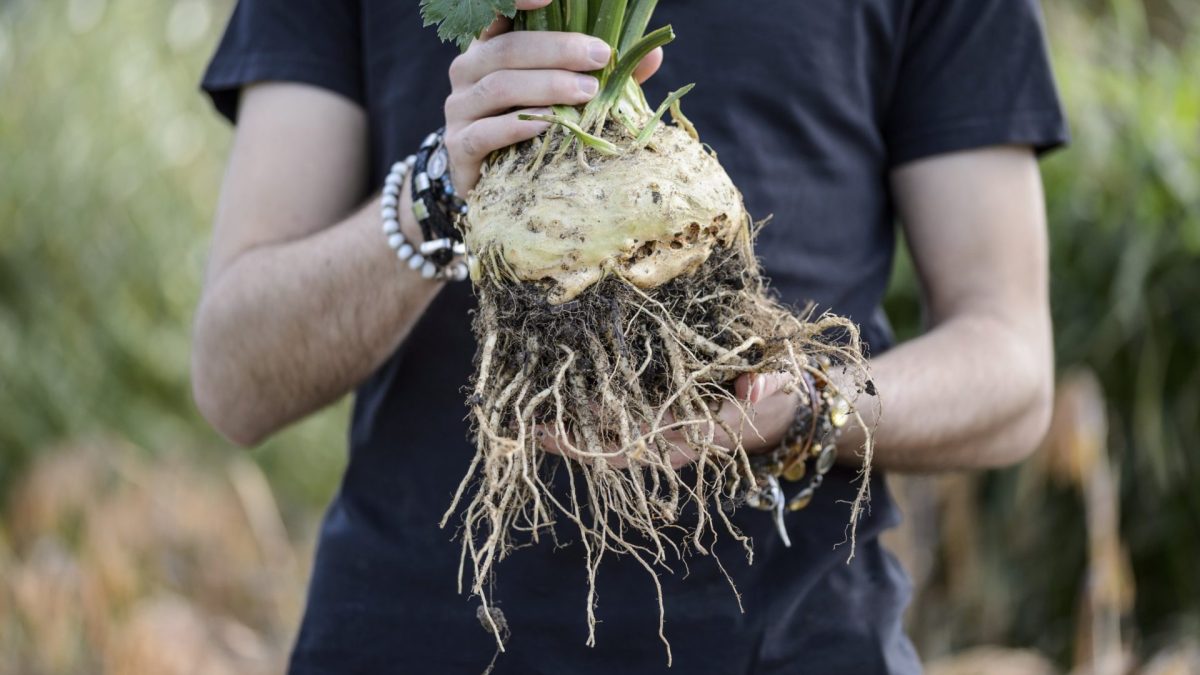
Although the summer abundance is over, well-stocked vegetable plots have winter crops including beetroot, Brussels sprouts, cabbages, carrots, kale, leeks and parsnips at their best now. Brussels sprouts, parsnips and swedes get sweeter with freezing weather, because starch is mobilised into sugars that act as anti-freeze, protecting cells. From February, the sugars will be turned into leaves and flower shoots, with the crop then becoming unusable. To avoid wastage, consume crops before this happens. Having said that, a few leeks, carrots and parsnips can be left to flower, as they make for excellent pollinator plants. Other crops, including pumpkins, squash, beetroot and turnips, are sensitive to low temperatures. They must be kept frost-free in the case of beetroot and turnips and about 12°C indoors for pumpkins and squash. In cold northern regions, beetroot, carrots and celeriac must also be protected by being brought indoors or, to retain good carrot flavour, covered in cardboard or straw and a rain-excluding sheet of polythene. Harvesting leeks and root crops from frozen ground is difficult, so either lift a bucketful to keep a supply in the shed each week or cover some with cardboard, hessian or other protection. Snow is less restrictive, but it can settle on anti-pigeon nets, leading to collapse. Shake off deposits before damage occurs. Early winter and autumn digging leaves the garden looking tidy, burying debris and weeds, but that is probably its only benefit. Formerly held to enhance soil texture, due to frost action and drying and wetting cycles, current thinking is that it does not create lasting benefit. Sowing cover crops or mulching is probably preferable.It is too late for worthwhile cover crops, as they simply won’t grow much bulk. Rye, ryegrass and wheat are doable options where they can be left until later spring to bulk up and root deeply to accomplish their soil improvement work. Buying in manure or compost, on the other hand, is a good option. Delaying digging and, indeed, clearance until late winter better supports wildlife but risks unmanageable work for late winter/early spring – gardeners must strike a balance. Where digging is not practised, stack manure for use as mulch in spring. Compost, however, being free of soluble nutrients, can be spread as mulch all winter, when the soil is dry enough, with no loss of nutrients or risk of pollution. In cold northern regions beetroot, carrots and celeriac must also be protected by being brought indoors (Photo: RHS/Jason Ingram) Wet soil is damaged by trampling. Growing vegetables in beds worked from the paths avoids treading on soil. Winter is a good time to shift to a bed system. Raised beds, even just 20cm high, are ideal for clay soils that lie wet until late spring, but other soils dry out quickly in summer, requiring more watering. Unraised beds don’t add to drought. In the south, there are only 12 weeks before sowing and planting for 2027. To be ready for that happy day, retrieve canes, labels, mesh, nets and stakes and other sundries, ordering more to take advantage of out-of-season discounts. Order seeds, sets and plants. Plants tend to be grown to order, and late ordering can lead to weak plants. Fertilisers keep for years if kept dry, but labels can deteriorate, so slip a label inside the bag or box.Suppress weeds that set seeds in winter – notably annual meadow-grass, chickweed and annual nettles. Ideally leave some where possible to feed birds and other wildlife. Perennial weeds are a different matter, and early winter is a good opportunity to dig them out while their position is still betrayed by their collapsing foliage. @GuyBarter is the Royal Horticultural Society’s (RHS) chief horticulturist. The RHS is a charity inspiring everyone to grow via its research, advisory, outreach, shows and gardens. For more information, visit rhs.org.uk
An expert guide to winter-proofing your vegetable garden
Full Article
Original Source
Read the full article at Inews →KhanList aggregates and links to publicly available news content. We do not host full articles from third-party sources. Always verify important information with original sources.