
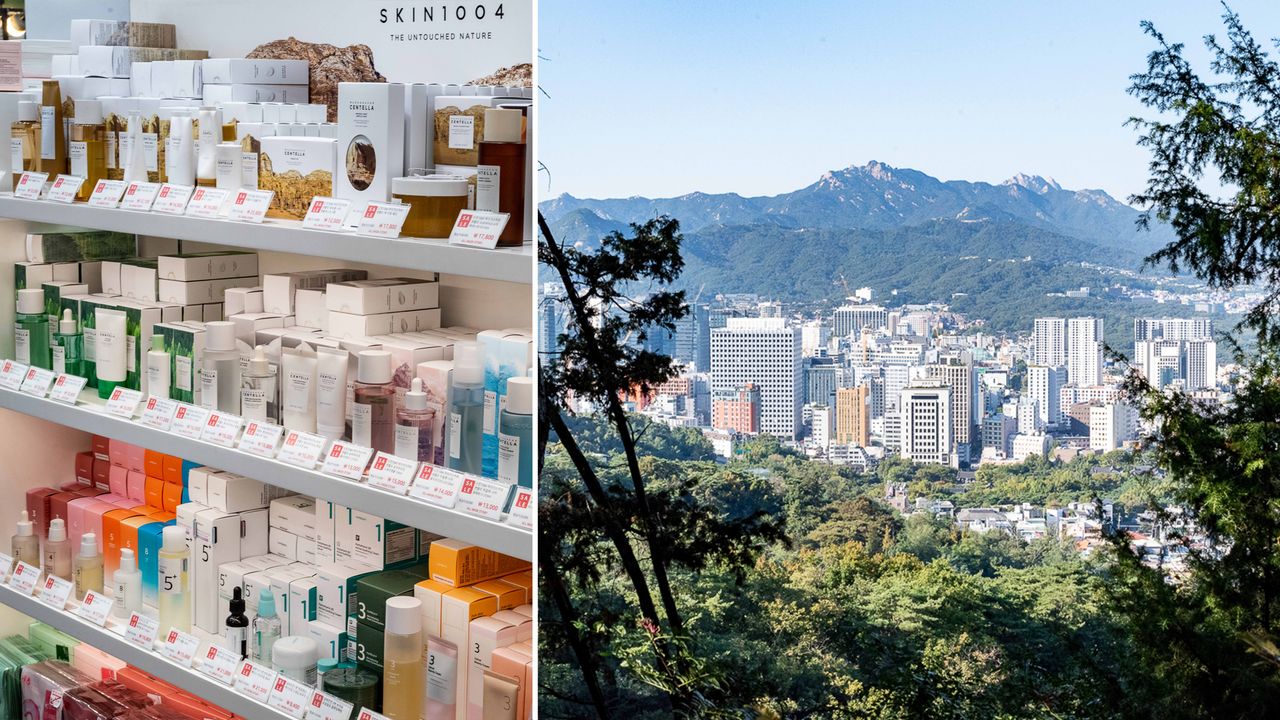
Korea’s beauty tourism is booming—here's how to get the most out of your K-beauty treatment trip, according to skincare specialists.Anna HainesIf you'd told me when I was 13 years old, a half-Korean girl growing up in Canada, that Korean beauty products would one day line the shelves of every Sephora around the world, I wouldn’t have believed you. The Korean Wave–K-pop, K-beauty, K-entertainment, and K-food–has spread globally over the past two decades but, recently, it seems to have reached a crescendo. From Olive Young opening its first North American location in Pasadena, California, this summer to the frequently sold-out kimbap at my local Trader Joe’s, Korean culture is everywhere.K-beauty products on display at a store in Seoul Anna HainesGlobal interest in visiting South Korea, not just appreciating its culture from afar, is driving traveler numbers to the country like never before—over 6 million visitors were recorded in the first quarter of 2026 alone. Some go to experience the splendor of the ancient palaces, tranquil Buddhist temples, and backdrops of their cherished K-dramas; others to try the street foods they’ve seen splashed across their social media feeds. And, as the popularity of K-beauty has spread, more and more travelers are flocking to South Korea in hope of achieving the glassy, glowing skin Instagram feeds are replete with. As a leader in aesthetic medicine offering top-notch treatments at a fraction of the cost as in the United States, Korea’s beauty tourism is booming—last year, 1.3 million visited for dermatology treatments and 233,000 for plastic surgery.Various Korean sheet masks on offer at a beauty store in Seoul Anna HainesThis year, I was one of them. Well, sort of. I went to Korea to explore my father’s native country. But after six weeks of witnessing age-defying complexions, I figured when in Rome. I had scouted Seoul’s K-beauty scene back in 2024, but with the industry’s rapid development, I was due for a follow-up. After several clinic visits, treatments, and interviews with Seoul- and New York-based Korean experts—here’s what I wish I’d known earlier.Choosing The Right Clinic“Start by identifying your goals: do you want lasers, injectables, regenerative treatments, or surgery?” Dr. Eunice Park, the founder of AIREM, a medical aesthetic spa in New York, asked me. We had traveled to Seoul together in 2024 to check out the latest treatments for an annual K-beauty retreat she runs. I didn’t know what I wanted; all I knew was I wanted something.For those who are unsure about the treatments they should be seeking, New York- and Seoul-based esthetician Erica Choi, the founder of Superegg skincare, recommends visiting a clinic known for a specialization. If you’re like me and need treatment guidance, a reputable clinic will tailor your treatment plan to your aging pattern, skin quality, and facial structure. Either way, avoid factory-style clinics offering one-size-fits-all packages at suspiciously low prices, advises Dr. Joon Lee at DOD Dermatology, where I had a combined radio-frequency microneedling and exosome treatment, designed to stimulate collagen and elastin productionInstead of following social media trends, prioritize the clinic’s credentials. Be careful not to mistake a non-medical ‘aesthetic spa’ for a dermatology clinic offering medical-grade treatments. “I recommend looking for clinics with ‘의원’ (uiwon) in their name, which indicates a licensed medical clinic—they often have a red medical insignia displayed,” advises Choi.Applying a soothing balm during a treatment session Anna HainesSimilarly, ‘specialist’ isn’t the same as ‘dermatologist.’ While there are specialists skilled in aesthetic procedures, a dermatologist is more trustworthy, says Dr. Chang Sik Kim at Chang Dermatology. Every expert I spoke with emphasized checking that the dermatologist or surgeon has board certification, which indicates years of rigorous, specialized training.Another green flag is transparency during your virtual or phone consultation. The clinic should communicate who will perform the treatment, any risks, and the expected downtime. Once you’re in Korea, request an in-person meeting with the physician performing your procedure. “Even if the clinic charges an upfront consultation fee, it’s the best investment you can make to ensure you get exactly what your unique facial anatomy needs,” advises Dr. Kwangyeol Lee, director of Diore Clinic.Timing Treatments For Maximum Results and Minimal DowntimeSet yourself up for success by scheduling treatments strategically. Opting for minimally invasive treatments with less downtime afforded me the flexibility to explore the city and schedule treatments close together. “It used to be more pain, more gain, but now there can be less pain with more results,” says Dr. Shin Ji Yeoun at HEV Dermatology, where I had 10Therma, a lifting radiofrequency treatment that causes minimal swelling and redness.If you’re getting more aggressive treatments like lasers, thread lifts, or skin boosters, experts recommend scheduling them early in your trip to allow time for follow-up appointments and any swelling, bruising, and redness to subside before flying home.To maximize results and minimize downtime, take advantage of the Korean preference for stacking treatments. “The golden rule of sequencing is energy-based devices before injectables,” says Dr. Joon Lee. Combining certain treatments—like ultrasound and exosome skin boosters—can have a synergistic effect. “The ultrasound device stimulates deep collagen production, while the skin booster provides immediate hydration and accelerates the healing process,” explains Dr. Joon Lee. But stacking treatments should be planned carefully by your physician. Dr. Kim advises against getting more than one treatment that causes irritation and inflammation in the same day.To reduce the cost of multiple treatments, Choi recommends asking the clinic if they offer bundled treatment pricing. But the esthetician advises against overbooking, “it can be tempting to try everything in one trip, but more isn't always better.”Consultation imaging of the writer's face Anna HainesThe writer during a treatment Anna HainesAsk All the QuestionsI learned the importance of asking questions the hard way. After five weeks of traveling the country, I had translation fatigue. So, when I didn’t recognize the name of the painkiller I received during a skin booster treatment, I didn’t press further. It was only later I found out how strong the painkiller was.“If you don't fully understand, keep asking until you do,” advises Dr. Park. Before your treatment, find out what products and devices will be used, the recovery process, and potential complications.All the clinics I visited had staff who knew basic English, but details were still lost in translation. “Google Translate or AI translation apps are fine for casual questions,” says Dr. Joon Lee. “But relying solely on an app to discuss personal goals, pain tolerance, and medical history can lead to subtle but important misunderstandings.”Next time, I’ll arrange a translator. Dr. Joon Lee suggests checking the clinic’s website or Instagram to see if they have an in-house medical translator. If not, you can search for a certified medical tourism coordinator through the Korea Health Industry Development Institute (KHIDI). You can also ask the clinic to recommend a translator familiar with medical terminology to hire privately. “The cost of a translator is minimal compared to the cost of misunderstanding an important medical discussion,” says Dr. Park.Immediately after your treatment, Dr. Shin recommends diligent sunscreen application as well as avoiding alcohol, active skincare ingredients such as retinol and AHAs, and heat-intensive environments like the gym. Post-treatment communication with your clinic via messaging or email is essential in case any recovery questions arise.Consider post-treatment care in advance. “While uncommon, issues such as infection, bleeding, or even pulmonary embolism can occur after surgery and may require urgent medical attention,” warns Dr. Park. The plastic surgeon suggests developing a contingency plan, including who will look after you if something goes wrong upon returning home.Nutritious post-treatment food Anna HainesNourishing fermented food on display in Seoul Anna HainesLean Into K-Wellness For RecoveryIn Korea, beauty is as much an internal trait as an external one. “Historical texts detail rituals for the skin, but equally emphasize overall well-being,” says Choi. “One of the things I love most about Seoul is that wellness is woven into everyday life.”This seamless integration starts with the food. The traditional philosophy of ohaeng, in which a complete meal represents the five colors, tastes, and elements to balance the body combined with the prevalence of proteins, collagen-rich stews, and fermented ingredients, makes Korean cuisine ideal for post-treatment recovery.For a collagen boost, Dr. Kwangyeol Lee recommends samgyetang, a nourishing chicken ginseng soup. Dr. Park likes to have the immune-boosting soup at restaurant Tosokchon Samgyetang. The plastic surgeon also recommends miyeok-guk, seaweed soup, a Korean staple for postpartum and illness recovery due to its high mineral content. When I’m craving post-treatment comfort, I seek out juk, an easy-to-digest rice porridge. Bonjuk, a beloved restaurant with numerous locations, is Dr. Park’s go-to. Dr. Joon Lee tells his clients to spend an afternoon after treatment sipping medicinal teas like omija-cha (five-flavor berry, to relieve fatigue) at a Korean tea house (hanok café) in the historic neighborhoods of Samcheong-dong or Insadong.For a combined beauty-tea house experience, I always return to The House of Sulwhasoo in Bukchon Village. A gallery of Sulwhasoo’s most exclusive products on the first floor leads to an Osulloc tea house upstairs serving antioxidant-rich matcha from Jeju Island. Fans of the skincare brand can book a one-night holistic wellness retreat at Four Seasons Seoul, which includes a six-piece Sulwhasoo skincare kit, Sulwhasoo ginseng tea, and access to the Korean sauna and executive lounge. The invigorating Korean scrub offered in their jjimjilbang (Korean spa) always leaves me glowing, but only when applied pre-treatment—the heat of a sauna can irritate recovering skin.Writer Anna Haines enjoying a healthy meal post-treatment. Anna HainesInstead of visiting a steamy jjimjilbang for recovery, Dr. Joon Lee recommends a hanbang (herbal spa) where treatments incorporate traditional Korean medicinal herbs like ginseng to reduce swelling by stimulating circulation and lymphatic drainage. He also suggests visiting a head spa—the lymphatic acupressure massage offered during the scalp treatment can help reduce inflammation without interfering with the face.For dedicated aftercare support, there are post-operative recovery centers, often associated with surgical clinics, which provide medically supervised therapies like IV infusions, oxygen chambers, and LED light treatments to promote healing.Give Yourself Extra TimeSpotting several swollen, fresh-out-of-treatment faces on my 14-hour return flight to JFK, I was glad I gave myself extra recovery time in Seoul. It also provided a buffer for any post-treatment follow-up appointments.But the best decision I made was not spending my entire trip at cosmetic clinics, as many who travel to Seoul for treatments do. “Because so many aesthetic clinics are concentrated in Gangnam, travelers often miss some of Seoul's most charming and culturally rich neighborhoods,” says Dr. Park, who loves to explore the quaint shops and hanoks (traditional Korean houses) of Bukchon.A beautiful spring day in Seoul Anna HainesFor me, the most effective recovery strategy turned out to be surprisingly simple—live like a local. I extended my trip, booked an Airbnb, and spent leisurely days getting lost in winding alleys and lingering in cafes over medicinal mugwort lattes. “For many patients, the best recovery experience is actually slowing down and enjoying Seoul, while giving the body the time it needs to heal properly,” says Dr. Park. Choi feels similarly: “One of the best wellness lessons Seoul offers is that self-care doesn't always have to be a treatment—it can be as simple as slowing down, walking through a beautiful neighborhood, and giving yourself time to recharge.”Condé Nast Traveler does not provide medical advice, diagnosis, or treatment. Any information published on this website or by this brand is not intended as a substitute for medical advice, and you should not take any action before consulting with a healthcare professional.
An Expert Guide To Planning a K-Beauty Trip To South Korea
Full Article
Original Source
Read the full article at Cntraveler →KhanList aggregates and links to publicly available news content. We do not host full articles from third-party sources. Always verify important information with original sources.