
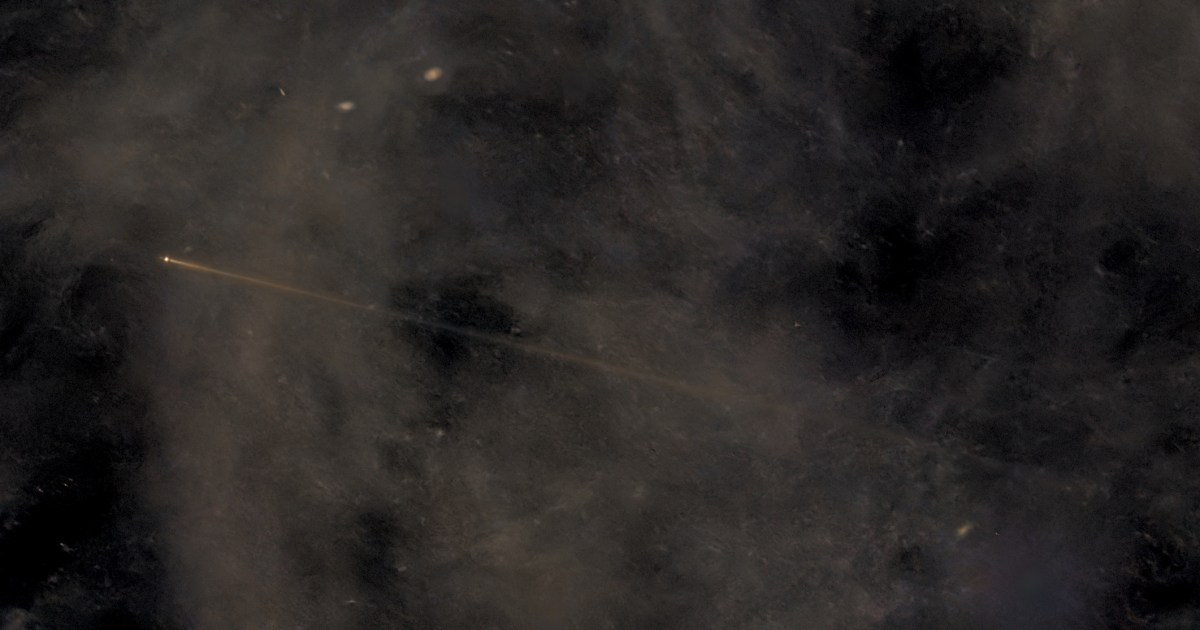
Dan Bartlett from June Lake, California Asteroid 6993 (1995 BJ4), a small body 7 miles (11 kilometers) across, orbits in the main belt between Mars and Jupiter. In August 2026, astronomers spotted a faint tail, making it candidate for the largest known main-belt comet. However, the tail has been gradually fading through 2026, which hints at it being caused by debris from a one-time impact rather than ongoing outgassing, astronomers reported last month in a paper accepted in The Astrophysical Journal Letters. In this image, the tail spans more than 35′, or wider than the Full Moon. 4.6 hours of exposure with two 11-inch f/2.2 Celestron RASA telescopes, ZWO ASI6200MM Pro (monochrome) and ZWO ASI6200MC Pro (one-shot color) cameras
An asteroid sprouts a tail
Full Article
Original Source
Read the full article at Astronomy →KhanList aggregates and links to publicly available news content. We do not host full articles from third-party sources. Always verify important information with original sources.