
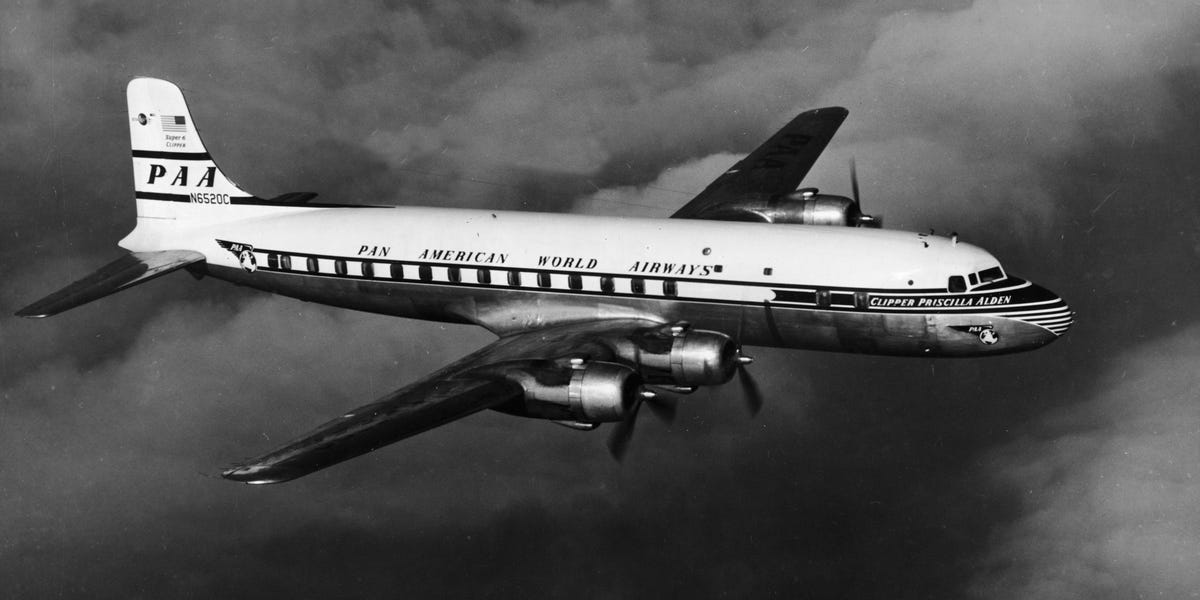
5 min readEvery time you board an airplane, a flight attendant stands in the aisle and demonstrates how to fasten a seatbelt, locate the emergency exits, and inflate a life vest. The ritual is so familiar that it’s become a piece of background noise most passengers ignore. But that briefing exists because of a single catastrophic afternoon 74 years ago, when an airplane vanished into the Atlantic, never to be seen again—until now.It was a bright and sunny Good Friday in San Juan, Puerto Rico. At the city’s Isla Grande Airport on April 11, 1952, Pan American World Airways’ Clipper Endeavor stood ready for a 1,600-mile run to New York’s Idlewild Airport (now JFK). Sixty-four passengers and five crew boarded under the command of Captain John C. Burn, a veteran Pan Am pilot who had survived a previous crash already: the 1943 wreck of the Yankee Clipper in Portugal’s Tagus River.At 12:11 p.m., the four-engine airliner lifted off and banked north over the water. Within moments, engine number three shuddered violently and quit. Burn swung the plane back toward Isla Grande, but before he could line up a return approach, engine number four died as well. With both right-wing engines gone, the DC-4 couldn’t climb or even maintain altitude. Burn radioed a distress call and prepared to ditch.Below him, what had been a gentle breeze at departure had quickened to 15 knots, kicking up rough swells. Nine minutes after takeoff, roughly 11 miles northwest of the airport and four and a half miles off Puerto Rico’s northern coast, Burn put the Clipper Endeavor down on the sea’s surface. The impact was violent. The tail section sheared away. But the main cabin held together, and all 69 people aboard survived the water landing itself. What happened next sadly turned a successful ditching into a mass drowning.No preflight safety briefing had been given. Many of the passengers spoke only Spanish, but the crew’s emergency commands came in English. There was no coordinated evacuation procedure. Although the aircraft carried life rafts and flotation vests, most passengers remained frozen in their seats, terrified, confused, or unable to understand what they were being told to do. Heavy seas poured through the ruptured fuselage. In less than three minutes, the Clipper Endeavor flooded and sank, dragging dozens of people down with it.The U.S. Coast Guard scrambled two PBY amphibious aircraft within six minutes of Burn’s distress call, followed by the buoy tender Bramble and additional Air Force air-sea rescue planes. Rescuers pulled 17 survivors from the water—12 passengers and all five crew members. Fifty-two people were dead.In Puerto Rico, the disaster became known as La Tragedia del Viernes Santo, the Good Friday Tragedy. It remains one of the worst air disasters in the island’s history. And its legacy was sweeping: the Civil Aeronautics Board, a forerunner of today’s Federal Aviation Administration, determined that the absence of any passenger safety briefing had directly contributed to the death toll. The agency mandated, for the first time, that all commercial flights over water provide preflight safety demonstrations and emergency procedure instructions. The ritual born from that ruling has since saved countless lives.But the airplane itself was gone. The DC-4 had sunk in deep water far beyond the reach of 1952-era salvage technology. For seven decades, no one knew exactly where it was.In 2019, an aviation and maritime historian named Russ Matthews, president and co-founder of the Air/Sea Heritage Foundation, stumbled across the Clipper Endeavor story. “I first learned about Clipper Endeavor while researching an entirely different Pan Am crash and was astonished that such an important story had largely faded from public memory,” he told Popular Mechanics. Matthews worked with explorer Josh Gates from the Discovery Channel to look through accident investigation reports and conduct sonar surveys off the coast of San Juan. Later, the team found real-time communications transcripts, expert analysis, and a chart map created by the U.S. Air Force pilots who witnessed the crash of the Clipper Endeavor and guided rescue crews to the scene. The map proved critical in narrowing the search area.Several weeks ago, the research vessel Fugro Brasilis—transiting from Trinidad to the Gulf of Mexico—agreed to stop off the coast of San Juan. Aboard was one of the world’s most advanced autonomous underwater vehicles: a Kongsberg Maritime HUGIN AUV, operated by the deep-ocean survey firm Deep Sea Vision. The free-swimming drone, equipped with high-resolution sonar, can scan vast swaths of ocean floor at depths up to 20,000 feet while staying submerged for days at a time.On June 2, the sonar found what Matthews had spent seven years looking for: the wreck of the Clipper Endeavor, broken into two sections and resting almost 2,000 feet beneath the surface. A follow-up photographic survey provided conclusive identification.As Matthews told Pop Mech, “The story is so powerful and the impact so far reaching. We are all stunned and elated by this discovery yet also humbled to remember what happened in that place so long ago.”In the images of the wrecked plane, the iconic winged Pan American logo and the aircraft’s name were still clearly legible on the battered (but largely intact) fuselage.“This aircraft vanished beneath the waves, and the legacy of those aboard was at risk of being lost with it,” Josh Gates said. “When the images came back from the AUV, we all gasped. Seeing the bright aluminum fuselage shining back at us from the ocean floor was a hugely emotional moment.”The team is now working with the Puerto Rico government to expand protections for the wreck site. Discovery Channel plans to showcase the full story behind the discovery for an upcoming Expedition Unknown episode and has already been in contact with many of the families impacted by the tragedy, including the accident’s only two known living survivors.“Every time you step on board an airplane today, you are safer because of what happened to Clipper Endeavor and her passengers three quarters of a century ago,” said Gates. “I hope this historic discovery brings some peace to the families of those aboard and serves to remind the flying public today of the debt of remembrance we owe to this fateful flight.”Tim Newcomb is a journalist based in the Pacific Northwest. He covers stadiums, sneakers, gear, infrastructure, and more for a variety of publications, including Popular Mechanics. His favorite interviews have included sit-downs with Roger Federer in Switzerland, Kobe Bryant in Los Angeles, and Tinker Hatfield in Portland.
An Aerial Disaster Inspired the Preflight Safety Briefing You Probably Ignore. Explorers Have Finally Found the Plane.
Full Article
Original Source
Read the full article at Popularmechanics →KhanList aggregates and links to publicly available news content. We do not host full articles from third-party sources. Always verify important information with original sources.