
Anthropic CEO Dario Amodei recently argued that artificial intelligence development may need to slow down for safety reasons, while also urging tighter restrictions on U.S. chips and technology to prevent China from pulling ahead. Meanwhile, OpenAI is explicitly asking the U.S. federal government to impose mandatory national safety rules on frontier AI, and Anthropic’s policy framework goes even further, suggesting governments should have the legal authority to block or deter deployments of dangerous systems. Beijing quickly pushed back and blasted Anthropic’s calls to slow AI as a “Cold War” tactic. But this clash reveals a glaring strategic paradox: If Western AI governance leans toward becoming more dependent on government safety controls, it risks shifting the competition onto Beijing’s home turf. What happens when the system designed to control technological risk also becomes a gatekeeper for who can participate? The current debate captures how much of the AI race is still framed around which country can maintain the lead along the technological path already in front of us. While those questions matter, they obscure a far more profound question: what if the technology that ultimately decides the race has not yet been invented — or what if the direction of the race itself needs adjusting? To understand this global rivalry, we must distinguish between two fundamentally different engines of progress: execution innovation (one to 100), which relentlessly scales established paradigms, and architectural innovation (zero to one), which defines entirely new paradigms. More importantly, we need to ask which of the two systems is better suited to each kind of innovation. The unmatched execution machine China is exceptionally good at going from one to 100. Backed by a centralized political system that can simultaneously mobilize world-class engineering talent, deep manufacturing ecosystems, and substantial funding, it excels at taking an existing technology, improving it, driving down costs, and deploying it at enormous scale. Therefore, its execution strength should rightfully make Western competitors uncomfortable. So, if all that is needed is simply for today’s transformer-based architecture to scale aggressively to reach its full potential, China’s capabilities could become a decisive advantage. This highly centralized one-party system is exceptionally powerful once it knows the direction. But what if the direction is not yet visible? The gatekeeper dilemma and the credential wall The rules of the game change when current architectures eventually hit a ceiling, and the next leap requires a fundamental conceptual breakthrough. Architectural innovation requires different soil; it thrives on autonomy and a tolerance for failure. At its core, a successful system allows the extraordinary wisdom of ordinary people to be showcased. This is where China’s research architecture can become a bottleneck. Major national research programs and universities place a heavy weight on recognized credentials, doctoral qualifications, professional titles, and eligible host institutions. Every system needs a way to allocate scarce resources, so the problem is not that China evaluates credentials, but rather who is able to enter the competition in the first place. Contrast this with the U.S. National Science Foundation’s small-business innovation program, where a startup can seek funding for high-risk technology based on commercial potential without its lead researcher holding an advanced degree or an elite title. The Western system doesn’t automatically find better ideas, but it allows more doors to open, which is essential for frontier innovation. The path to scientific advancement is never just choosing the best project from those already considered credible, whether it’s the project or the person behind it. More importantly, it is creating enough independent routes for every worthy idea from all backgrounds to have a chance to be developed. I encountered this contrast personally in New Zealand. A company I was involved with had no traditional academic pedigree, but we managed to secure government research and development support and organize university expertise around a commercial problem. What struck me was not the money, but the underlying assumption: we did not first need to hold academic titles or elite credentials before our question was considered worthy of support. This is crucial because a junior researcher — or simply a talented person without a strong on-paper background — who has an unconventional idea usually does not control the budget, laboratory resources, or institutional permissions needed to test it. The idea, therefore, has to travel through people and organizations that do. This naturally creates a filtering mechanism, even if personal connections do not play a role. A project championed by someone with a recognized title is simply easier to defend than a paradigm-shifting bet from someone without a proven background. This system not only blocks people without elite credentials, but it also tilts the incentives for researchers within the hierarchy toward ideas that are easier to justify, fund, and publish, making genuinely unconventional zero-to-one bets almost impossible to pursue. A Western gatekeeper paradox If we look closely at the safety mechanisms currently being proposed by U.S. frontier labs — mandatory national safety rules, government veto authority over model deployments, and severe civil penalties tied to global revenue — the danger to the Western innovation ecosystem becomes stark. The historical strength of the United States is exactly its freedom to innovate and operate; it is this decentralized, low-friction environment that consistently nurtures new talent and drives zero-to-one architectural breakthroughs. In attempting to mandate safety and reduce technological risk, these policies ironically push the U.S. toward the same top-down, gatekeeping structure that China already executes flawlessly. Ultimately, this approach risks weakening the very freedom to operate that has historically driven American innovation. The ultimate question After all, a system’s strength in going from one to 100 does not automatically translate into strength at going from zero to one. If today’s AI architecture is already close to what is ultimately needed, and the remaining challenge is mainly one of scaling, cost, deployment, and safety controls, Washington’s efforts to restrict China’s access to advanced hardware may be enough to slow China down but not necessarily secure victory. OPINION: ANTHROPIC’S CEO CRIED WOLF ON AI. NOW HE WANTS WASHINGTON TO KILL HIS RIVALSHowever, if the current path of AI development eventually hits a conceptual ceiling — or if the next breakthrough requires changing direction altogether — then the winner may instead be the system most capable of allowing an unproven or institutionally inconvenient idea, including one from someone without an elite background, to survive long enough to redefine the frontier. That leaves the ultimate question for both Washington and Beijing: between one-to-100 execution and zero-to-one architectural breakthroughs, which race are we actually running? Jane Li is an independent China political-economy adviser and has been quoted by Reuters, the Financial Times, South China Morning Post, and other international media on China-related business and political issues.
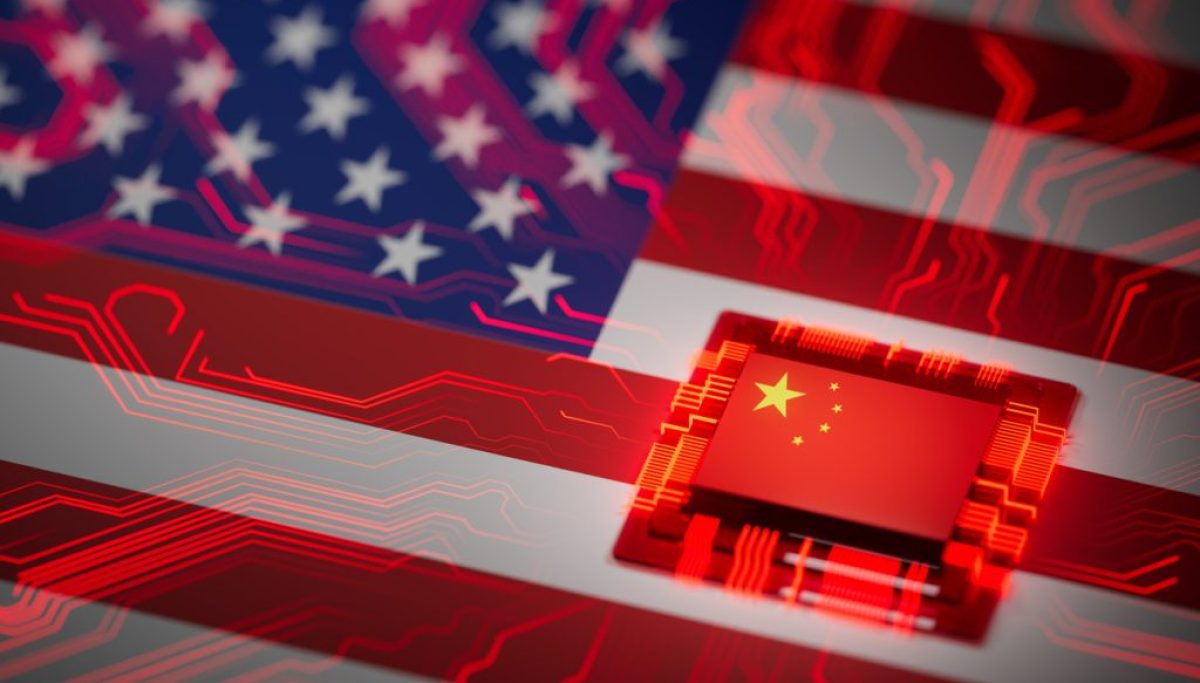
America’s real AI threat isn’t defeat by China — It’s becoming Beijing
Full Article
Original Source
Read the full article at Washingtonexaminer →KhanList aggregates and links to publicly available news content. We do not host full articles from third-party sources. Always verify important information with original sources.