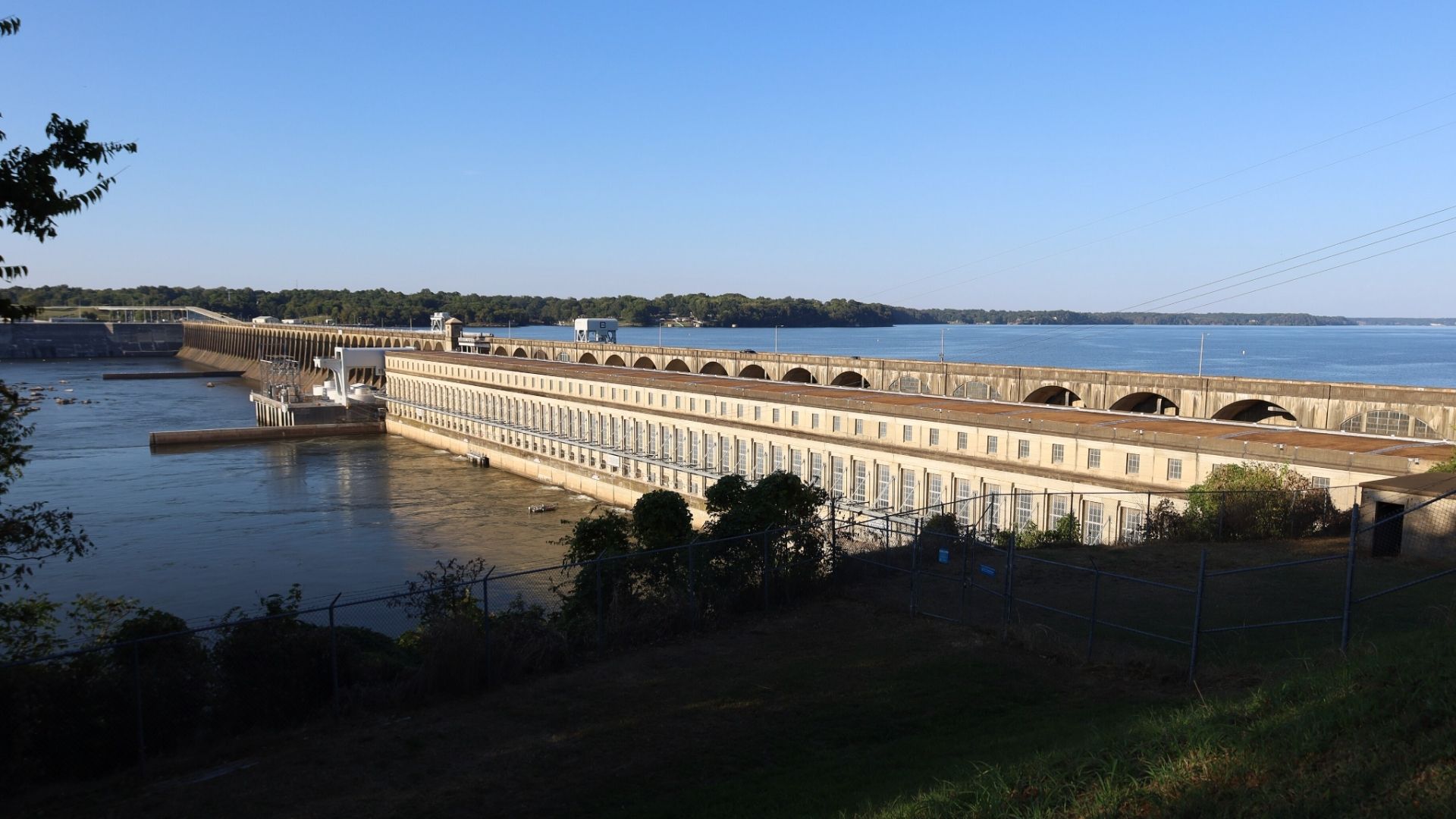
Long before solar farms and nuclear reactors joined the American grid, engineers harnessed rivers to generate vital electricity for rapidly expanding cities, farms, and industries. Several pioneering early hydroelectric projects remain reliably operational more than a full century later. These seven dams span Idaho, Arizona, Tennessee, and Alabama. Their survival shows how durable structures, maintained turbines, and managed reservoirs can keep historic infrastructure useful within a modern power system across the United States even today. 1. Minidoka Dam, Idaho Wikimedia Commons Completed across the Snake River in 1906, Minidoka Dam was among the earliest US Reclamation Service projects. Its powerplant entered service in 1909, becoming Idaho’s first federal powerplant and supplying electricity for irrigation pumps that helped settlers cultivate the surrounding desert. Four units now provide 28.5 megawatts of combined capacity, while the wider Minidoka Project continues delivering irrigation water across southern Idaho. It demonstrates how early western hydropower often enabled large-scale water management. 2. Theodore Roosevelt Dam, Arizona Wikimedia Commons Theodore Roosevelt Dam was completed northeast of Phoenix in 1911, creating a reservoir on the Salt River. Hydroelectric equipment initially powered construction machinery, while surplus electricity supported pumping and served Phoenix customers. A modification completed in 1996 raised the dam 77 feet, increased storage, and improved flood control. Its hydrogeneration capacity now reaches 36 megawatts, enough for about 30,000 homes, according to operator Salt River Project. 3. Wilbur Dam, Tennessee Wikimedia Commons Completed on the Watauga River in 1912, Wilbur Dam was among Tennessee’s first major hydroelectric developments. Two generating units were installed initially, a third followed in 1926, and the Tennessee Valley Authority added a fourth after acquiring the property in 1945. Wilbur now has a summer net dependable capacity of 11 megawatts. The structure measures 76 feet high and 375 feet long. Its powerhouse was destroyed after a 1940 flood overtopped the dam, proving that continued operation has required rebuilding, not merely preservation. 4. Ocoee No. 1 Dam, Tennessee Wikimedia Commons Ocoee No. 1 began generating electricity in January 1912, making it another centenarian in TVA’s fleet. Built on the Ocoee River, it created Parksville Lake and supplied regional power before TVA acquired the facility in 1939. Five generating units provide 24 megawatts of net dependable capacity. Its reservoir also offers 19,000 acre-feet of flood storage, showing how hydroelectric projects can combine generation with river management. 5. Ocoee No. 2 Dam, Tennessee Wikimedia Commons Constructed in 1913, Ocoee No. 2 uses a five-mile wooden flume carrying water along the gorge to a downstream powerhouse. The arrangement creates the hydraulic head required for generation without a towering dam, distinguishing it among surviving early hydroelectric works. Its two units provide 23 megawatts of net dependable capacity. TVA rebuilt the deteriorated flume, returning it to service in 1983 while retaining the century-old concept. Scheduled water releases also support whitewater recreation. 6. Great Falls Dam, Tennessee Wikimedia Commons Great Falls Dam was completed on the Caney Fork River in 1916 and began operating in 1917. TVA bought it in 1939, and it remains the agency’s only dam outside the Tennessee River watershed. Two units provide a summer net dependable capacity of 35 megawatts. One is among America’s oldest vertical generating units, according to TVA. Although modest today, Great Falls was substantial for its time and reflects rapid advances in turbine and generator engineering during the early twentieth century. 7. Wilson Dam, Alabama Wikmedia Commons Built across the Tennessee River between 1918 and 1925, Wilson Dam dwarfed many earlier projects. The 4,541-foot concrete gravity structure supported navigation, electricity production, and industrial growth around Muscle Shoals. Wilson remains TVA’s largest conventional hydroelectric facility. Its 21 generating units offer a summer net dependable capacity of 663 megawatts, far exceeding the others here. The site also has the highest single-lift navigation lock east of the Rocky Mountains, with a maximum lift of 100 feet. Conclusion These dams remain productive because operators have repaired powerhouses, replaced equipment, strengthened structures, and adapted operations as engineering standards evolved. Their longevity therefore reflects sustained investment, rather than proof that century-old infrastructure can operate indefinitely without intervention. Together, they preserve a formative chapter in American electrification while providing renewable electricity, irrigation support, flood management, recreation, or navigation. Their old concrete, masonry, waterways, and modernized machinery connect early public-power ambitions to the needs of today’s grid. Recommended ArticlesGet the latest in engineering, tech, space & science - delivered daily to your inbox.Atharva is a full-time content writer with a post-graduate degree in media & amp; entertainment and a graduate degree in electronics & telecommunications. He has written in the sports and technology domains respectively. In his leisure time, Atharva loves learning about digital marketing and watching soccer matches. His main goal behind joining Interesting Engineering is to learn more about how the recent technological advancements are helping human beings on both societal and individual levels in their daily lives.
America’s enduring giants: 7 historic dams still generating power
Full Article
Original Source
Read the full article at Interestingengineering →KhanList aggregates and links to publicly available news content. We do not host full articles from third-party sources. Always verify important information with original sources.