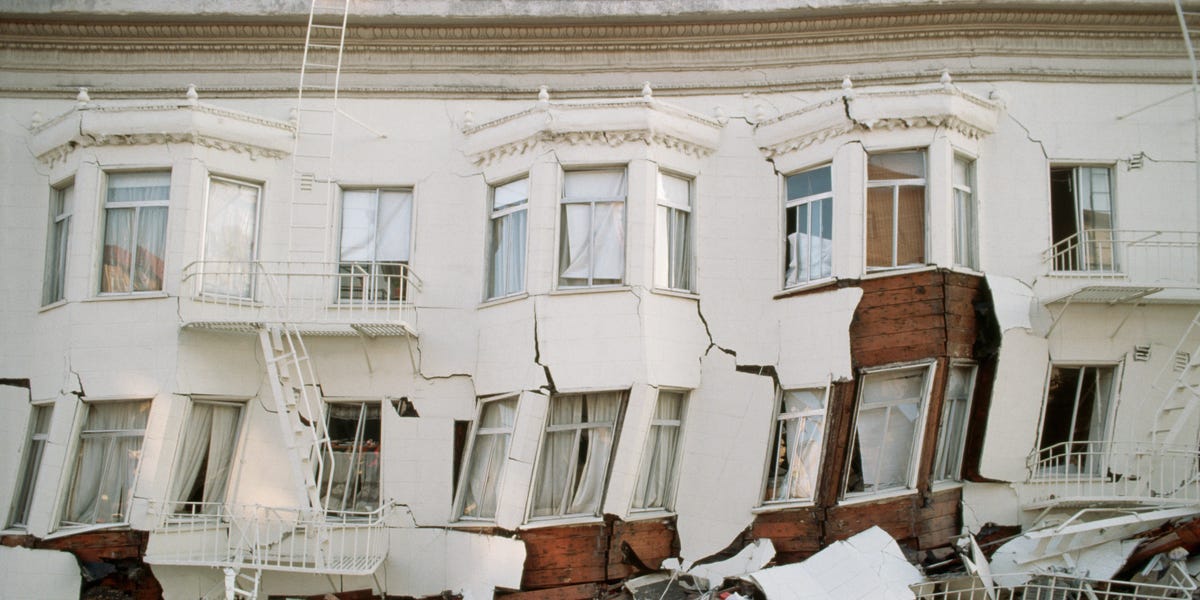
3 min readHere’s what you’ll learn when you read this story:The New Madrid earthquakes in 1811 and 1812 were the largest quakes east of the Rocky Mountains in U.S. history.Today, a hypothetical earthquake of a similar size would devastate the region and cause nearly 90,000 injuries and deaths, according to one report. While earthquakes still quietly rumble along the fault every year, scientists debate whether a big one will strike the region within the next 50 years.When people think about seismic hotspots in the U.S., the first that come to mind are likely the constantly roiling volcanoes of Hawai’i, the daily quakes of Alaska, or the incessant rumblings along the fault lines hugging the West Coast. But the largest seismic events in U.S. history—and by far the largest east of the Rocky Mountains—actually occurred in the Midwest and South and were centered on the small town of New Madrid, Missouri.From December 1811 to February 1812, the region experienced tremors that rang bells in New England, temporarily reversed the flow of the Mississippi River, and claimed the lives of at least 1,000 people (though that number is likely an underestimate). Now, more than 200 years later, a similar earthquake in the region would have a much different—and deadlier—result.According to a 2009 report from scientists at the University of Illinois, Virginia Tech University, and George Washington University, a modern-day New Madrid earthquake would likely devastate the states of Tennessee, Arkansas, and Missouri, which lie right along the fault. Most earthquakes are “interplate,” meaning they occur where two tectonic plates meet. However, New Madrid is an “intraplate” fault, meaning it occurs within the boundaries of the North American plate itself.The report indicated that such an event would leave 715,000 buildings damaged, 3,500 bridges in need of repair, 425,000 breaks and leaks along interstate water pipelines, more than two million homes without power, and 7.2 million people displaced. In terms of deaths, some 86,000 injuries and fatalities would be expected—all exacerbated by more than a hundred damaged hospitals. All told, the damages would come out to roughly $300 billion (or even more in 2026 terms). In other words, the results would be “cataclysmic.”“The results indicate that Tennessee, Arkansas, and Missouri are most severely impacted. Illinois and Kentucky are also impacted, though not as severely as the previous three States,” the report stated. “About 42,000 search and rescue personnel working in 1,500 teams are required to respond to the earthquakes.”Because of this stark outcome if the worst-case scenario came to pass, states within striking distance of this potential earthquake all have dedicated action plans and regular annual meetings to discuss preparedness and rescue scenarios. For example, lawmakers in Missouri met at the 2026 Missouri Earthquake Summit to discuss how the state, likely to be one of the most severely impacted during a New Madrid earthquake, would respond.“The initial response is going to be flying, because obviously a lot of infrastructure’s going to be damaged,” Mark Marberry, a commissioner for Ste. Genevieve County, Missouri, told the Ste. Genevieve Herald, referencing nearby Rolla National Airport. “So they’ll have Missouri National Guard, probably the Air Force, all these mobile units flying, moving stuff into where they need to be.”Luckily, the New Madrid fault isn’t showing signs of imminent danger. The Illinois Emergency Management Agency and Office of Homeland Security (IEMA-OHS) says that while the fault experiences roughly 200 rumbles per year, most of them are too small to be felt. Scientists at Northwestern University, also in Illinois, say the fault is “dying” and that it could be a “very long time” before the devastation of the early 19th century happens again.They found that the fault moves roughly 0.2 millimeters a year, which is peanuts compared to the San Andreas fault, which moves a shocking 37 millimeters a year. It’s possible, the scientists argue, that the earthquakes of today are still aftershocks of that original seismic catastrophe. The United States Geological Survey (USGS) disagrees and argues that there is a 25 to 40 percent chance of a 6.0 magnitude earthquake along the fault in the next 50 years.For now, the method of better-safe-than-sorry prevails as states continue to monitor and prepare for the worst.Darren lives in Portland, has a cat, and writes/edits about sci-fi and how our world works. You can find his previous stuff at Gizmodo and Paste if you look hard enough.
America’s Biggest Earthquake Reversed the Mississippi River. What If It Happens Again?
Full Article
Original Source
Read the full article at Popularmechanics →KhanList aggregates and links to publicly available news content. We do not host full articles from third-party sources. Always verify important information with original sources.