
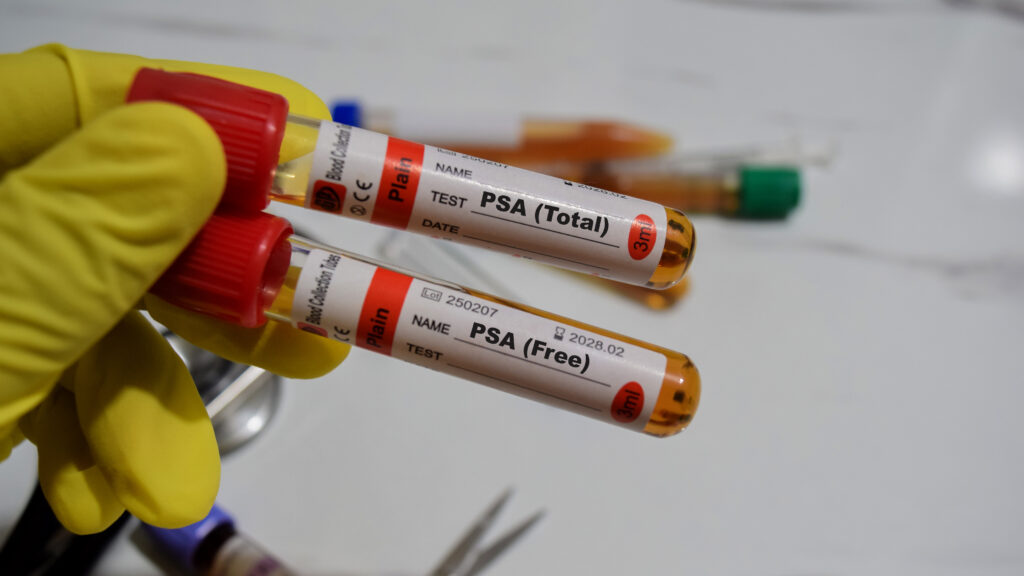
In a major change to screening guidelines, the American Cancer Society recommended on Thursday that American men between ages 50 and 69 at an average risk of prostate cancer should test their prostate-specific antigen (PSA) blood levels every two years. The prior guidelines, released in 2010, left testing for average-risk men to their discretion, after assessing cancer risk with a physician. Similarly, PSA testing recommendations were strengthened for high risk groups — Black men and men with a strong family history of prostate cancer. They are now encouraged to get PSA-based screening yearly starting at 45. Black men in particular disproportionately die from prostate cancer, and the guideline authors said they hope that increased surveillance will reduce the number of Black patients presenting with cancers at advanced stages. Then, starting at 70, the decision on whether to continue screening becomes individualized as the balance of benefit and harm is not as clear after that age. Screening should be interrupted after 80, or in men who are not expected to live another 10 years. The changes reflect recent findings that screening through PSA levels reduced disease specific mortality for certain men, bringing the indicator back into specialists’ good graces. Once a preferred biomarker to identify risk of prostate cancer, routine PSA screening had fallen out of favor — and was dropped from the guidelines in 2010 — for its lack of specificity, which resulted in many men undergoing follow-up procedures when they had no cancer, or very slow-growing tumors. The U.S. Preventive Service Task Force, a federally appointed panel of outside experts, has not changed its guidelines since the new evidence became available in 2025, and continues to recommend against routine, population-wide PSA screening, suggesting instead individualized decision-making. But the panel, whose recommendations determine the preventive services that insurers must cover, has announced an upcoming update. The cutoff for PSA levels to be considered high is established as 3.0 nanograms/milliliter or higher for men aged 45 to 69 years old. This is an important clarification, said James Eastham, chief of urology at Memorial Sloan Kettering Cancer Center. “Most PSA blood tests in the United States, when they’re reported, say under 4.0 [ng/ml] is normal, but it really should be under 3,” he said. “I think [the update] will hopefully help primary care physicians refer folks a little bit earlier.” To limit the risk of overdiagnosis and overtreatment, the guidelines also now recommend two elevated PSA readings, followed by an MRI scan and/or testing for other biomarkers of prostate cancer, with the aim of reducing the number of patients undergoing biopsies. “We just wanted to give a little bit of flexibility for folks who cannot easily obtain an MRI,” said William Dahut, chief scientific officer at the ACS and a contributing author of the guidelines, about including both biomarkers and MRIs as a possible step following elevated PSA levels. However, he noted that an MRI would still be recommended prior to biopsy, should a biomarker test come back abnormal. Though there are a variety of biomarkers, the guidelines don’t recommend one over the other. Dahut said ACS researchers intend to look more closely at biomarkers to establish which may be more effective in predicting a more aggressive cancer. “I think the new guidelines are certainly a balanced approach for early detection of prostate cancer,” said Eastham. “There have been many men undergoing unnecessary biopsies, and many low risk cancers that were subsequently overtreated,” he said. By recommending some steps between an elevated PSA and a biopsy, he said, the new recommendations reflect the evidence that while being a good biomarker, PSA alone would identify too many men as biopsy candidates. Finally, the guidelines emphasize the importance of active surveillance in men with slow growing cancer: “If you screen more men, you’re going to find more men with early-stage disease, and we need to be strong in our position that that does not mean that you need to rush for therapies or that you need to have therapies at all.” For Eddie Baynes, a 56-year-old prostate cancer survivor and advocate, the new guidelines “hit the nail on the head” when it comes to recommending routine PSA screening. As a Black man, he knew he was at higher risk of developing prostate cancer, yet it wasn’t until the fraternity he belonged to organized a screening event that he, at 52, started getting regular PSA tests with his bloodwork. Though routine screening wasn’t part of the ACS recommendation at the time, it led to a cancer diagnosis and a prostatectomy. That’s why he’s been advocating for men to get PSA levels tested, and relatively frequently. With the new guidelines, men like him will start routine screening earlier than he did. “Part of my advocacy is getting tested more frequently. So now, just to have that announcement coming from the American Cancer Society, it just makes what I’ve been urging individuals to do for a while stronger,” he said. STAT’s coverage of health challenges facing men and boys is supported by Rise Together, a donor advised fund sponsored and administered by National Philanthropic Trust and established by Richard Reeves, founding president of the American Institute for Boys and Men; and by the Boston Foundation. Our financial supporters are not involved in any decisions about our journalism.
American Cancer Society revises guidelines, urges routine PSA screening for prostate cancer
Full Article
Original Source
Read the full article at Statnews →KhanList aggregates and links to publicly available news content. We do not host full articles from third-party sources. Always verify important information with original sources.