
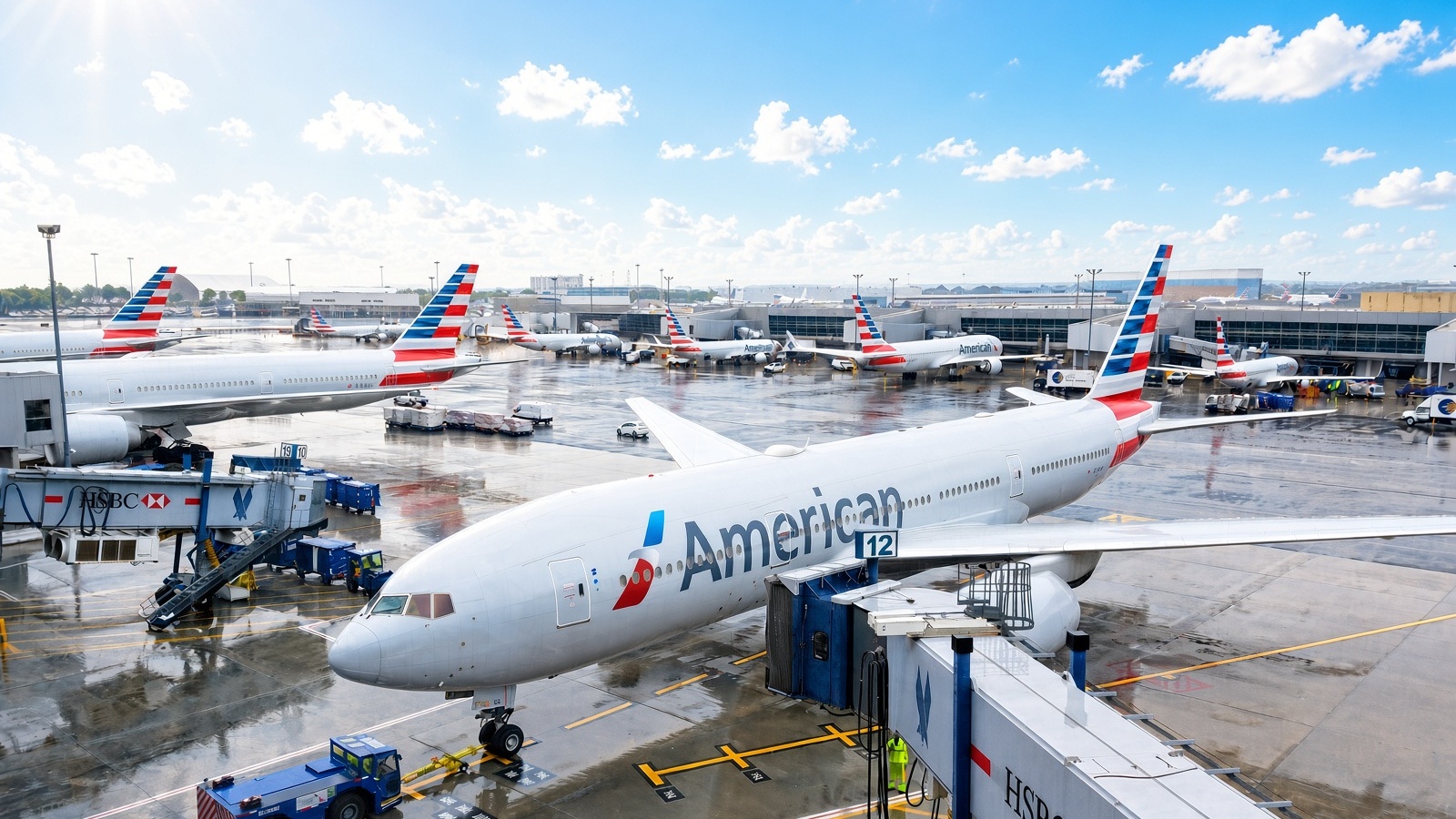
American Airlines says focusing on local customers has produced “material margin improvement” at LaGuardia. They’re doing better in New York by focusing on the needs of New Yorkers. Meanwhile, Chief Commercial Officer Nat Pieper said at at Thursday’s Skift Aviation Forum that he sees Chicago’s biggest opportunity in winning corporate traffic, and he’s working on Los Angeles schedules that better serve the people who live there too. That’s a full rejection of the New York strategy American laid out in 2014, immediately after the US Airways merger. They wanted to bring passengers to New York, rather than offer a schedule for New Yorkers. That was dumb. They thought they couldn’t compete in New York, and they walked away from the credit card spending of New Yorkers. American Chose Not To Be The Airline For New Yorkers The original post-merger strategy was building schedules around people coming to New York for business and then going home. Arriving in the morning and leaving in the evening works for an out of town visitor. A New Yorker making a day trip wants the reverse. American dropped LaGuardia service to Cleveland, Minneapolis and Atlanta while adding cities like Roanoke and Wilmington, North Carolina. They were using scarce New York slots to strengthen their appeal to customers they believed were underserved elsewhere in the country, instead of building a schedule to take people who lived in New York to the places they needed to go. It was an extension of the old US Airways playbook of avoiding direct competition. By 2018, Robert Isom was pitching a boutique business airline for New York, built around London, premium transcons and a limited collection of other routes. That was already a change from the original inbound strategy. It still missed that the person buying a business class ticket to London also takes their family on vacation. And by not providing either a better product or a more well-rounded schedule, they were setting themselves up to be a ‘spill carrier’ taking business only when offering a lower price that competitors wouldn’t meet. The JetBlue partnership demonstrated what a broader network could do. In October 2021, I reported American’s fastest growing markets for AAdvantage signups were its JetBlue and Alaska partnership cities. Doug Parker Explained The Credit Card Math Problem In March, I wrote about former American CEO Doug Parker’s explanation of how airlines allocate credit card revenue to routes. He described assigning the money to flights where customers redeem their miles. That accounts for the seats being used. It doesn’t tell you which flights caused the customer to get the card and put spending on it in the first place. A New Yorker might use their miles for Hawaii. But they chose American because it worked for their trips to Chicago, London and Miami. If American stops being useful for those trips, the customer may switch airlines and cards. Crediting the Hawaii flight doesn’t capture what the New York schedule was doing for the business. That was my criticism of American’s retreat seven and eight years ago: cutting a flight can improve its route accounting while making the company worse off by losing the customer’s other business. You can’t count the card revenue twice, but you need to count what disappears when the customer leaves. Chicago And Los Angeles Need The Same Rethink This is also why the O’Hare fight matters beyond departure counts and Scott Kirby’s desire to beat American. At the employee meeting I covered in January, Pieper reported 20% growth in Chicago loyalty enrollments and 20% growth in card acquisitions over the preceding nine months. As I explained when Chief Financial Officer Devon May addressed Chicago profitability in March, allocated overhead, network effects and credit card economics can produce very different answers to whether a hub makes money. May said their usual flight profitability systems don’t directly capture all those card effects. Meanwhile, American withdrew Los Angeles long haul flying and became less useful to local customers. In October I contrasted the old network strategy with Pieper’s plans to reverse it. He’d told Brett Snyder at Cranky Flier: I fundamentally believe we need to fly our own airplanes to the big markets in the world In his Skift comments, he describes schedule changes continuing through 2027 toward a 2028 terminal rebuild and a 30-gate operation. Yet in his October 12 interview with Cranky Flier, the plan was 25 gates across terminals 4 and 5, while Pieper wanted all 30. American’s fifth lease amendment, approved by the City Council on December 10, 2025, provides for 25 preferential use gates after Terminal 5 reopens: all 15 in Terminal 4 and 10 in Terminal 5. LAWA’s 30-gate description is for the entire two-terminal complex, not American’s allocation. American has been using 5 Tom Bradley terminal gates, but those are temporary replacements during Terminal 5 construction. American can seek additional Bradley, but they aren’t assured five permanent extras. The lease also ends LAWA’s obligation to accommodate American at the remote Eagle’s Nest when the rebuilt Terminal 5 opens. So 25 is the documented allocation in terminals 4 and 5, and 30 is the larger operation Pieper wants. It’s not clear to me how he’s able to say that they’ll have them – I hope they will! The Alaska Partnership Fits This, Too American nearly threw away its Alaska partnership for a related reason. As I reported when Parker explained the reversal in February 2020, American had seen Alaska’s purchase of Virgin America as creating more route overlap, turning a partner into a competitor. But Alaska had strength in Northern California and the Pacific Northwest that American lacked. Those customers could make American’s flights more valuable, and a broader combined offering could win corporate accounts neither carrier could serve as well alone. The original plan had American operating long haul flights from Seattle, supported by Alaska. Bangalore and Shanghai never started. London started and then disappeared. Alaska bought Hawaiian and began building the international airline American hadn’t delivered. As I wrote in September, bringing Alaska into the Atlantic joint venture with British Airways and partners, and the Pacific venture with Japan Airlines, would change the incentives. American would have a financial interest in selling Alaska’s international flights, while the foreign partners could bring customers from the other end. They could coordinate schedules rather than merely put a codeshare on an existing flight. More Flights Aren’t Enough To Win Scott Kirby was explaining the network and credit card connection back in 2017. United needed better domestic schedules to win customers, who would then become prospects for its card. American needs to repair the parts of its network that prevent it from earning a customer’s broader business. But I also pushed back on Kirby’s assumption that network size would win the card business. The competition includes bank cards with transferable points and cash back, not just another airline’s card. American’s newer Citi relationship makes the network and product investments more consequential. As I wrote last month about its ambition to approach $10 billion in annual loyalty partner payments, acquiring a cardmember, keeping them, and getting them to spend are different tasks. That’s why it matters tremendously that American is working to build a better airline. And it matters that they preserve the quality and advantages of their AAdvantage program. Without either of those, the gambit gets expensive fast but doesn’t deliver the hoped-for results. Topics on this page
American Airlines Reverses Its Original New York Strategy—Wants Local Customers Back In Major Cities
Full Article
Original Source
Read the full article at Viewfromthewing →KhanList aggregates and links to publicly available news content. We do not host full articles from third-party sources. Always verify important information with original sources.