
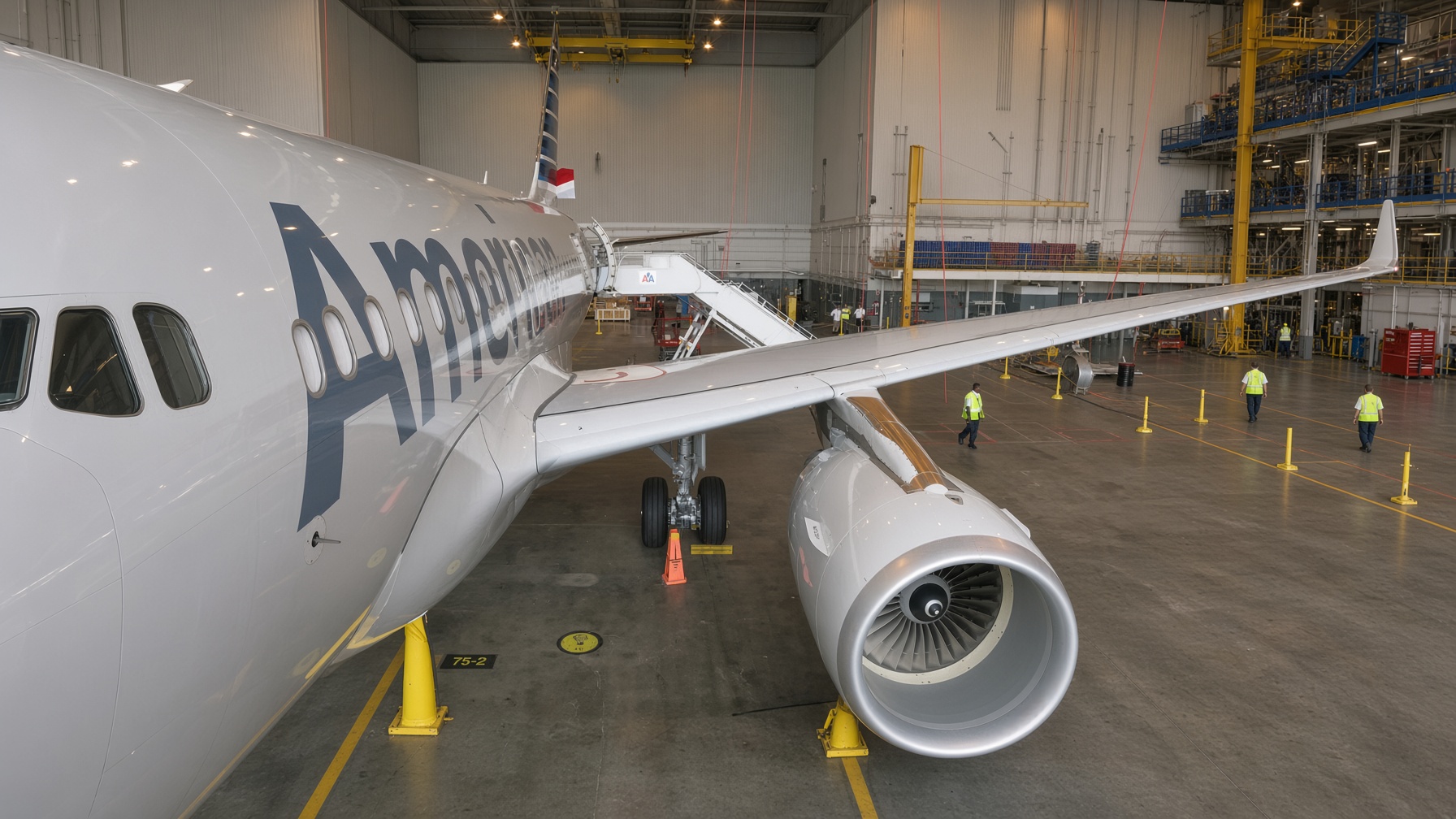
An American Airlines pilot at Atlanta asked for more time before taking off behind a Boeing 757. A few minutes later, after an argument over wake turbulence, the controller warned of a “possible pilot deviation” and gave the crew a phone number to call. He was calling out the pilot. And he was wrong. The controller appears to have had the better argument about the required spacing between the planes, but there wasn’t any ‘pilot deviation’. The crew was entitled to turn down a takeoff they weren’t comfortable with. This happened Sunday, September 13, involving American Airlines flight 1428 from Atlanta to Philadelphia. The crew had lined up on runway 27 Right, waiting for permission to take off. When that clearance came, they wanted to wait longer for the departing 757’s wake to clear. Here’s the longer recording, starting with the departure sequence. Earlier in the video, the American Airlines flight is identified as a Boeing 787. It was an Airbus A319, registration N812AW. American’s initial request was ordinary enough: American: “Yeah, we need a little bit more time for that separation.” Tower: “American 1428, cancel your takeoff clearance. Exit at Mike 20.” American: “Exit at Mike 20, American 1428.” Mike 20 is the runway exit the controller wanted them to use. American acknowledged the exit instruction, but didn’t explicitly repeat that its takeoff clearance was canceled. The controller repeated the cancellation twice before the pilot responded, “Cancel the takeoff clearance, American 1428.” That’s the only potential operational issue in the recording. (To be clear, acknowledgment rules don’t require every instruction to be repeated word for word.) The controller directed American along the taxiway and told them to stop before an intersecting taxiway. Another aircraft moved into the departure sequence. Then came this: Tower: “American 1428, next time you need more than standard separation, you need to notify us prior to taking the runway.” Later, the controller told American to hold its position: “I gotta get you some new flow out to Philly.” That sounds like arranging another departure release toward Philadelphia after the crew missed its original opportunity. The American pilot then reopened the argument: American: “Yeah, just for your information, we do not carry your separation manuals in our flight deck. So you cleared us for takeoff behind a 757 with winds calm… I don’t think that’s a proper separation for wake turbulence.” Tower: “There is no wake turbulence separation, man.” American: “Okay, let us fly the airplane. You guys can, uh, do your job.” Tower: “American 1428, possible pilot deviation. Advise ready to copy phone number.” The pilot also objects to how quickly the clearance came after the 757 began lifting its nose for takeoff. American Airlines Airbus A319, file photo. Wake turbulence is rotating air left behind an aircraft’s wings as they produce lift. A following plane can encounter that wake and get rolled by it. Close to the ground, there’s little room to recover. Pilots are trained to be especially alert in calm conditions, when wake can remain where another aircraft will encounter it. I looked it up, and a Boeing 757 is wake turbulence category E and an A319 is Category F. The separation table doesn’t specify an additional wake interval for those planes. An A319 is smaller than a 757, but it isn’t a ‘small aircraft’ that triggers additional spacing behind a 757.The controller is technically right that “there is no wake turbulence separation” required here and ordinary runway and departure separation rules apply. Generally, the second aircraft can begin its takeoff roll once the first plane is airborne and at least 6,000 feet ahead. Controllers can also issue takeoff clearance before the required separation exists, provided they reasonably expect it to exist when the second plane starts its takeoff roll. However, a pilot isn’t obligated to depart just because the controller met minimum separation betwen the aicraft. It’s the responsibility of the pilot to accept or refuse clearance and pilots can request an amended clearance if they believe the one they’ve received would put the aircraft in jeopardy. I recently covered a JetBlue pilot who declared an emergency to turn away from a thunderstorm after a controller refused the crew’s requested heading. Here, American didn’t need to declare an emergency. They just declined takeoff and needed revised taxi instructions. The controller wasn’t wrong that pilots should ask early for extra separation, as soon as practical before taxiing onto the runway. But that’s different from forfeiting the right to a concern once they’re on the runway. The America pilot telling the controller to “do your job” wasn’t helpful, and debating the controller’s manual when other aircraft need the frequency. But the controller calling this a possible pilot deviation seems vindictive. A “possible pilot deviation” tells the crew that the controller believes their actions may have violated a rule. It gives the pilots an opportunity to make notes while events are fresh. It’s a warning about a suspected violation, but the controller isn’t judge and jury on that. Here, the warning comes immediately after “you guys can… do your job.” The controller took the criticism personally. Then Frontier joined in. After receiving its handoff to the next controller, the crew offered a compliment: Frontier: “You guys do great work today.” Tower: “I appreciate it. I’ve been doing it for 26 years. I don’t need some pilot telling me how to do my job. You guys rock.” One online commenter suggests that “that controller needs to get a phone number, he’s arrogant.” Topics on this page
American Airlines Pilot Says Takeoff Isn’t Safe—Air Traffic Controller Threatens To Report Him
Full Article
Original Source
Read the full article at Viewfromthewing →KhanList aggregates and links to publicly available news content. We do not host full articles from third-party sources. Always verify important information with original sources.