
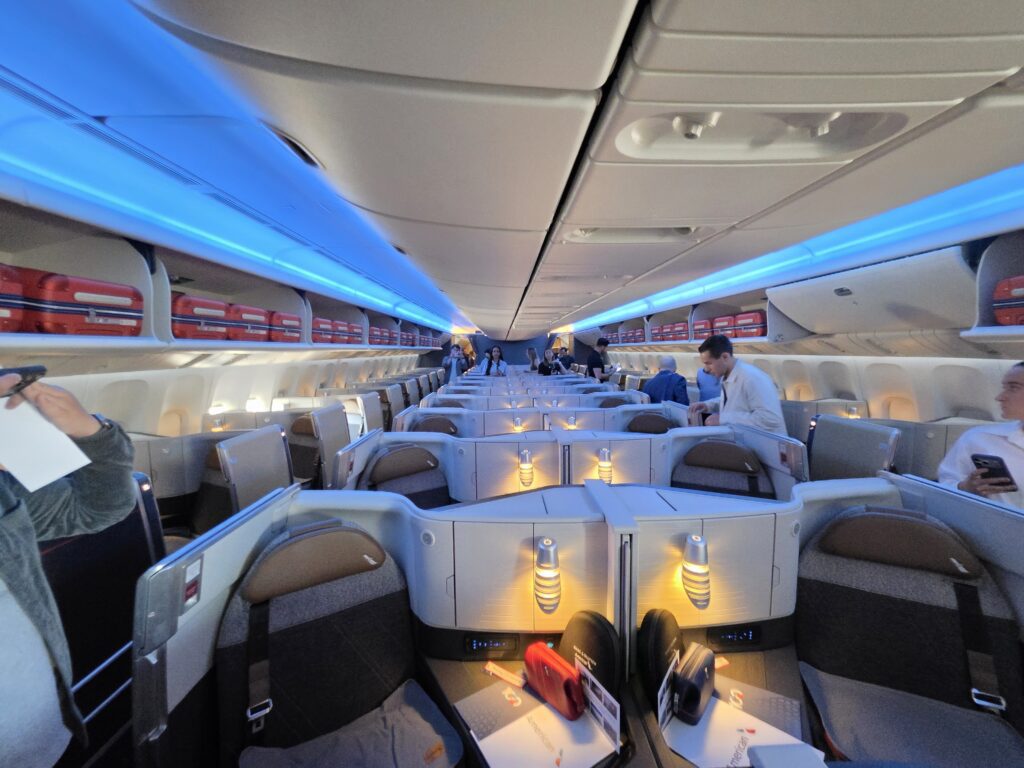
As I told you to expect a week ago American Airlines has announced that it’s bringing Starlink to every mainline jet, including the long haul aircraft where its lousy wifi has been one of the biggest weaknesses in the passenger experience. Installations begin in early 2027, and the plan now covers more than 1,000 planes. Previously American planned Starlink on its Airbus planes. However, aviation watchdog JonNYC had leaked the plan to expand this to Boeing 737s, 777s and 787s. When American announced Starlink in May, they committed to more than 500 Airbus narrowbodies. My biggest disappointment was that they left out their Boeing aircraft, especially the widebodies with older Panasonic internet that desperately need replacing. The expanded commitment covers: More than 500 Airbus narrowbodies. More than 400 Boeing narrowbodies. More than 130 Boeing widebodies. That’s over 1,030 aircraft serving more than 165 million customers annually, and they have more than 300 additional mainline aircraft scheduled for delivery in the coming years. Early 2027 is the start of installations. American hasn’t announced when they’ll finish, or which Boeing aircraft will get the equipment first. And this is a mainline commitment – American Eagle regional jets aren’t included. Their two-cabin regional jets just got ViaSat satellite wifi, while smaller regional jets remain dark. American plans to use Starlink’s Performance Aero Terminal, advertising speeds of up to 1 gigabit per second per terminal. That’s capacity shared aboard the aircraft for gate to gate service. United’s original Embraer E175 installation had one Starlink antenna with about 500 Mbps. United Boeing 737-800s used two Starlink antennas, with approximately 1 Gbps combined peak capacity. American already offers AT&T-sponsored free wifi to AAdvantage members on Viasat- and Intelsat-equipped aircraft. American’s domestic satellite wifi was been pretty good when they were charging for it, though Starlink is much better. Service degraded when it became unpriced and more people used it. Their older Panasonic-equipped widebodies are terrible. It’s often not worth paying less for a ticket while losing the ability to work. The value of that productive time is frequently much greater than the difference in cost of the ticket. Fast wifi genuinely supports premium revenue. Starlink satellites are much closer to earth, so the signal has less distance to travel. The lower latency makes the connection feel nearly instantaneous. In June I went through 18 months of improvements at American. Even I was surprised by how much they’d done. They’ve invested in lounges, improved food and coffee, and made some of their policies less frustrating. Since then they’ve also announced the return of seatback screens and more extra legroom coach. American spent years taking things away from customers while trying to compete with Spirit and Frontier. That never made sense for an airline with American’s costs. They need customers willing to pay more. Meanwhile, Delta’s Amazon Leo agreement starts with 500 aircraft, with installations beginning in 2028 if the service is ready then. Meanwhile, in other news today, Delta Air Lines has a new logo. I love @Delta new logo! https://t.co/vGuwegUoz3 — tyler hogge (@thogge) October 7, 2026 Delta still has better operational reliability than American. Its Delta One lounges are excellent, and it already has seatback screens on aircraft where American passengers are waiting for them. But American has an opening to compete for customers who value being able to work throughout a flight. And United (and even Southwest, Alaska and… Frontier) will be doing this. Topics on this page
American Airlines Now Plans Starlink For Entire Mainline Fleet—1,000 Jets Including Widebodies
Full Article
Original Source
Read the full article at Viewfromthewing →KhanList aggregates and links to publicly available news content. We do not host full articles from third-party sources. Always verify important information with original sources.