
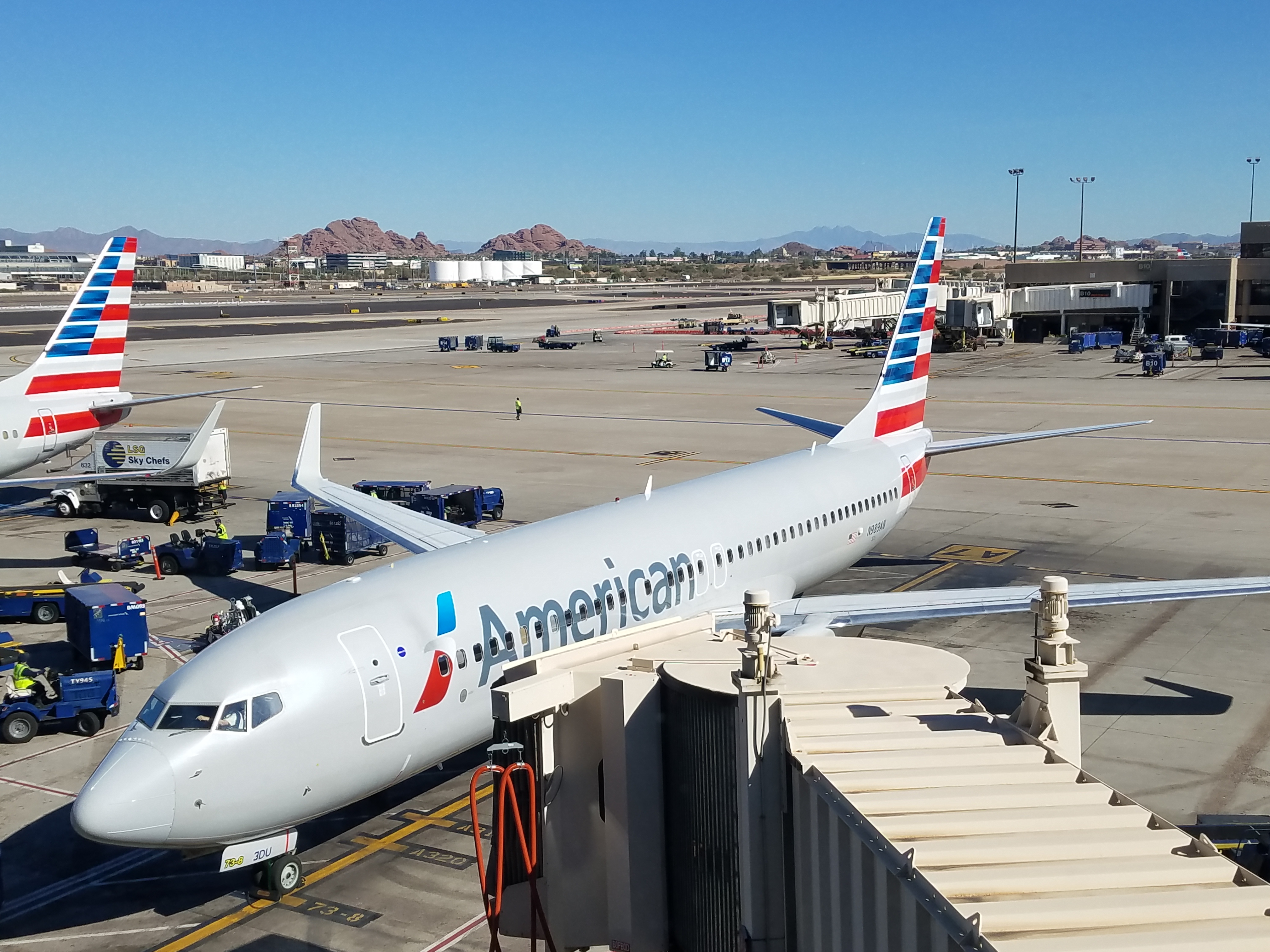
American Airlines has been selected as the anchor airline for Phoenix Sky Harbor’s new West Terminal. The project is currently estimated at $4.5 billion, with an opening targeted for late 2033. American would move out of Terminal 4 into a new complex designed to handle more international flying and larger aircraft. American will finally have a nicer facility. That also creates room for Southwest and other airlines to grow. American faces substantial competition from Southwest in Phoenix. Here are the airport’s full-year 2025 passenger figures: Airline 2025 Passengers Airport Share American Airlines 20,893,285 40.5% Southwest Airlines 17,201,906 33.3% Delta Air Lines 3,657,003 7.1% United Airlines 3,216,812 6.2% Frontier Airlines 2,304,078 4.5% Alaska Airlines + Hawaiian Airlines 1,928,792 3.7% All other airlines 2,416,773 4.7% Total 51,618,649 100.0% American and Southwest together account for nearly three-quarters of the airport’s passengers. American’s Phoenix hub came through America West and US Airways. The airport’s bond disclosure says American accounted for 71% of connecting passengers in its fiscal 2023–2024, with Southwest accounting for 27%. A terminal designed around American’s connections gives the airport a chance to improve how that hub works, considering that the 25 minute connections they sell today are a genuine nightmare. The West Terminal will sit between Terminal 3 and the new Taxiway U. It’ll be Phoenix’s first entirely new terminal since Terminal 4 opened in 1990. The airport is planning a modular building that can add concourses over time. They haven’t settled the terminal’s name or number, let alone its final gate allocation. There’s a much larger airport being planned around it. Phoenix’s new Destination PHX 2050 program anticipates 90 million annual passengers. And the airport’s March planning presentation shows that 72% of passengers in 2025 began or ended their trips in Phoenix, compared with 60% in 2009. Their expectation of more local passengers means a need for more curb space, check-in, security and baggage claim. For passengers, the plan means new gate areas, dining and shopping, lounges, updated passenger-processing systems and integration with the Sky Train. The international emphasis should also give the airport more flexibility to accommodate long haul aircraft and connect their passengers onto domestic flights. American CEO Robert Isom promises “much-needed new premium spaces” in the new terminal. Those are… much needed. Phoenix is a critical part of American’s network, and we’re excited to continue to invest in the airport and this region’s future. American is Phoenix’s largest airline, carrying more than 20 million customers through Sky Harbor annually and employing 8,000 team members across Arizona, and we are proud to partner with the City of Phoenix and Sky Harbor on a vision that will support continued growth, create jobs, strengthen global connectivity and deliver an even better experience for our customers with much-needed new premium spaces. The future West Terminal will further connect Phoenix to destinations around the world, strongly positioning the city to lead the next generation of travel by driving economic opportunity, tourism and global business connections for the region.” There is no business class Flagship lounge today, and the three Admirals Clubs are undersized and in desperate need of investment. American currently has clubs above gates A7–A9, between A19–A21, and above B5–B7. Phoenix’s existing Centurion, Escape and Chase Sapphire lounges in Terminal 4 are currently accessible to American passengers. It’s not clear what third party lounge space will be available in the new terminal. It used to be that these bank lounges were seen as competitive threats both to the airport (because they kept passengers from spending in the terminal) and airlines (because they offered a better experience than the airlines did, so they competed for premium card business) However they make a hub attractive and make choosing to connect in that hub attractive. The airline isn’t paying for the amenity but it helps them compete with other carriers for business. And that, in turn, attracts premium customers and cardmembers to the airline as well. American’s departure from terminal 4 would free up a large amount of space, but the airport hasn’t said who gets which gates. Southwest is best positioned to grow into these. Meanwhile, the airport is already building a separate six-gate concourse at Terminal 3. I’ve covered its planned 10,000-square-foot lounge with an outdoor terrace and Camelback Mountain views. The current West Terminal schedule looks like this: Work Current Timing Planning 2025–2026 Design procurement 2027 Design 2028–2030 Construction 2029–2033, potentially starting in late 2029 Opening Targeting late 2033 Before construction of the terminal, cargo, parking, operations and maintenance facilities will need to be relocated. The airport plans to detail initial plans and phasing on November 4, and release its terminal program definition document in December. Regardless, it’s good to see American making a long-term investment in the hub, alongside major projects in Dallas, Los Angeles, Chicago and Charlotte (and perhaps soon Philadelphia). Topics on this page
American Airlines Is Moving To A New $4.5 Billion Phoenix Terminal—And Southwest Could Be A Big Winner, Too
Full Article
Original Source
Read the full article at Viewfromthewing →KhanList aggregates and links to publicly available news content. We do not host full articles from third-party sources. Always verify important information with original sources.